
Annette Simmons

  • About
    • About Annette
    • Annette in Action
  • Books
    • Territorial Games
    • A Safe Place for Dangerous Truths
    • The Story Factor
    • Whoever Tells the Best Story Wins
  • Services
  • The Six Kinds of Stories
  • Storytelling 101
    • Blog
    • Q & A
    • Metaphor Maps
  • Clients
  • Contact

October 19, 2018 by Annette Simmons 25 Comments

Who Controls the Truth?

Who Controls the Truth?

Who Controls the Truth?

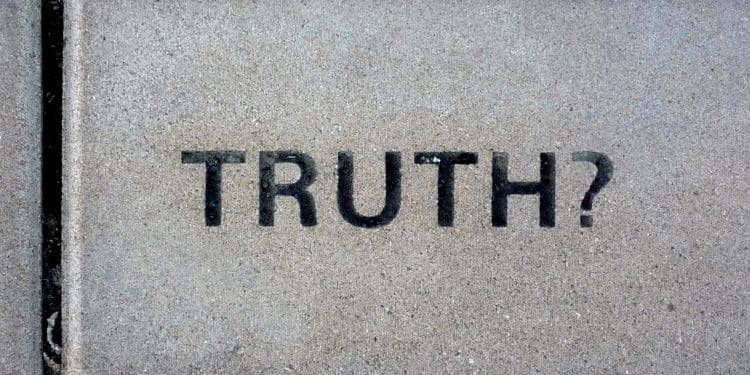
I think there are two kinds of truth, little “t” truth and Big “T” Truth.  If anyone walks up to you wagging their finger and says,

“You want the truth…I’ll tell you the truth!” …

…they are about to share their opinion with you.  Big T Truths are timeless and transcend the small snapshots of little t truths we call facts.  Big T Truths were true before you and I were born, and they will be true long after we are gone. Little t truths are context dependent.  The difference is embedded in the old saying, “Do you want to be right (little truth), or do you want to be kind?” (Big Truth: we need to be both.)

Long before The Story Factor, I wrote Territorial Games – about people gaming the truth – and A Safe Place for Dangerous Truths – how to get a group to tell themselves the truth. So, it’s always been about truth for me.  That is why I got interested in storytelling.  I found a Big T truth in the story that naked Truth was turned away until Parable dressed her in story so people invited her to sit at their table.

My hope is to journal “out loud” and find people (like you?) who are interested in having a dialogue about the idea of Big T Truths and the norms that keep our eyes and hearts wide open to supposedly dangerous truths that if ignored, will threaten our collective survival. In fact, it seems that some our algorithms now gamify truth in ways that lead to infighting, withholding information, and excluding certain narratives.

Big T Truths embrace the paradoxes we cannot avoid if we want to live a meaningful life by balancing both love and power.  Honestly I think some of the recent efforts to “science the shit” out of storytelling lead to smaller either/or truths and skip the “art part” necessary to retain paradoxical Big T Truths.

As a kid, I learned certain kinds of truth telling were dangerous to my survival. These experiences spring-coiled me to jump out of my skin when it feels like it is happening again.

It’s happening again.

Trauma made me hyper vigilant specifically for abuses of power and hypocrisy. I’ve learned to lighten up, but it’s still there. And I think it makes me useful.

If enough people are interested, I’ll post about the games I see people playing with truth. Please leave a comment if this sounds interesting to you.

Filed Under: Annette's Blog, Big T Truths Tagged With: algorithmic bias, Annette Simmons, Big T Truth, brand story, business storytelling, storytelling, true stories, truth telling, truthiness, Whoever Tells the Best Story Wins

August 15, 2017 by Annette Simmons 1 Comment

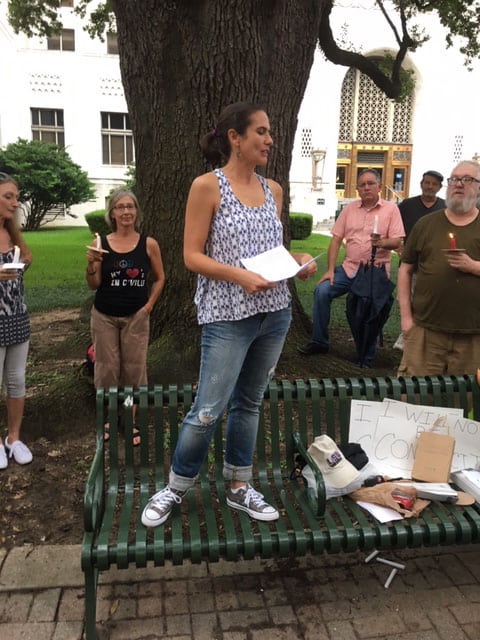
Charlottesville Vigil in A Southern Town

Elizabeth Beauvais spoke the words written below last Sunday night at a local vigil to mourn the violence in Charlottesville. We still have a confederate monument directly in front of our court house. Let’s not ignore the stories perpetuated by these monuments. Monuments have motives. This one was erected during Jim Crow when loyalty to Confederacy was code for white supremacy.  It still is.

She agreed to let me share a copy of her words:

“I went to the University of Virginia in the mid-1990s as a Jefferson Scholar, a scholarship that brought with it expectations of not just academic excellence, but citizenship and a real contribution to the inclusiveness, equality among student life. I soon learned that this was a campus-wide religion at UVA – this religion to Jefferson and his democratized ideals of self-determination, honor and equality. I took the history of civil rights under Julian Bond and poetry with our first black female poet laureate Rita Dove. I say this to tell you what a horror and shock it was to see hundreds of torch-bearing neo Nazis walking the central lawn of this campus, my campus, on Friday night. Don’t get me wrong – Charlottesville, then and now, struggles with a racist and misogynist past with lingering aftershocks in the present– a state school that didn’t allow women in until 1970, a university built with slave labor under the design of a founding father whose repeated rape of his slave mistress has become perversely romanticized. Charlottesville is far from perfect. But Charlottesville did not bring this on itself.

I believe that Charlottesville was expressly targeted as a strategic battle site by douchebag Richard Spencer and his NeoNazi, racist colleagues BOTH because it is now a progressive city built by the leading architect of America AND because it could actually be anywhere. For outside hate groups to invade and unilaterally terrorize a city that voted over 80% blue in the last election, a college town, and UNESCO world heritage site – (a city also, by the way, surrounded by a sea of red) – is a pointed, clear message that reads: We can take Berkeley with torches and hate just as easily as we can take Shreveport.

This matters to us not just because we feel for people in Charlottesville but because the violence could happen here — and the oppression and marginalization of already vulnerable people is in fact happening daily at the policy level.

My friend Kristin Adolfson was in the crowd hit by the car Saturday that barreled into her and dozens of other peaceful protesters that were holding signs that said, “Solidarity. Unity.” Kristen had written Love Not Hate on her shoulders and carried snacks and water in her backpack. She was marching by a low-income housing complex that white supremacists had been tormenting with racial epithets and chants of “Heil, Trump”. Miraculously, Kristin was unharmed, but a woman near her, Heather Heyer, died. Kristin told the New Yorker in an interview Sunday: “This was a terrorist act. Something that happens in so many places around the world, and it happened here in our little town. And I still can’t process the hate—that someone could actively take people’s lives, that’s what their goal was.”

She wrote to us on Facebook:

“What I can’t forget: The joy we had as we were marching down Water Street. Clapping and chanting and the solidarity and the community.

Then: such a strong feeling of ***NO!!!!!*** when I realized what was happening, realizing there was a car at full speed plowing through us. If my NO could have stopped time. It felt like it should have, it was that big.
How I knew what was happening and I couldn’t stop it. The sound of the car hitting human flesh and bone, ripping into us like dominoes, a quick staccato. Bodies thrown into the air. The anger that someone would do this. So angry, so angry. NO.
NO to the car and to the driver and to why it happened.
The fear for how bad it was, how many dead? How many dead.
A woman supported by three friends screaming heart wrenching. Her scream contained all our screams.
The tear streaked face of the young man wearing gray and a black medical mask around his neck, telling me someone is dead.
His face. Grief, incomprehension, pain, tears and pain, collapsing not able to stand.
His face.”

Over the past several years, since Sandy Hook, I’ve wondered – how long until I know someone who’s killed by gun violence and unchecked hate and intolerance? Or since Lafayette – when will I need to map out the exit the next time I take my kids to see a movie? How long until it comes for me or someone central to my life? I didn’t have the opportunity and the misfortune to test my courage as Kristin did (and I know that for many the awfulness of racially motivated violence has long been in their streets.) Charlottesville is as close as it’s come for me. I won’t let my fingers write “so far” – but that of course is my fear, your fear, all our fears, right?

Here’s what I know:

  • This is not “alt-right” or far-right, this is non directional, non partisan. Non American. The actual right should be loudest group saying this.
  • This is not about First Amendment rights. Not when assembling and speaking also means toting torches and assault rifles and other actual tools of terror. Friends who teach constitutional law at UVA have been telling me and others earnestly that when both the first amendment and the second amendment are abused together – violence, terrorism, homicide are not far behind.
  • Ignoring the fact that there is a short, direct and causal line from the President’s rhetoric and permissiveness for hate to the recent shocking surge of violence and hate crimes in American towns is dangerous. Strong leaders on both sides of the aisle, CEOs and other influencers are now seeing this writing on the wall and finally being vocal. Meanwhile – David Duke, our embarrassing fellow Louisianian, himself declared that the alt-right unity fiasco “fulfills the promises of Donald Trump.”
  • Doing nothing regarding Shreveport’s own Confederate statues and totems of racism in the hopes that Charlottesville’s violence won’t come here is ostriching and wrongheaded and in fact, the surest way to greater oppression and racial violence and domestic terrorism.
  • Equivocating with so-called compromises on false equivalencies – as if monuments enshrining civil rights and slavery bear equal moral weight and significance as worthy symbols in front of a courthouse is another fast track to Charlottesville – or worse.
  • I love Charlottesville so much I named my daughter after it — and I also gave her the middle name Strong. I actually believe Charlottesville is going to be okay, largely because there is a strong and motivated population and institutions that immediately began calling the evil out by name, AirBNB owners who canceled Alt-right reservations, locals who moved their cars to make it harder for hate groups to park and have to walk miles and miles in their sad little fake military costumes, teachers and students who stood in front of their university buildings as they sought to reclaim it for tolerance and were viciously assaulted, and now residents crowd-funding for all kinds of social justice groups to strengthen their community.
  • I love Shreveport too. Can we organize like that together?
  • When and if the Nazis come to our town, or reveal themselves in our town, terrorize and threaten people, maybe even brutally mow down some young brave person, how will we respond to their chant “you can not replace us.” I think we start in the same way we have gathered here at this vigil: by standing up to say, “we are not replacing you – because you were never entitled to anything you are demanding in the first place.”

I need to say how much of an imposter I feel as a well-meaning, slightly crunchy aging liberal white woman talking about bigotry and racism. I am acutely aware of the fact that what I am speaking of is no news at all to my neighbors of color in Shreveport. In fact, I told Tamica there were people far better positioned than me to speak today. But then, I remembered what I read this Sunday morning in the New York Times:

“Now is the time for every decent white American to prove he or she loves this country by actively speaking out against the scourge this bigot-ocracy represents. If such heinous behavior is met by white silence, it will only cement the perception that as long as most white folk are not immediately at risk, then all is relatively well. Yet nothing could be further from the truth, and nothing could more clearly declare the moral bankruptcy of our country.”

Read more from Elizabeth Beauvais here.  She’s a great writer!

Filed Under: Uncategorized Tagged With: charlottesville, confederate monument, interview techniques narrative, narrative, storytelling, true stories

July 3, 2017 by Annette Simmons 3 Comments

Budweiser Storytelling Genius Used for Good

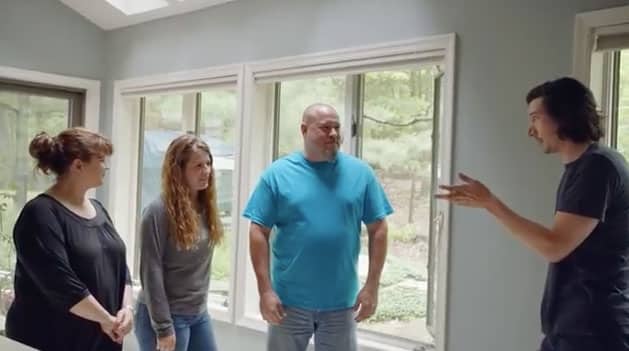
I just watched the new Budweiser commercial for July 4 this year and I think it is genius.  They used story to do good as well as make money. Lately I’ve been disturbed by mechanistic applications of story, but this? This is big picture, risky, embedded with big T Truth and I hope it does what it seems to have been designed to do.

Budweiser invites liberals and conservatives to remember who they are and why they are here, and to have a damn beer fer crissakes. The common good intentions of left and right are symbolized by the conservative cues framing the family of the veteran and his daughter as obviously conservative they add an even heavier handed cues about liberal Hollywood to characterize Adam Driver.  Then they dissolve their different POVs with the shared tragedy of both men being wounded before deployment and dealing with pain and survivors guilt.

I try to imagine… what was the dialogue in the conference room when they made the decision

“Should we do it?”

“It’s risky.”

“You are f—ing idealists.”

“It tested well.”

“Screw it, we’re going to do it.”

Of course they tested this ad. I admit preliminary the comments I’ve read are accusatorial jabs from die hard haters from both sides. But I hope that over time, the idea of just sitting down and having a beer comparing what we care about most…will bring some sanity to the current political arena.

If not, I’ll just drink a Bud and try not to worry about it.

Filed Under: Uncategorized Tagged With: Annette Simmons, BUDWEISER, business storytelling, communication, engagement, JULY 4, narrative, story, The Story Factor, Whoever Tells the Best Story Wins

April 21, 2017 by Annette Simmons 3 Comments

United Airlines: The Nurse Ratched Effect

Can safety becomesa pipeline to express resentment?

Can safety create a pipeline for resentment?


I stopped flying United Airlines a while back.  I remember the first time I felt harassed on a United flight. I asked for help lifting my backpack into the overhead. The flight attendant’s lip curled slightly as she said, “I am primarily here for your safety” with a tone that added the unspoken message, “so don’t treat me like a servant.” At the time, I assumed her anger was due to a snowballing series of unpleasant events and my assumptive request felt arrogant to her. It was not immaterial that she was black and I am white. I am active in racial reconciliation work in the Deep South so if race was part of it that makes sense to me.

But I see another pattern fueling tension between United employees and customers that recently led to man-handling a customer. And I’d be interested to hear your thoughts. Like all reality, there are predictable polarities in business – particularly service businesses. One big paradox is:

If the customer is always right… are employees still our most important asset?

I’m guessing United and other airlines adopted the “primarily here for your safety” perspective as a strategy to increase the dignity employees retain if/when customers are unkind. A guardian gets more dignity than a servant so this metaphor shifted the pendulum of empathetic perspective toward employees. And that’s wonderful. We should be taking better care of employees. This has been a long term strategy for United and it explains the CEOs initial solidarity with employees.

Yet the unintended consequence of increasing empathy for employees by characterizing them as guardians first, hosts second, simply shifts the burden to manage physical safety and psychological safety. Attempts to mechanize empathy seem to shift the burden by de-humanizing yet another context where personal attention matters. We are drowning beneath a tsunami of decisions chasing numbers at the expense of personal relationships and it is turning out exactly as you might imagine.

Systems designed to ensure physical safety frequently create a lack of psychological safety. Think Nurse Ratched. Or TSA (much better now). Systems and routines designed to minimize the situational nature of empathy only prevent the situational nature of empathy. Even hospitals enter a dangerous phase when numbers become more important that people. And it’s not restricted to a focus on safety. Last week, I felt harassed by endless phone calls from my car dealer strong arming me into completing a customer satisfaction survey. These poor people seem more incentivized to score satisfaction than deliver it. Competition for good numbers can turn good people into little nazis. We need two forms of measurement: numbers are great but qualitative measures matter too.

Numbers games teach winners to shift expenses and burdens onto losers – in United’s case – customers. Emphasizing physical safety  (measurable) over psychological safety (qualitative) builds autocratic systems that enforce preventative routines based on worst case scenario, root cause analysis, and the ethic of “better safe than sorry.” We can do better. The human need for empathy (and the consequences of empathy denied) will never be designed out of real life. So why not embrace the paradox, pursue safety and good numbers while remembering that the best way to get empathy is to give it.

P. S. Check out my updated audiobook version of The Story Factor on Audible!

Filed Under: Annette's Blog Tagged With: Annette Simmons, business storytelling, empathy, metaphor, paradox, patient experience, patient safety, polarity, safety, storytelling, United, United Airlines, User Experience, UX, Whoever Tells the Best Story Wins

February 3, 2017 by Annette Simmons 7 Comments

Women’s March 2017: My Personal Experience

march

It is 5:00 a.m. Thursday January 19, 2017. I have no plan except to drive my car 1,193 miles to “show up” in D.C. for the Women’s March. I gas the car; pick up Valerie, and swing by “Southern Maid” for a king cake. Images from “Thelma and Louise” excite and frighten me. We will stay at my stepsister’s near Greenbelt metro station. Louisiana people don’t visit family without a king cake this close to Mardi Gras.

We drive ten hours on Thursday and eight hours on Friday under spacious skies, rainy skies, not so many fruited plains, and gobs of purple mountain majesties. Louisiana, Mississippi, Alabama, Georgia, Tennessee, Virginia. In Tennessee we stop to stretch our legs and buy supplies: whiteboards (dumb), markers, oh-so-nonviolent pink glitter for counter-protestors (prescient), pink heart stickers, pink wrapped chocolates and hot pink bandanas since neither Val nor I knit. We arrive Friday night and my stepsister and her husband make fish tacos for six. Dessert is king cake and Rachel who arrived with Deb from Massachusetts the day before gets the baby. All six of us agree to leave the house at 7:30 a.m. the next morning.

We leave the house at 8:15 a.m. Kind, congenial, and considerate is more important than punctual. The six of us turn into twelve, then twenty four…then too many to count as we migrate to the train station. We smile. We “woo-hoo” at all the great signs. We board the train in numbers that expand exponentially at each train station. We photograph ourselves and each other. I ask my stepsister, “Can I borrow your hat for a selfie?”  Across the aisle I hear, “Do you need a hat?”  I let out a girly squeal, “Seriously?” I may have even fanned my face with my hands.

Three girl scouts and two moms hold open a bag of hand-knitted pink pussy hats. “Pick one.” Val and I chose. Hers is pink knitted plaid (how is that even possible?) Mine is hot pink. Inside are notes: “Dear wearer of this hat…” hand signed by the knitter. Paula from Albany, New York knitted mine. Hugs. Thank yous. We show the notes around then put them in a safe place.  More photos. The doors open. Our numbers expand again. This time the doors can’t close. Despite sitting tight with minimum of personal space we already fill this train beyond capacity. Instinctively we access the secret wisdom normally used for zipping up skinny jeans. We inhale and suck ourselves in so the doors can close. My flesh tingles. I realize I feel physically and psychologically safer now than I’ve felt in months. I “fit in” with this group that is much larger than I realized. Sweet relief. We are not alone. My hope expands in proportion to our numbers.

Police and Metro workers wait in position to hand signal us up from the metro toward the daylight. We flow like mighty rivers surging from twelve different metro stations onto the streets of D.C. until we overflow the banks of our own expectations. As we converge, I see swirls of women, men, children, girl scouts, scientists, federal employees, activists, grandmothers, teachers, cooks, hijabs, signs, geeks, beauties, hippies, a kaleidoscope of humanity moving with one mind and one intention: to show up. We steadfastly ignore our flaws, judgments, egos, agendas, hurts and divisions in order to fully experience what I can only describe as a shared faith that compassion is more important than control. We show up so can look ourselves in the eyes, see who we are, how many we are, and how dedicated we are to wrestling our nation’s arc back toward justice.

It is past one o’clock. Marchers occupy every square foot in every direction as far as I can see. Occasionally a small group passes nearby forging a path in one direction or another. We squeeze elbows in to make way. Discomfort, jostling, and the frustration of immobility escalate but we are steadfastly kind. Kindness is more important than position, proximity, or prominence.

Cell phones don’t work. Instead, we have conversations. Where are you from? How long did it take y’all to get here? Rachel is surrounded by a cluster of young women listening stories about Soujourner Truth. Two Arab women try to help me find a signal. I crave an aerial view to affirm our strength in numbers. Younger marchers climb walls, poles, a stack of pallets from the day before so they can see. I watch a young woman climb a tree to get an elevated view. She loses her footing, regains purchase and finds a stable spot. Her success prompts spontaneous applause and cheers. She didn’t know anyone was watching. I didn’t either. We cheer her beauty, ambition, and perseverance.

My imagination recalls a November trip to see Monarch butterflies hibernating in the mountains of Mexico. I feel like one of those butterflies tightly pressed against millions of others – nature’s safety plan for survival. In the dead of winter it takes togetherness to survive. When it is time for migration, there are individual actions but the lifespan of each butterfly then shortens. The butterflies that return back to Mexico are often seven generations removed from the ones that left in the spring. I see a grandmother with a sign, “Why Am I STILL Marching for Equal Rights?”

A voice shouts, “What. Does. Democracy look like?” “THIS is What. Democracy looks like!” I cannot see the jumbotron. I do not see a stage. I do not hear any speeches (we will watch them later on youtube, Ashley Judd twice) By two p.m. our “battalion” – I don’t know what else to call us – begins to march toward a street that runs parallel to the official parade route. I will return home without ever laying eyes on the official parade route. We are overflow marchers, not extraneous, but evidence of an endless supply. Those who value money and power more than compassion and collaboration should know there are lots more from where we came from.

Police are kind and polite. Two of them snap photos of us from horseback. A man stands in the street playing his violin for us. We walk in the street observed by more marchers now standing on walls and sitting on higher ground taking time to rest and soak it in. Even by 4:00 p.m. signs are still held high by arms that must channel super-duper mother bear strength. I’m tired. I hurt. I beg five minutes rest. Then I keep going.

From outside there will be disdain. Pundits will try to discredit our intent or twist aggressive narratives out of women who merely stand firm against the attack on human rights and human dignity. Selective coverage will misdirect attention. We will be criticized as inarticulate, unfocused, and hypocritical. It will be difficult. We will need more of that super-duper mother bear strength.

The train is an even tighter squeeze on the way back. We are too tired to orchestrate a skinny jeans inhale. Instead we hold on to each other, share seats, sit in laps and accommodate our bulk like Saturday morning sweatpants and a fuzzy blanket. We comfort our mutual exhaustion and look like the Far Side cartoon of a boneless chicken ranch. Dead tired. Until …over the intercom the train conductor asks, “Can I get a woo-o-o?” We give a full-on “woo-o-o” that brings smiles as we listen one last time to our collective voice.

Taking my boots off feels like an orgasm. I am so hungry pizza tastes like nirvana. My exhaustion delivers peaceful delicious sleep.

Sunday we start driving at 11:00 a.m. to a different Tennessee Holiday Inn Express. Monday morning I do an interview with a Shreveport, La. radio station. (paraphrasing). He asks:

“Did you buy any extra ummm, of those, ummm pink hats? I want one!”

“I didn’t see any hats for sale. I got my hat from a Girl Scout on the train. It wasn’t really a merchandizer’s event. All of the hats I saw were handmade, free.”

“So the pink..ummmm, what shall I call it puggy hats…pully hats…p— ”

“You mean pink pussy hats?”

“Wel-l-l-ll, we have to abide by FCC regulations…”

(pause)

“I don’t see a need to rename the hat…but let’s move on. I’ll let you borrow my hat so you can take a selfie if you want.”

“Great! Next question: Do you think Madonna went too far?”

“I think Madonna felt safe enough to vent. I’ve heard schoolteachers say terrible things in a teacher’s lounge that they’d never say in a classroom. I know this event wasn’t private but it felt private to me… It felt like one huge therapy session between a million women collectively on our last nerve. It was an opportunity to speak freely. She did. She was talking to us…not to observers.”

“You don’t sound angry. There were some angry signs out there. Did you see a lot of anger?”

“Umm, not an inappropriate amount. Anger is how we protect ourselves. So it makes sense if signs created by women who feel threatened, who want to protect their rights might look angry. But I think that is what anger is for.”

His questions alerted me that what I experienced is not the story most people will hear. Many layers of meaning will be attributed to the Women’s March on Washington. But deep meaning (any deep meaning) inevitably invokes paradox and is too visceral, emotional, and experiential to share without personal experience or artistic interpretation.

I think you had to have been there, or at least want to imagine what it was like to be there in order to truly understand what it meant to take part in the biggest demonstration in US history.  It meant the world to me.  I hope you find a meaningful point of view that fills your heart with faith that kindness, empathy, and collaboration are more important and more powerful than the disdain, greed, and competitive reasoning currently dividing us.

Filed Under: Annette's Blog, Finding Stories, Stories Help, storytelling ethics Tagged With: Annette Simmons, inspiration, leadership, narrative, storytelling, true stories, Whoever Tells the Best Story Wins

January 3, 2017 by Annette Simmons Leave a Comment

Storytelling and UX: Separated at Birth

Plate Design pre-800 A.D. Nazca tribe, Cusco Peru

Plate designed 0-800 A.D. by Nazca tribe, Peru

In 2004 I introduced my ideas about story-thinking to a bunch of design engineers who responded  “no, no, that’s design-thinking.” So I fell in love with design thinking…genuises like Dan Lockton (101 patterns for behavior change), Jan Jursa and UX Storytellers (free ebook with personal UX stories) create designs that are stories. Perhaps story thinking and design thinking are not an exact match but the steps of find/share/refine from UX, Agile,  and Scrum sources are delightfully nonlinear (story) compared to the decision routines I learned from management by objective techniques (i.e. SMART goals) and I like the conversations of UX people.   They ignite the imagination to pursue goals we can’t yet see.

I have an issue with the UX term “cognitive bias” because EMOTION should be in there somewhere and “bias” makes humans sound like stupid cows who might follow a cattle chute wherever it goes. Even cow chutes can fail until a designer understands the stories cows tell themselves (see Temple Grandin). Human patterns of interpretation can utilize rational tools but our patterns irrevocably reflect the DNA of physical experience and emotional reasoning. Every “cognitive bias” makes as much sense as any stereotype makes sense. It shouldn’t be universally applied, but it comes from an organic place.  I’m happy to know that Dan Ariely says his term “predictably irrational” refers to the idea that it is irrational to think you can predict your own behavior. It is not a blanket disdain for these patterns of behavior. Emotional reasoning is and forever will be more powerful than rational decision making and I see that as a good thing because our future will be much better when we learn to blend emotions like empathy, compassion and love into our ratios.

Before demand for content reduced storytelling to a sequence of linear explanations and numbered bullets, it was mostly taught in person.

Learning storytelling in a group from an experienced storyteller provides an experiential sense of story that can’t be captured with a set of procedural instructions.  There are great courses out there.  We can learn a lot online…but if we want to understand something as deeply human as storytelling its ideal for humans to interact with other humans.

Here’s why: A story blends emotional, visual, kinesthetic and rational reasoning routines without separating them.  Personal stories illuminate insights that are specific to a situation’s people, complexity, texture and relationships. A vibrant true story delivers a hologram of culture, nature, nurture, space and time from an embodied human point of view: WAY more information than a story formated via a hunt and peck search for hero, quest, obstacle, helper and journey.

The job of a storyteller is two-fold. First, a storyteller notices the emotional, visual, and kinesthetic patterns that produce perceptions (i.e. what makes some facts feel more important than other facts) and interpret conclusions (I “know” him therefore he is more trustworthy).  Second, a storyteller must be able to re-create this perceptual/emotional point of view so others share the insights and the feelings as if they were physically there.

Yes, any story that provides your listeners with a vicarious experience of your facts in time and space makes your facts feel more “real” …with all the benefits of that, but to me, the real value of storytelling is the way it allows us to aggregate contexts and shift perspectives so we make better decisions.  When rational objective reasoning is allowed to over-rule subjective story reasoning we end up with projects that should’ve worked, but didn’t because emotions and perceptions rule human reality.

More than a set of tool to persuade, story-finding and storytelling skills increase the variety and quality of scenarios we can imagine to produce the results we seek – sometimes revealing even better goals in the process. Any story that narrates a relevant “Significant Emotional Event” (without some imposed structure) helps us S.E.E. important patterns, better test prototypes, and understand user experiences.

Designing cattle chute stories/interfaces that only lead to pre-determined conclusions is not engaging it is coercion. Narrating stories with the priority of understanding (not controlling) true human experiences releases listener conclusions to be creative and more meaningful to you both.  It means showing faith in your listeners (always appreciated) and sharing responsibility for mutually creative interpretations and actions. There is no “right story.” If you look for the perfect story you sacrifice the process of mindful attention to what is, in favor of what you want to see.  Both are valid…but I’m thinking we could all do a better job of understanding what is.

So to all my UX colleagues, please don’t let your understanding of storytelling get distorted with contrivances created to package and sell storytelling advice.  User experiences with emotion and unpredictability intact are too valuable to the process of innovation to be reduced to fit existing categroies. Be bold.

Filed Under: Annette's Blog Tagged With: Annette Simmons, business storytelling, interview techniques narrative, The Story Factor, Whoever Tells the Best Story Wins

  • « Previous Page
  • 1
  • …
  • 6
  • 7
  • 8
  • 9
  • 10
  • …
  • 18
  • Next Page »

Storytelling 101

I have a confession to make...

Storyteller’s Confession: My Secret Mission

October 5, 2021 8:59 am

I’ve been trying to infiltrate the halls of power for decades. My secret mission is to increase the diversity of thought by teaching those without a voice how to tell their stories and by teaching leaders how to find and retell stories that broaden everyone’s understanding. Read more →

Posted in: Uncategorized

Stories with a Moral Blueprint – part 8 of 8

May 14, 2020 8:43 am

  We need a Magic School for Storytellers Thirty years before J. K. Rowling created Harry Potter, Ursula Le Guin’s... Read more →

Posted in: Annette's Blog, Big T Truths

Stories with a Moral Blueprint – part 7 of 8

May 13, 2020 7:37 am

  Truth in Storytelling When I wrote the first edition of The Story Factor twenty years ago, I began with the... Read more →

Posted in: Uncategorized

Stories with a Moral Blueprint – part 6 of 8

May 12, 2020 6:48 am

The Moral Dilemmas of a Lion, a Scarecrow, and a Tin Man Frank Baum’s original introduction to The Wizard of... Read more →

Posted in: Annette's Blog, Big T Truths

Stories with a Moral Blueprint – part 5 of 8

May 11, 2020 8:38 am

  Blueprints for Building Trust Learning to drive was fun until I hit the mailbox. I burst into tears, blaming... Read more →

Posted in: Annette's Blog, Big T Truths

Subscribe to Annette's Blog via Email

Enter your email address to subscribe to this blog and receive notifications of new posts by email.

Like us on Facebook:

Like us on Facebook:

Contact Us

Group Process Consulting, LLC
phone: 318.861.9220
email: annette@annettesimmons.com
facebook: www.facebook.com/thestoryfactor

  • Storyteller’s Confession: My Secret Mission

    A Storyteller’s Confession I’ve been trying to infiltrate the halls of power for decades. My … Continue Reading…

    Storyteller’s Confession: My Secret Mission
  • Stories with a Moral Blueprint – part 8 of 8

      We need a Magic School for Storytellers Thirty years before J. K. Rowling created Harry … Continue Reading…

    Stories with a Moral Blueprint – part 8 of 8
  • Stories with a Moral Blueprint – part 7 of 8

      Truth in Storytelling When I wrote the first edition of The Story Factor twenty years … Continue Reading…

    Stories with a Moral Blueprint – part 7 of 8
© Copyright 2021, Group Process Consulting, All Rights Reserved.
Based on the ·Executive Pro Theme/Genesis Framework by StudioPress · Built using WordPress · Log in