Annette Simmons

  • About
    • About Annette
    • Annette in Action
  • Books
    • Territorial Games
    • A Safe Place for Dangerous Truths
    • The Story Factor
    • Whoever Tells the Best Story Wins
  • Services
  • The Six Kinds of Stories
  • Storytelling 101
    • Blog
    • Q & A
    • Metaphor Maps
  • Clients
  • Contact

October 5, 2021 by Annette Simmons Leave a Comment

Storyteller’s Confession: My Secret Mission

A Storyteller’s Confession

I’ve been trying to infiltrate the halls of power for decades. My secret mission is to increase the diversity of thought by teaching those without a voice how to tell their stories and by teaching leaders how to find and retell untold stories that broaden everyone’s understanding.

I confess, I’m not as interested in increasing the bottom line as I am in finding ways to sustain as many bottom lines to support as many people as possible.

That puts me at odds with the cherished assumption that business is all about doing more with less – specifically less people. Because I like people, I want to improve people’s lives and save the environment at least as much as I want to increase profit.

And I’m not a nut. I know we need to protect the success of the organization. But I trust that all the metrics, quantitative analysis, and algorithms that exist solely to show how to do more with less aren’t going away. They will continue to do what they need to do.

But we do need to embrace a new paradigm where people count at least as much as numbers. And we do that through sharing our stories.

Storytelling is a form of generosity vital to collaboration. When people are forced to be transactional it kills the magic of growing faith and trust by showing faith in others without demanding quid pro quo payback. The most inspiring stories narrate self-sacrifice, helping without pay back, showing good faith, and illustrating moral norms. We don’t build trust when the terms and conditions of signing up include multi-page inventories of all that might go wrong. Every set of terms and conditions I’ve read told me a rather dark story of distrust of myself and a bullet proof shield of selfishness.

Two years ago, I started coming clean about my concerns about the ethics of those who want to learn storytelling in order to control narratives rather than engage multiple narratives. Not surprisingly, most businesses who called me decided to hire someone else after I started talking about the ethics of storytelling. Learning the ins and outs of storytelling is like going to magic school. I think any teacher who doesn’t show students about the dangers of avoiding dark magic is being irresponsible.

One of the blessings of being up front about my “secret mission” is that some of the businesses who call are even more interested than before. I’ve got a new book coming out that articulates how competitive narratives tend to treat collaborative narratives like competition. In Drinking from a Different Well: How Women’s Stories Change What Power Means in Action, I tap into the genius of women’s narratives about power, the way men misunderstand female contexts, as well as a coherent way to blend male and female power in the workplace to redefine success in a way that protects people, profits, and the planet.

Gendered narratives represent preferences not competencies. Sexual dimorphism suggests that when evolution must protect a paradox (protecting us AND them) nature/nurture often splits the difference by ensuring both matter––but in different degrees.

Protecting “them” is a bit more important to women and protecting “us” is a bit more important to men. When women end up in positions that don’t offer enough power to protect “them,” we feel powerless and evade promotions that will only make it worse. The term moral distress explains a lot about why women leave positions of power. If we don’t have the power to do the right thing, it makes us feel powerless.

This is not just women, of course; anyone who prefers collaborative narratives over competitive narratives ends up being treated like the competition when it comes to control and power. It’s one of the things that I’m working on right now.

How do we blend both competitive and collaborative narratives? What needs to change in the way we make decisions? How do we deal with our own hypocrisy?

I include myself. Only by investigating the difference between what we say we want (safe planet, healthy people, etc.) and what we actually do to achieve it (I don’t compost for instance) can we figure out how to close the gap. Your thoughts?

I will soon start blogging on differentwell.com if you want to sign up to hear about my new book Drinking From a Different Well: How Women’s Stories Change What Power Means in Action.

Filed Under: Uncategorized

May 13, 2020 by Annette Simmons 3 Comments

Stories with a Moral Blueprint – part 7 of 8

BIg T Truths make stories come alive.

BIg T Truths make stories come alive.


Truth in Storytelling

When I wrote the first edition of The Story Factor twenty years ago, I began with the idea that people don’t want more information. They want faith in you and your positive intentions. I never suspected that two decades later we’d be discussing an explosion of stories that intentionally undermine this faith. Without the conventional power of weaponry to achieve their goals, certain groups have learned to harvest the twin powers of stories and technology. These weaponized stories persuade neighbors to attack each other as enemies. They undermine trust and often trick us to act against our own best interests. Now that technology amplifies the frequency and reach of malicious storytelling, the power of malicious storytelling to destroy social cohesion is more evident than ever. These results call on all storytellers to double-check that the stories we tell do not erode our ability to balance competing needs.

The good news is that stories only get better when a teller digs deep to reveal capital “T” Truths that that engage, describe, and explore real-life ethical issues. I knew a retired preacher, now dead, who complained to me that writing the history of his church only produced a flat, boring story. I innocently suggested, “Then you aren’t telling the whole truth because in my experience telling the whole truth makes every story more interesting.” He responded, “You mean I should tell about the S&M affair I had with a female preacher from the next town over?” Stunned, all I could say was, “Well, it already sounds more interesting.” It’s an extreme example, and no, his affair didn’t make it into the church’s history. But I share this story in the hope it will help you remember that withholding truths to control a narrative is a recipe for flat stories. Interesting stories take on ethical dilemmas, paradoxical truths, and lift our gaze from the transactional to the transcendent. Sanitized stories are boring.

Digital storytellers now seem to be rediscovering this fertile ground after initial attempts to mechanize, accelerate, and simplify storytelling produced lackluster results. One approach I admire provides a personal Bitmoji avatar to illustrate real-life paradox with image-based stories we can drop on top of real-life photos or video to add more meaning. For instance, the Bitmoji avatar that shakes off fear before walking across hot coals, then celebrates a very short while before his or her feet burst into flames. The “damned if you do, damned if you don’t” dilemma is a paradox we have all experienced. Drop this Bitmoji sequence onto a wedding or graduation photo on Snapchat and the reminder that joy and suffering are usually a package deal can make us feel more connected.

Chatbots, on the other hand, have trouble with paradox and universal dilemmas. From the get-go, I’m wary of the ethical implications of designing a bot with the precise goal of tricking humans to believe a machine is also human. Even more worrisome is the idea that this trick is often achieved by teaching humans to think so much like machines that we can’t tell the difference. Chatbots tend to simplify paradox into binary options that discourage any inquiry that might undermine the bots programmed goals. Natural language processing can obviously be automated. But how could we possibly develop a machine that won’t oversimplify moral paradoxes? It’s not surprising that initial attempts, like Microsoft’s experiment with the chatbot on Twitter named Tay (“thinking about you”), quickly learned to maximize the speed of response rates with racist, sexist, and Nazi-sympathizing posts.

From the beginning of time, humans have recorded organic wisdom with stories to guide real-life personal choices. Today it seems that a search for organic wisdom, or even a road less traveled, is blocked by increasing arrays of algorithmic chutes and ladders designed to lead us to travel only the roads that are profitable to the road builders. (As opposed to the original Snakes and Ladders game from the second century bc that illustrated karma by characterizing good deeds with ladders and evil deeds with back-sliding snakes.) This algorithmic distortion means you can search the internet for advice to treat any chronic disease, and the solutions you find are typically controlled by whichever group profits most from your misfortune.

It’s no accident that creative people increasingly protect a certain amount of time spent without screens, to experience nature, and cultivate transcendental perspectives using meditation and ritual. These people don’t hate technology. They simply see solid advantages to ensuring their brains can still sense transcendent truths as well as invent rational equations. Ursula Le Guin, whose stories mined real-life conundrums, once said:

“Commodified fantasy takes no risks: it invents nothing, but imitates and trivializes. It proceeds by depriving the old stories of their intellectual and ethical complexity…Profoundly disturbing moral choices are sanitized, made cute, made safe. The passionately conceived ideas of the great storytellers are copied, stereotyped, reduced to toys, molded in bright colored plastic, advertised, sold, broken, junked, replaceable interchangeable.”

Ancient Aramaic tales of genies (jinn) feature tricksters with supernatural powers who grant extravagant wishes purely to teach a character how to watch what he wishes for. Now that we have manufactured supernatural technologies that reach exponentially larger audiences and grant extravagant wishes at the press of a button, we are relearning the hard way to watch out what we wish for.

Certainly there are those who will argue that business is not responsible for keeping moral stories alive. But one thing I know deep in my bones from more than twenty years of teaching stories in the business environment is that facing a moral conflict and taking a stand builds trust much faster than sidestepping these issues. In order to stand out your stories need to show what you stand for.

It is emotion, not numbers, that keep us engaged, drive us to protect the weak, fund philanthropy, and fuel our search for justice, equity, and meaning. Just because it is impossible to quantify the long-term payoffs of moral actions doesn’t mean they aren’t worth the investment. And just because you want to make a profit doesn’t mean you need to engage in the dark arts to do so.

Tomorrow: Magic School for Storytellers


Excerpt from Chapter 12, 3rd ed. of The Story Factor (2019)  AUDIBLE VERSION HERE

Filed Under: Uncategorized

May 5, 2020 by Annette Simmons Leave a Comment

Stories with a Moral Blueprint – Part 1 of 8

The Morals of Our Stories

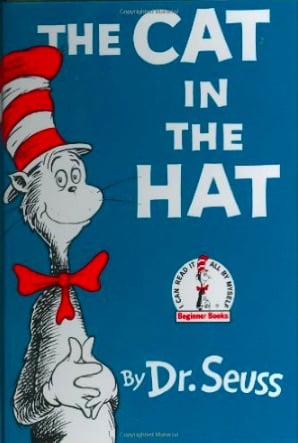
Look at me! Look at me! Look at me NOW! It is fun to have fun But you have to know how. —Dr. Seuss, The Cat in the Hat

Look at me!
Look at me!
Look at me NOW!
It is fun to have fun
But you have to know how.
—Dr. Seuss, The Cat in the Hat


Dr. Seuss’s story The Cat in the Hat embodies a lesson for any of us who loved this book as a child. In the book, two children alone at home are tempted into mischief by a cat wearing a top hat while their pet goldfish warns them of dire consequences. While the cat persuades the children to ignore the goldfish and join in his messy fun, afterward he orchestrates a massive cleanup just in time to avoid parental consequences. To me the story implied that I could have fun, break the rules, and do whatever I wanted as long as I cleaned everything up before my parents found out. Others favored the goldfish’s advice to follow rules and avoid making a mess in the first place. With the help of stories like this one, children learn how to balance fun and responsibility in ways that are vital to their success as adults and their success as storytellers.

Seuss’s plot offers a blueprint that traces both the fun and cost of making messes while simultaneously making it clear that leaving your messes for others to clean up doesn’t work over the long term. Learning to clean up the messes we make is a moral lesson that starts with children’s stories and passes from each generation to the next…if, and only if, we protect and repeat the behaviors recommended in stories to sustain society’s faith that our collective survival depends on certain prosocial habits.

If we reclaim the term “moral” from negative connotations of judgmental intent and hypocrisy, it is much easier to embrace the idea that moral lessons work to our advantage. The emotional qualities of our lives, products, services, and families directly reflect the quality of the moral lessons we reinforce by repeating certain stories. Now that most of our conversations about what is morally good or bad occur within the context of technology, it requires more of a concerted effort to remember that emotional reasoning already influenced the design of any system programmed by humans.

From a purely rational, profit-maximizing context, spending money on moral behaviors such as conserving resources, building products that last, or refusing to exploit human weaknesses seems like someone else’s problem rather than an investment in  proving you take our collective future seriously. Once labeled inefficient, unnecessary or avoidable, the prosocial emotions that previously encouraged us to override certain selfish interests weaken. When moral behaviors like self-restraint, empathy, and compassion stop feeling meaningful, we become less collaborative and more isolated. Without stories that train our imaginations to have faith that today’s sacrifice of time and energy will pay off, we are at risk of losing the irrational but highly functional faith that moral actions pay off, even though it is impossible to calculate how and for whom, exactly.

Moral behaviors that can’t be justified with ROI calculations will fade unless we keep telling the kinds of stories that bolster our faith that the intangible benefits of certain moral actions transcend short term financial returns. Without a concerted effort to sustain our faith in morally reasoned stories, we expose ourselves to the danger of the weaponized stories and fake news designed specifically to poison cultural reservoirs of meaning and trust. For instance, many stories of disruption suggest it is smart to increase profit by identifying and eliminating expenses that protect intangible collective benefits and pay only for actions that directly contribute to profit. The truth is that there is no business case for moral norms that can’t be undermined by a motivated data analyst. In a world that only recognizes calculable cost-benefit ratios, moral norms lose meaning and stop driving behavior. So we must sustain these meaningful stories if we want to live in a moral and just world.

Excerpt from Chapter 12, 3rd ed. of The Story Factor (2019)  AUDIBLE VERSION HERE

Filed Under: Uncategorized

May 4, 2020 by Annette Simmons Leave a Comment

Storytelling Moral Survival System: Part 15 (suggestions)

Use your imagination to see multiple perspectives.

Use your imagination to see multiple perspectives.

Protect Imagination

Imagination is a daily practice. Our brains use two forms of memory. One is a procedural memory that supports rational, scientific, left-brain habits. The other is an episodic memory that tracks and records episodes (stories) of experiential learning often discredited as anecdotal evidence. Remembering entire episodes exercises our imaginations as we toggle between various points of view and tour the complexities of real life. Our imaginations require direct sensory input. Physical experiences stock up a reservoir of images, sounds, tastes, smells, and sensations. I’ve noticed a sharp decline in the ability of digital natives to come up with expressive metaphors, perhaps because screens can’t provide enough authentic sensory experiences to activate what seems to be a sensory-dependent skill.

Science is beginning to indicate that what we call insight is largely a sensory process. While we await more science, it’s interesting to consider all the metaphors we use to describe intuition or insight. We smell bullshit; something rings a bell or triggers our radar; a story delivers a flash of understanding, sends off vibes, or delivers a kick in the gut. Maybe what people used to call “extra-sensory” perception is more accurately described as sensory perception—reading our own body’s sense of a situation. All I know is that when I diligently seek out experiences that feed my imagination and revisit these experiences by imagining the sensory details, it is much easier to come up with insightful metaphors and stories.

Imagination enables us to invent new futures that are better than the present. Logic relies on past evidence-based successes, whereas imagination turns reality into clay we can mold into novel shapes and then test. Consider the person who sketched the design for the chair supporting your bottom right now. At some point this chair didn’t exist. That person imagined it, sketched it out, maybe even used a story to communicate the idea of it so strangers could construct it into a material reality. Without strong imaginations we struggle to invent new material realities.

Constant investment in your imagination stretches the mental muscles you need to explore beyond apparent limitations. Protect your storytelling from the enemies of imagination: certainty, proof, and metric constraints. Question certainties that narrow your definition of a problem. Ask real people to tell you true stories in person (share yours first). Don’t allow well-intentioned criticism to obliterate the best parts of your stories by shifting your focus to minor flaws before you have found the heart of your story. Rise above cynicism, quarantine fears, and risk vulnerability to stay connected to your imagination’s ability to find new trails of insight.

Software designers regularly use metaphors of architecture, building, and journeys to accelerate design ideas. These imaginative metaphors demonstrate how quickly metaphor can recruit the power of our imagination to see connections that logic fails to notice. Think about your imagination as taking on the metaphorical habits of different animals. For instance, my imagination is naturally like a fox because I chase whatever rabbit runs in front of me. Sometimes I need my imagination to hibernate like a bear or become as fickle as a cat, vacillating between exploring a problem from the inside/out as well as outside/in. Physical world metaphors trigger new points of view that may reveal new insights.

Metaphors shake things up. When you characterize a well-worn problem with a new metaphor you update your view with imaginative insights. Another of Pixar’s 22 rules of storytelling suggests making a list and then discarding your first five ideas in order to see if the sixth one surprises you. Likewise you might list five good metaphors specifically to find a sixth metaphor that better improves understanding. I use all of these tricks to stimulate my imagination.

Finally, imagination is vital for people who maintain a wide circle of moral concern. If we can’t clearly visualize the people we care about: future generations, our boss, family and the vast array of humans we choose to treat like family they will cease to influence our perceptual field. Expanding who, where, and what we imagine makes our stories feel more meaningful to more people.

Excerpt from Chapter 11, 3rd ed. of The Story Factor (2019)  AUDIBLE VERSION HERE

Filed Under: Uncategorized

April 30, 2020 by Annette Simmons Leave a Comment

Storytelling Moral Survival System: Part 13 (suggestions)

Same gray, different frames. Objective thinking is not as objective as we might think.

Same gray, different frames. Objective thinking is not as objective as we might think.

Retain Paradox

The optical illusion above demonstrates how a black or white background will cause two identical gray squares to seem different. The gray square against a black background usually seems lighter.

Living a more meaningful life may simply be a matter of feeling connected to a bigger circle of moral concern and finding the sweet spot between self-interest and collective interests. Sacrifice is the flip side to the joy of belonging. James Baldwin quoted Shakespeare: “Out of this nettle danger, we pluck this flower, safety,” as a definition of art and poetry. Everything that matters to us matters more when we stand in the sweet spot of contrast. We better feel the pulse of our hearts when we win the struggle against our demons. Jack London, in Call of the Wild, asserts that “such is the paradox of living, this ecstasy comes when one is most alive, and it comes as a complete forgetfulness that one is alive.” There can be no Call of the Wild without a deep understanding of the un-wild and taming effect of civilization. Stories that are too civilized need a bit of wild to feel real, and vice versa. Storytelling turns into dark magic when a story is distorted to portray a human paradox as if there was one viable solution rather than balancing two poles of a paradox we must manage. If all our heroes win, we never learn to value failure.

Retaining paradox keeps your content relatable, realistic and alive with contrast. We can use whatever template we like as long as our stories retain a tension between the trade offs of reason and emotion, safety and freedom, efficiency and resilience, logic and compassion and all of the other messy truths vital to a meaningful life. Stories that track the drama of finding these sweet spots are simply more interesting.

And now it seems like paradox might even be a natural law we didn’t fully understand until after we used highly sophisticated computers to hack efficiency. Neurological research by Israeli professor Rony Paz of the Weitzman Institute and Professor Itzak Fried suggest there may be a “zero sum game between efficiency and robustness.” 1 We gain one at the price of the other, and vice versa. In the brain, cognitive rational signals can become so efficient they marginalize the amygdala’s primitive signals and the imbalance causes dysfunction and a lack of resilience. The professors suggest the metaphor of a washing machine run by highly efficient software that lo-and-behold increases the likelihood of the washing machine breaking down. Paz compares the amygdala to the washing machine drum: “It’s not highly sophisticated, but it is less likely to fail – which is important to animals’ survival.”

Trying to outsmart the “efficiency vs. nature” paradox in finding and telling stories creates the same results. Efficiency is only one pole of this human paradox. And it’s opposite is not chaos, but nature’s efficient system for survival – moral emotions generated by an “unsophisticated” but robust amygdala. The amygdala system has been denigrated as our “monkey mind” for decades, but monkey minds know stuff. Our emotions may be “irrational,” but they are irrational for survival-based reasons that use emotions to guide the survival behaviors we call morals.

Emotions keep us alive and connected. I imagine a data analyst and Hopi chief would have vastly different ideas about what is “efficient,” one smart, the other wise. With storytelling, if we rely too much on efficient templates, lo-and-behold it increases the likelihood of stories that break down. If storytelling evolved as nature’s method for curating emotional lessons for survival (more on that in the next chapter) then forcing stories to adapt to technology’s version of “efficiency” may marginalize the emotions we need to facilitate workable survival habits.

Living a good life, doing a good job, being a good leader, and telling a good story blend art and science. Laws, dogma, and their digital-grandchildren, algorithms, will never permanently resolve the paradoxes of being human. It would be like forcing a person to choose one solution between a) Breathe in oxygen or b) Breathe out carbon dioxide. Retaining paradox invites listeners to trust their senses and mine the wisdom of their own experiences with stories that offer context rather than dictate.

Excerpt from Chapter 11, 3rd ed. of The Story Factor (2019)  AUDIBLE VERSION HERE

Filed Under: Uncategorized

April 28, 2020 by Annette Simmons Leave a Comment

Storytelling Moral Survival System: Part eleven (templates)

Design thinking is a form of story thinking.

Design thinking is a form of story thinking.


User Experience Stories: As <Persona> I want <What?> so that <Why?>

I remember teaching storytelling to Microsoft engineers in the early 2000s and explaining what I thought of as “story thinking” only to be told “no, that’s design thinking!” And it is, sort of. For me story thinking has always been agile enough to examine, test, and respond to intangible beliefs, values, emotions, as well as measurable feedback. Design thinking and Agile methods (project management processes that incorporate frequent reassessment and adaptation) simply formalize the sequence that best leads to functionally and perceptually rewarding goals. Developed to improve software design, User Experience (UX) templates and methods blend the work of a team of designers in ways that keep conclusions flexible and responsive as situations change. One way they keep things flexible is to pursue goals that feature users’ perceptual interpretations as “user stories.”

UX designers combine interviews (stories) and data to categorize consumers into personas, so they can fill in the blanks: “As <Persona> I want <What?> so that <Why?>” This template definitely keeps technology responsive to subjective human needs. The UX definition of a user story applies to the specific purpose of design, but the design-thinking process that goes with the idea of UX stories is exactly how I teach executives to find stories that connect and communicate a message. It introduces the discipline of testing whole stories in realistic circumstances rather than evaluating bits and pieces of a story against hypothetical scenarios. The Agile process encourages us to spend more upfront time in discovery (observing and listening to existing stories), and finding current patterns, before establishing guidelines (what is most important), so we can test and retest new stories until they click. The UX process puts first things first when it comes to storytelling.

The only danger with UX philosophy from my point of view, is the habit of characterizing all emotionally driven behaviors as “cognitive biases” (systematic errors). Putting all emotional reasoning into a basket labeled “systematic errors” makes it hard to reinforce moral biases that are only irrational in the short term but represent centuries of emotional reasoning for when, where, and how to override short term quid pro quo expectations in favor of long-term goals. Discrediting emotional reasoning creates emotion-less systems. To the overly rational, moral behaviors look like errors in judgment. We must be wary of people who suggest we “change the story,” when what they really mean is for us to change the morals that have put a dent in short term profits.

Emotion-based decision-making can be wrong, but that does not mean it is always wrong, or that emotions aren’t absolutely necessary for human decision – making. For instance, seeing a packed parking lot at a restaurant might make you decide to eat there, even though your emotions are biasing you to treat a correlation called social proof as if it were cause and effect. Packed parking lots do not cause good food. You were right for the wrong reasons. But jumping to the conclusion that cognitive biases like trusting social proof, basing choices on availability, or habits of loss avoidance are irrational and therefore wrong, ignores the fact that these habits have proven useful for centuries. When systems exploit rather than support cognitive biases, they potentially undermine critical reservoirs of social trust. For instance, social proof is a bias that encouraged cave men to drink water others had already tested. Categorizing “social proof” as a systematic error sidesteps moral concerns over manufacturing social proof by say, buying millions of Twitter followers. This betrayal undermines long-term trust in social proof to the point that collaboration becomes less and less likely.

Another bias called “loss avoidance” may also play a critical role to encourage “better safe than sorry” patterns that help us over-ride short term impulses in favor of living to fight another day. When storytellers exploit this bias by discouraging delayed gratification with threats of loss (“act now, offer ends soon!”) it erodes our emotional system for moderating unwise impulses. Stories that frame not voting as a way to avoid loss erode faith that voting—imperfect as it is—will allow us to avoid much bigger losses down the line.

Excerpt from Chapter 11, 3rd ed. of The Story Factor (2019)  AUDIBLE VERSION HERE

Filed Under: Uncategorized Tagged With: Annette Simmons, Big T Truth, business storytelling, Design thinking, narrative, storytelling, Storytelling Moral Survival System, The Story Factor, UX, Whoever Tells the Best Story Wins

  • 1
  • 2
  • 3
  • …
  • 7
  • Next Page »

Storytelling 101

I have a confession to make...

Storyteller’s Confession: My Secret Mission

October 5, 2021 8:59 am

I’ve been trying to infiltrate the halls of power for decades. My secret mission is to increase the diversity of thought by teaching those without a voice how to tell their stories and by teaching leaders how to find and retell stories that broaden everyone’s understanding. Read more →

Posted in: Uncategorized

Stories with a Moral Blueprint – part 8 of 8

May 14, 2020 8:43 am

  We need a Magic School for Storytellers Thirty years before J. K. Rowling created Harry Potter, Ursula Le Guin’s... Read more →

Posted in: Annette's Blog, Big T Truths

Stories with a Moral Blueprint – part 7 of 8

May 13, 2020 7:37 am

  Truth in Storytelling When I wrote the first edition of The Story Factor twenty years ago, I began with the... Read more →

Posted in: Uncategorized

Stories with a Moral Blueprint – part 6 of 8

May 12, 2020 6:48 am

The Moral Dilemmas of a Lion, a Scarecrow, and a Tin Man Frank Baum’s original introduction to The Wizard of... Read more →

Posted in: Annette's Blog, Big T Truths

Stories with a Moral Blueprint – part 5 of 8

May 11, 2020 8:38 am

  Blueprints for Building Trust Learning to drive was fun until I hit the mailbox. I burst into tears, blaming... Read more →

Posted in: Annette's Blog, Big T Truths

Subscribe to Annette's Blog via Email

Enter your email address to subscribe to this blog and receive notifications of new posts by email.

Like us on Facebook:

Like us on Facebook:

Contact Us

Group Process Consulting, LLC
phone: 318.861.9220
email: annette@annettesimmons.com
facebook: www.facebook.com/thestoryfactor

  • Storyteller’s Confession: My Secret Mission

    A Storyteller’s Confession I’ve been trying to infiltrate the halls of power for decades. My … Continue Reading…

    Storyteller’s Confession: My Secret Mission
  • Stories with a Moral Blueprint – part 8 of 8

      We need a Magic School for Storytellers Thirty years before J. K. Rowling created Harry … Continue Reading…

    Stories with a Moral Blueprint – part 8 of 8
  • Stories with a Moral Blueprint – part 7 of 8

      Truth in Storytelling When I wrote the first edition of The Story Factor twenty years … Continue Reading…

    Stories with a Moral Blueprint – part 7 of 8
© Copyright 2021, Group Process Consulting, All Rights Reserved.
Based on the ·Executive Pro Theme/Genesis Framework by StudioPress · Built using WordPress · Log in