The Social Impact of Storytelling
Over the twenty years since The Story Factor was first published technology has accelerated communication, and with it the speed of storytelling, beyond our wildest imagination. Amid the revolutionary growth of all this digital media, video, database mining, and social media, Apple founder Steve Jobs commented that the “most powerful person in the world is the storyteller.” Jobs did not originate this thought. Hopi Indians have long said, “He who tells the stories rules the world.” But it was Jobs and his colleagues in the tech world who ushered in advances that magnify the power and magic of storytelling. Magic this powerful brings with it responsibility, so it’s essential to remember that to whom much is given, much is expected.
The biggest lesson over the last twenty years for storytellers is the realization that using technology to control a narrative in favor of a single point of view can silence other important points of view. The ancient story about five blind men describing five different parts of an elephant takes on new significance if you imagine that one of the blind men might now have a Twitter feed of 50 million followers. Through no fault of his own, his story describing only the elephant’s trunk—the only part of the elephant he could feel—could convince millions of his followers that elephants are like fat snakes that hang from the sky so they will be completely unprepared for the actual thing. The point is, single stories with short-term goals often leave out important details, and technology has increased our ability to spread those short- sighted tales.
In a TED talk, Nigerian novelist and short-story writer Chimamanda Ngozi Adichie warned of the danger of a single story, even those stories with positive intent. As a little girl in Africa, Adichie read children’s books about white children living in Europe that both engaged her and left her feeling excluded. A book designed to teach European kids to read unintentionally sent her the message that the world wasn’t interested in brown kids. It is difficult to predict this kind of harm, but now that we can see the potential we can develop practices that lessen the risk. Part of the answer is to avoid the harm of a single story by providing a variety of perspectives.
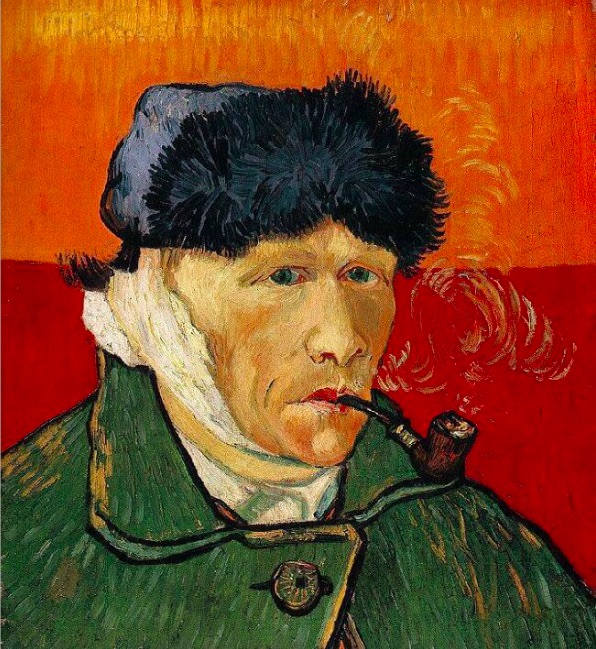
It is part of the creative process for artistic storytellers to apply a variety of methodologies and to be suspicious of “yes/no” answers to questions that are too complicated for the “yes/no” binary. Imagine asking Van Gogh if yellow is the most important color. Any “clear” answer distracts the aspiring painter from learning that yellow’s importance (like all colors) changes depending on its proximity and relationship to other colors. A tiny speck of yellow on an otherwise dark canvas can be more meaningful than a canvas completely covered with the same yellow. Whatever clear answers you have adopted to guide your storytelling, it’s important to remember that there are lots of good answers and more than one good definition. Single definitions limit your stories to the constraints of that source’s point of view. Recruiting definitions of story from psychology, business, behavioral science, marketing, public speaking, anthropology, the liberal arts, and mythology are bound to improve the artistry of a storyteller, as well as mitigate the risk of blind spots.
Excerpt from Chapter 11, 3rd ed. of The Story Factor (2019) AUDIBLE VERSION HERE
Yes!
Intent makes a difference in how the tool is used. And even without malevolent intent, harm can occur anyway.
The focus on short-term, single-issue narratives is less about storytelling than it is about warfare to obtain power over the thoughts and actions of others. Thomas Jefferson once said, “I have sworn on the altar of God eternal hostility against every form of tyranny over the mind of man.”
It seems to me that you are echoing the concept that stories can be used to impose tyranny or can be used to provide eternal light on the human condition. And the timelessness and/or universality of a story is a good indicator of which.
I’m writing about war narratives right now. Swearing “eternal hostility” (thanks for this quote BTW!) has a downside during peacetime. I think war narratives need to exist maybe – but not as the primary narrative for living one’s life. The war narrative for instance encourages us to view Covid-19 as an “enemy,” or as nature’s “payback” or “revenge” anthropomorphizing a biological deviation. This frame of “war on the virus” may seem useful, even appropriate but it doesn’t reveal the true nature of the thing. A more female narrative of the healer (no enemy) brings different ideas to the forefront. What narrative are you using to frame Covid-19?
Interesting. I thought of it more as an opposition to those who would impose tyranny on others. Not necessarily war, but I get the gist of your interpretation.
I like Michael Chricton’s observation in his book, Rising Sun. In America when we have a problem, we fix the blame. In Japan when there is a problem, we fix the problem.
I like your concept of the healer approach to looking at COVID-19. My take is on helping others deal with the risk (to the extent we know it).
I have never looked at COVID-19 as an enemy to be defeated. By technical training, I looked at it as one of many risks we all face every day albeit a new version of one. In facing risks, we have to deal with many factors. Cost, benefits, probabilities, things within our direct control, things outside our control, personal risk tolerance, the potential impact of our actions on others, etc. It is a hard nut to crack. However, due to that experience, I am able to compare relative effectiveness and/or necessities for action for this risk with others we already had before COVID-19 existed and continue to have (flu, opioid addiction, alcohol-related car deaths, cigarette smoking-related death, etc.). The inconsistencies are staggering, but not unexpected to me. Adding uncertainty to the mix makes it even harder for most people to deal with an issue without the unintended consequences of fear-based thinking.
There was a great paper on risk perception by Chauncey Starr a few decades ago where he took actual US death statistics and asked different groups of people to rank them from highest to lowest risk. The differences between actual and perceived risks were startling.
As with many new things, it takes time for enough data and experience to accumulate for society to come to terms with such an issue. Like so many other issues, a lot depends on whose ox is getting gored. Freedom and responsibility in society are a matched set and are inseparable. But they are often messy things full of real or apparent contradictions. So I try to make lemonade from lemons, not champagne.
What a great metaphor to say that a single story can mislead as much as asking if yellow is the most important color. I see this as brilliant — rays of yellow streaming from a white center. Or is it a yellow center????
Having fun.
I love Van Gogh – his story, his art, his outsider status! He is a muse to me. Anyway, I’ve been noticing how many corporate crafted stories are designed to make correlations seem like cause/effect. That’s another pet peeve of mine. I hope you enjoy today’s post too.