Annette Simmons

  • About
    • About Annette
    • Annette in Action
  • Books
    • Territorial Games
    • A Safe Place for Dangerous Truths
    • The Story Factor
    • Whoever Tells the Best Story Wins
  • Services
  • The Six Kinds of Stories
  • Storytelling 101
    • Blog
    • Q & A
    • Metaphor Maps
  • Clients
  • Contact

March 6, 2019 by Annette Simmons 1 Comment

Ten Games #9: The Shunning Game
Ten Games #9: The Shunning Game

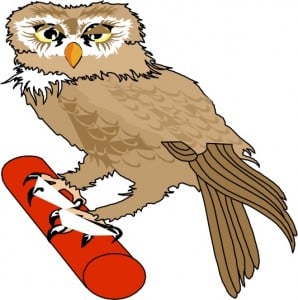
The unblinking stare of someone who acts like you don't exist

The unblinking stare of someone who acts like you don’t exist.

Any time there were meetings called at the strategy level, he would ‘inadvertently’ not contact this person… a number of meetings were scheduled at the exact same time as this particular executive’s staff meetings.”

“There was a lot of whispering and things going on. I’d walk back there to hand someone something and, all of a sudden, the conversation would completely stop and the atmosphere would get very tense.”

“His response when I would ask him questions was to say, ‘I’m working with so-and-so on that – what do you need to know for?’… and I’m his MANAGER!”

Technically all ten games are tactics of exclusion. However, the Shunning Game packs a psychological punch that damages a victim’s self-regard and destabilizes their equilibrium. There is a reason the Amish use shunning to reject members who question Amish beliefs. It works.  For any group dedicated to controlling perceptions there is plenty of new technology that automates shunning, blocks access, and disables the stories of individuals who don’t fit some preferred narrative.

Don’t get me wrong. We are talking about two sides to a paradox here. On one side, any individual with a big collaborative vision needs a strategy for ignoring critical voices that mean harm.  Caring too much about the voices of those who do not share our values is a recipe for failure.  Those of us who value collaboration and empathy need a “thick skin” to reduce our sensitivity to rejection and mockery  – but go too far and thick skin becomes routine insensitivity and a counter-productive lack of empathy.  It suppresses moral qualms about hoarding resources or refusing safe harbor to the less fortunate who end up labeled “out-group.”

Shunning is not always intentional. Privileged people often don’t even know they shun less privileged voices.  They treat dissenting voices like bothersome gnats dehumanizing these voices with metaphorical bug spray. Deliberate shunners on the other hand, actively set up gatekeepers, block entry, and rig communication pipelines.

Shunning feels personal to the victim, but not the perpetrator. In the worst cases the shunning game translates to bullying, mockery, public humiliation, systematic exclusion, and cruelty. New and supposedly impersonal “efficiencies” that dehumanize communication, treat humans like numbers, or block the voices of dissent deliver a personal experience of shunning that creates a viscerally powerful personal impact. Victims of shunning either shut down or lose their ability to think straight.

The human body interprets social isolation as dangerous to our physical survival.  The body actually treats isolation like a mortal threat: distorting the immune system, increasing inflammation, and mortality rates.  See, we crave human contact for evolutionary reasons.  Humans need to belong to a collective in order to survive.

Almost everyone has suffered the impact of a personal rejection. Perhaps you enthusiastically reached out to engage, collaborate, or offer the gift of your attention – and your presence was overtly or covertly unwelcomed, unrecognized or even mocked. It hurts enough to fuel a wasteful kind of anger that is vindictive – not to mention prompting hours of time spent coming up with a perfect come back (guilty) that will never be delivered.

Like most paradoxes the best solutions are found between the extremes.  If you are being shunned, seek out regular connections with those who share your ideals.  Recognize that most shunning is a defensive ploy rather than a personal rejection. If we let shunning drive us crazy it steals our energy. It is much better to stay sane and minimize the impact of shunning. Reclaim your time to think strategically about how to best regain your place at the table.

And finally, contemplate the idea that the person shunning you might think you started it. If they felt ignored first, the game was on. Test the tactic of asking their perspective, apologizing, and reconnecting.  You will find this method works far more often than you expect. Your ego won’t like it, but this tactic is actually a minor risk. Over the twenty years since Territorial Games was released I’ve heard countless stories from people who successfully set aside old grievances and reclaimed a relationship that ended up better than the original relationship before it was broken. Hemingway was right, we often end up stronger at the broken places.


 

Filed Under: Big T Truths, Ten Territorial Games, Uncategorized Tagged With: Annette Simmons, Big T Truth, communication, power, Territorial Games, Whoever Tells the Best Story Wins

December 13, 2018 by Annette Simmons 3 Comments

Ten Games People Play to Control Truth (7)

  1. Invisible Walls Game
"Come on in" said the spider to the fly.

“Come on in” said the spider to the fly.

“He would use the bureaucracy. He would tie things up in bureaucracy. He knew how to make moves and grab what he wanted and then tie it up so you couldn’t get it back.  He would use the system…He would mislead people into thinking that he was being cooperative while he was doing this other stuff behind the scenes. He always put on the face of a very cooperative person, but he was a back stabber.”

The Invisible Walls Game is a broad catch-all bucket of highly creative yet secret (well…deniable) ways to stop the progress of an idea while pretending to support that idea in public.  One subject reported that a game player agreed to share information and then buried the needed information within a mountain of data and printouts.

“[They] completely disallowed any useful information to come out for me to take back and use as a program. The people in that meeting , therefore, accomplished not allowing  the program to be started.”

Of course, not all walls are inherently bad.  Good fences make good neighbors.  A “wall” is not a game until a group decides they no longer need/want to be a good neighbor.

One Big T Truth about being human is that, to survive, we must balance the paradoxical benefits of connections and protections.  Too much emphasis on protection erodes connections. Too few connections and we cannot solve problems that require collaborative effort.  Every decision to protect has the potential to erode a connection and vice versa.

Twenty years later, the word “bureaucracy” in the quote above can also describe new technology-run administration systems (new forms of bureaucracy) with built in walls that prevent unauthorized acts of connection/generosity before they can happen. For instance in healthcare, systems increasingly redefine face-to-face interactions as unnecessary and thus avoidable expenses. Kiosk check ins, website based communication and automated telephone systems effectively wall off any chance the providers I need will have to waste time on a healing smile, a shared  joke, or an expression of empathetic connection.   Some territorial game players are even proud of how these walls keep resources out of the reach of anyone outside their circle of moral concern.

Everyone knows that some walls are good, even vital, but the territorial game of Invisible Walls (not so invisible lately) specifically describes behaviors of a core group that hoards resources needed for collective actions. If it’s not a game (legit protection) it isn’t an invisible wall.

In the 3rded. of The Story Factor (Fall 2019) there will be more about how individuals, groups and institutions use stories to define who is and is not within their “circle of moral concern.”  Shrinking circles mean fewer connections.  And when the desire to protect causes us to neglect the care and feeding of vital connections required to solve problems too big for our tribe alone– we are playing games with our future.

Filed Under: Big T Truths, Uncategorized Tagged With: Annette Simmons, Big T Truth, business storytelling, communication, Territorial Games, Whoever Tells the Best Story Wins

November 6, 2018 by Annette Simmons 8 Comments

Ten Games People Play to Control Truth (4 of 10)

  1. Camouflage Game (Wild Goose Chase)

wildgoodchase

The new forms of this game have the potential to twist truth in ways that kill ideas that matter far more than just killing the research project described in the quote below:

“Hal was there only as a sophisticated untracker in groups.  Untrackers get you going down the primrose path…you feel comfortable going…the whole way through.  In order to avoid implementation of my [research] idea, Hal said it sounded great but ‘we need…to get the…clinical investigation committee to approve the scientific merit.’ And so on and so forth….What he knew [was] that if you have a bunch of fairly bright people…you can make it sound plausible…. what he said was absolutely right on target, but the intent…was not scientific merit. [It was to block the research.]

The term “untracker” is an excellent way to define a camouflage game player.  This game is a common slapstick comedy routine. The Three Stooges played it all the time. One of them would point and yell, “Look over there!” and when the target looked in that direction the “untracker” could steal whatever he wanted while they weren’t looking. You may have played it yourself without malicious intent.  It’s what siblings do to get the last cookie.  But when the stakes are high, involving difficult truths, it’s not funny.

“It’s the wild goose chase. If they send you off on enough of them, you won’t think the thing to be hunted is in their territory. It appears so credible…’If I can get you away from my territory then I win.’”

From the original research in 1997, it was clear that most untrackers hid their misdirection in the camouflage of support: just one more additional step, an opportunity we should wait for, adding one more expert.  Sometimes the tactic is to get a group to bite off way more than they can chew so they choke on their own good intentions before their program has a chance to invade protected territory.  Frequently it works so well people really believe the game player’s insistent claims of positive intent.

Capitalizing on someone’s insecurity doubles the game player’s ability to create confusion. The goal is for emotions to hijack the rational mind. Calling attention to someone’s embarrassing past, a mistake, or asking in the middle of their presentation “what’s that brown thing hanging out of your nose?” is enough to steal momentum or stop a speaker dead in her tracks.  The game player almost always pretends they are trying to help. In particular, to help us avoid some perceived disaster they intend to illustrate in vivid detail. Because the fastest way to misdirect attention is to find a threat and supersize it.

“So it ranged from discounting to actually creating perceptions of threats.  A new program was positioned to be potentially dangerous to the welfare of the company in order to keep it from effecting the way a group of managers liked to do business.”

When game players point out multiple threats and escalate perceptions of dire consequences they can make a group so dizzy with confusion the group is much more likely to defer to an authority (usually the game player) to save them.  This game incorporates the art of illusion – make the threat seem big enough and scary enough and no one has time to think or to do the hard thing.

Like all of the games, the Camouflage Game works because people participate.  When we look “over there” and stop paying attention to what we know is true, we are the ones who make the game work. And the most susceptible groups are always those of us with tough dilemmas we can avoid indefinately every time we agree to “Look over there!” Rather than making hard decisions and making the painful sacrifices the situation demands we opt for rubber necking someone else’s disaster. I suspect this hasn’t changed.

Filed Under: Annette's Blog, Big T Truths Tagged With: Annette Simmons, Big T Truth, communication, narrative, Territorial Games, true stories, Whoever Tells the Best Story Wins

October 23, 2018 by Annette Simmons 9 Comments

Ten Games People Play to Control Truth (1)

People seem to be applying the same ten games from Territorial Games (1997) to control narratives and thus control our perceptions of what is/isn’t true.  For the next ten weeks I’ll post about each of these ten games one at a time.

But first let me give a bit of background on the research. It all started with the metaphor, “turf war.” Everyone knew what “turf war” meant, but when I asked for stories every description just contained more metaphors (back stabber, empire builder, brown noser, etc). I wanted to know what actually happened, the behaviors, and the impact at a granular level.  SO, I asked people to tell me stories about “a time when I witnessed a turf war.” The metaphors started to translate to specific situations that eventually fell into ten buckets of behaviors.

Marking territory is quite common.

Marking territory is quite common.

What is a territorial game? What is territory?

In the late ‘90s we already had very few tangible kinds of territory to fight over except maybe office space (remember private office space?) The games were primarily used to control information, relationships, and status/popularity. Controlling these three intangible factors meant players could monopolize gateways to money, power, and more tangible goodies.  Today, it seems these ten territorial games have exponential potential to control global perceptions of truth.  Any storyteller determined to control “the” narrative has stopped seeking mutual truths in favor of a single story.

Today, these games are even less visible because technology hides games so they are much harder to name, resist or question. So many messages are shaped and promoted by entities seeking to game the truth, we are all either confused or escape into fundamentalism.  Personally I can’t even conceptualize solutions until I can examine which games perpetuate the biggest problems. Over the next few weeks I’ll do my best to translate old descriptions of each of the ten territorial games to current examples so we can decide if we think this is a useful way to describe the most common games people use to distort “dangerous” truths.

  1. Occupation Game:

The image that best evokes the idea of the occupation game is an dog marking his territory.  Just as often the Occupation Game is played like musical chairs. The game is all about getting there first, in as big a way as possible to occupy control of who/how/why people get information, access, or status. In musical chairs the player with the biggest butt who is most willing to knock someone else off a chair usually wins.  Sending an biting email with our version of the truth while copying far more recipients than necessary is a form of the occupation game. Occupation game players also withhold information (sit on it) if it they feel it might benefit their percieved “enemy” even in situations where sharing the information is the best way to achieve the organization’s mission.

Thank goodness I did this research when there were more tangible examples. Most of these behaviors are so far behind the scenes, written in code, and so complex we need metaphors to discuss them. SEO software has automated the occupation game. Which is fine. People have been playing these games since cave men protected good hunting grounds. Only… look at the two examples below of physical games of occupation and ask yourself if the problems caused by these games might also translate to current problems discerning what is/isn’t true.

“So there would be cases where people wanted to get something done and regardless of any of the [safety] procedures or who was accountable, they would just get it done – they’d go ahead and do it.  They would ignore the procedures and then justify it on the basis of this is what you’ve got to do to keep the plant online…To keep the procedure people out of their hair they were very secretive in many cases.  In some cases, they would rewrite procedures on their own.”

                                             Safety Engineer of a Nuclear Plant

In the name of speed and efficiency we prefer to ask forgiveness rather than permission. But if a nuclear plant needs safety procedures surely we also need safety procedures to protect “Truth.”  In the tangible world safety doesn’t happen without effort, so it sure as heck isn’t going to happen without effort/procedures in the intangible world to avoid nuclear options and scorched earth solutions.

In my research most people did not connect the long range implications of these games or even realize that they were playing a game.  Territorial games are fear based actions that hijack the limbic system with knee-jerk fear responses. The central aspect to understanding and overcoming territorial games is to understand that no matter who you ask, “who started it?” no one will ever answer: “me.”

Therefore solutions that seek to place blame only make things worse.

For the most part these games are not malicious. We play these games because we are humans acting like humans.  The example above risked a nuclear disaster.  Occupation games that populate (occupy) all of our available attention with half truths risk similar disasters.

“We had three different departments on the same physical site.  When a load of scrap came in, you sent a truck and you had to dump it somewhere…The guys were doing whatever they could to sort of define their boundaries and dump piles of stuff that would keep the other guy from using that space …There would be this stuff sort of creeping into the parking lot…the other funny thing is that the people who did the work couldn’t stand to see the pile get too low. It scared the hell out of them. It was like they liked seeing this big pile of work …they always knew they had a job…[it was] contrary to the financial side, because the best thing we could do was to have no inventory with no money tied up in it.”

If storytellers race to produce as much content as possible across as many channels as possible, I don’t see how we can avoid burying the kind of Big T Truths we must face to keep counterproductive individual goals from sabotaging humanity’s collective goals.


Filed Under: Uncategorized Tagged With: Annette Simmons, business storytelling, communication, Metaphor Map, narrative, occupation game, storytelling, Territorial Games, true stories, Truth

July 3, 2017 by Annette Simmons 3 Comments

Budweiser Storytelling Genius Used for Good

I just watched the new Budweiser commercial for July 4 this year and I think it is genius.  They used story to do good as well as make money. Lately I’ve been disturbed by mechanistic applications of story, but this? This is big picture, risky, embedded with big T Truth and I hope it does what it seems to have been designed to do.

Budweiser invites liberals and conservatives to remember who they are and why they are here, and to have a damn beer fer crissakes. The common good intentions of left and right are symbolized by the conservative cues framing the family of the veteran and his daughter as obviously conservative they add an even heavier handed cues about liberal Hollywood to characterize Adam Driver.  Then they dissolve their different POVs with the shared tragedy of both men being wounded before deployment and dealing with pain and survivors guilt.

I try to imagine… what was the dialogue in the conference room when they made the decision

“Should we do it?”

“It’s risky.”

“You are f—ing idealists.”

“It tested well.”

“Screw it, we’re going to do it.”

Of course they tested this ad. I admit preliminary the comments I’ve read are accusatorial jabs from die hard haters from both sides. But I hope that over time, the idea of just sitting down and having a beer comparing what we care about most…will bring some sanity to the current political arena.

If not, I’ll just drink a Bud and try not to worry about it.

Filed Under: Uncategorized Tagged With: Annette Simmons, BUDWEISER, business storytelling, communication, engagement, JULY 4, narrative, story, The Story Factor, Whoever Tells the Best Story Wins

October 21, 2013 by admin Leave a Comment

Just do it! Iteration or "playing it by ear" is a great way to learn storytelling and find great content fast

I recently posted that Coke shifted half their marketing content research budget from qualitative research to iterations.
One of my friends responded:  “So?”
Okay, fine. I went all geeky.  I will try to redeem myself with an example of how that works. [Read more…]

Filed Under: Q & A Tagged With: Annette Simmons, business storytelling, communication, group process, influence, inspiration, iteration, iterative process, leadership, learning, meetings, narrative, organizational barriers, staff meeting, story, storytelling, true stories

  • « Previous Page
  • 1
  • 2
  • 3

Storytelling 101

I have a confession to make...

Storyteller’s Confession: My Secret Mission

October 5, 2021 8:59 am

I’ve been trying to infiltrate the halls of power for decades. My secret mission is to increase the diversity of thought by teaching those without a voice how to tell their stories and by teaching leaders how to find and retell stories that broaden everyone’s understanding. Read more →

Posted in: Uncategorized

Stories with a Moral Blueprint – part 8 of 8

May 14, 2020 8:43 am

  We need a Magic School for Storytellers Thirty years before J. K. Rowling created Harry Potter, Ursula Le Guin’s... Read more →

Posted in: Annette's Blog, Big T Truths

Stories with a Moral Blueprint – part 7 of 8

May 13, 2020 7:37 am

  Truth in Storytelling When I wrote the first edition of The Story Factor twenty years ago, I began with the... Read more →

Posted in: Uncategorized

Stories with a Moral Blueprint – part 6 of 8

May 12, 2020 6:48 am

The Moral Dilemmas of a Lion, a Scarecrow, and a Tin Man Frank Baum’s original introduction to The Wizard of... Read more →

Posted in: Annette's Blog, Big T Truths

Stories with a Moral Blueprint – part 5 of 8

May 11, 2020 8:38 am

  Blueprints for Building Trust Learning to drive was fun until I hit the mailbox. I burst into tears, blaming... Read more →

Posted in: Annette's Blog, Big T Truths

Subscribe to Annette's Blog via Email

Enter your email address to subscribe to this blog and receive notifications of new posts by email.

Like us on Facebook:

Like us on Facebook:

Contact Us

Group Process Consulting, LLC
phone: 318.861.9220
email: annette@annettesimmons.com
facebook: www.facebook.com/thestoryfactor

  • Storyteller’s Confession: My Secret Mission

    A Storyteller’s Confession I’ve been trying to infiltrate the halls of power for decades. My … Continue Reading…

    Storyteller’s Confession: My Secret Mission
  • Stories with a Moral Blueprint – part 8 of 8

      We need a Magic School for Storytellers Thirty years before J. K. Rowling created Harry … Continue Reading…

    Stories with a Moral Blueprint – part 8 of 8
  • Stories with a Moral Blueprint – part 7 of 8

      Truth in Storytelling When I wrote the first edition of The Story Factor twenty years … Continue Reading…

    Stories with a Moral Blueprint – part 7 of 8
© Copyright 2021, Group Process Consulting, All Rights Reserved.
Based on the ·Executive Pro Theme/Genesis Framework by StudioPress · Built using WordPress · Log in