Annette Simmons

  • About
    • About Annette
    • Annette in Action
  • Books
    • Territorial Games
    • A Safe Place for Dangerous Truths
    • The Story Factor
    • Whoever Tells the Best Story Wins
  • Services
  • The Six Kinds of Stories
  • Storytelling 101
    • Blog
    • Q & A
    • Metaphor Maps
  • Clients
  • Contact

May 14, 2020 by Annette Simmons 1 Comment

Stories with a Moral Blueprint – part 8 of 8

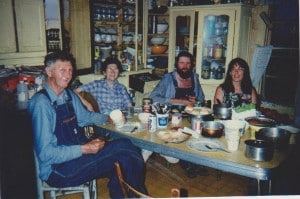
Ray, Rosa, Ted and me sharing dinner and stories.

Ray, Rosa, Ted Hicks and me sharing dinner and stories.


We need a Magic School for Storytellers

Thirty years before J. K. Rowling created Harry Potter, Ursula Le Guin’s Earthsea series imagined a magic school that taught apprentice sorcerers how to avoid abusing the power of magic. Le Guin points out early in the series that “even to light a candle is to cast a shadow.” Her point is well taken. While the vast majority of storytellers have good intentions (lighting candles), good intentions aren’t enough when practicing the powerful magic of storytelling because the potential pitfalls (shadows) are many. Master magicians (like master storytellers) need guidelines to avoid abusing their power. Here are a few guidelines borrowed from magic school:

Know your own heart and what feels meaningful to you.

Stories without heart don’t travel very far. Le Guin’s magic school refused entry to any student who could not give his true name. Certainly the magic of one who knows his own name and his own heart is more powerful than one who isn’t sure who he is or what he stands for. In Le Guin’s first Earthsea novel, a young wizard is showing off when he recklessly summons his own shadow, which then seeks to destroy him. By the end of the book the young wizard learns that he can never escape his shadow, so he merges with it to keep it safely in check. We don’t have to be perfect, but we do need to understand our weaknesses. It is impossible to art your heart into your storytelling if you don’t know your own heart.

Prove trustworthiness by demonstrating restraint.

Just because you can do something doesn’t mean you should. Storytellers, like sorcerers, create illusions, transform normal people into heroes (or enemies), and mold perceptions in ways that imitate the magician’s sleight of hand. J. K. Rowling’s character Dumbledore puts it this way: “It is our choices that show who we truly are, far more than our abilities.” His advice applies equally to storytelling. Rowling’s version of magic school is not only interested in teaching students how to do magic, it is dedicated to teaching budding wizards how to avoid (and how difficult it is to avoid) doing magic that causes harm. The success of the Harry Potter books proves just how engaging it is to collaborate for moral reasons. In a commercial environment where storytellers are only evaluated on how quickly they stack up wins, it takes courage to exercise restraint and leave some opportunities untapped. Yet without restraint there is no evidence of trustworthiness. Only a story of what you could do, but choose not to, can prove you are trustworthy.

Tell stories that validate both sides.

There are things that beginners can’t know. It took me twenty years to realize the danger of characterizing storytelling as a tool rather than a resource. Telling a story that connects two adversarial sides and helps them to start building bridges and finding meaning in collaboration is the highest art of the storyteller. Demonizing others in order to win at all costs, silence the weak, or smooth the abuses of the powerful is much easier, but it lacks wisdom, requires very little skill, and strips your practice of meaning. Build your talent by stretching yourself to find stories in which both sides win. Help adversaries see a bigger picture so they can discover solutions that are invisible when their lens is narrow.

The famous Appalachian storyteller Ray Hicks once told me that during a particularly difficult time in his youth he stood near a cliff and the voice of the devil “come upon” him. “It was a fast, urgin’ voice” trying to persuade him to escape his troubles. He stood in the mountains on an “outcrop o’ rock” contemplating a jump as the “devil’s voice” told him to just “get it done, go on and get it over.” Ray looked me in the eye and said, “But then I heerd the Lo-r-r-rd’s voice, and it was a calm peaceful voice—not like that fast urgin devil voice—it tole me, Ra-a-ay, you gonna be just f-i-i-ine. Ain’t nothing that bad. Things is gonna turn around.” Ray then told me my job was to go out and “up the numbers” listening to that calm voice.

So from Ray, to me, to you: “We need to be listenin’ more to that calm peaceful voice ’cause that’s the voice that’s gonna get us through.” That’s the voice that has the magic in it.

Picture3

Excerpt from Chapter 12, 3rd ed. of The Story Factor (2019)  AUDIBLE VERSION HERE
Filed Under: Annette's Blog, Big T Truths Tagged With: Annette Simmons, business storytelling, communication, engagement, influence, Magic School for Storytellers, narrative, Ray Hicks, Storytelling Moral Survival System, true stories, Whoever Tells the Best Story Wins

May 12, 2020 by Annette Simmons Leave a Comment

Stories with a Moral Blueprint – part 6 of 8

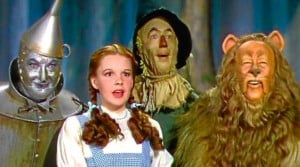
oz

The Moral Dilemmas of a Lion, a Scarecrow, and a Tin Man

Frank Baum’s original introduction to The Wizard of Oz, written in 1900, made it clear that he felt children no longer needed the stereotypical “old-time fairy tale” that “may now be classed as ‘historical’ in the children’s library.” Baum claimed the time had come for “newer ‘wonder tales’ in which…the wonderment and joy are retained and the heartaches and nightmares are left out.” Still traumatized by watching the movie version as a child, I wanted to shout, “Flying monkeys!!”

In spite of Baum’s promise to throw out the bad and keep the good, he needed those scary flying monkeys and evil witches in order to deliver the promised wonderment and joy. The moral dilemmas in this story survived the transition into the movie version intact, even if Hollywood changed Dorothy’s silver slippers into ruby slippers and reinvented the good witch from a “face…covered with wrinkles, her hair…nearly white…[who]…walked rather stiffly” into glamorous Glinda, the Good Witch of the North.

Note that this hundred-year-old story has been farmed for leadership lessons for decades, including a self-published book on leadership lessons according to Toto, Dorothy’s dog. That’s because the The Wizard of Oz is a multi-moral story that illustrates paradoxical truths such as learning to appreciate home by leaving home, that what you seek externally is already inside, that courage doesn’t exist without fear, and risking self to save others can restore ones sense of self.

We seem equipped with emotions specifically designed to override extreme self-interest in favor of love and connections. If there is an evolutionary reason that humans living isolated lives suffer loneliness, then stories celebrate a wide range of feel-good solutions. Most offer blueprints that show how reaching out with love, making connections, and acts of generosity can be much more rewarding than winning as much as we can, as often as we can. The best stories teach us how to balance dueling desires for paradoxical goals like love and power rather than risk the danger of choosing only one over the other (a paradox that spreadsheets don’t reflect).

We learn how to determine whether it is time to connect or disconnect, to be firm or flexible, to tend relationships or go it alone, to use or set aside emotions, to reference past, present, or future, to exert control or invite participation. It takes the virtual reality of plots and characters to successfully toggle back and forth between technically contradictory yet complementary approaches. We find meaning not in choosing one over the other, but in embracing the paradox that we thrive by giving and receiving, by following and leading, by creating rules with exceptions that tend to relationships, and by both revealing and hiding our vulnerabilities.

Excerpt from Chapter 12, 3rd ed. of The Story Factor (2019)  AUDIBLE VERSION HERE
Filed Under: Annette's Blog, Big T Truths Tagged With: Annette Simmons, Big T Truth, business storytelling, communication, engagement, influence, inspiration, leadership, Moral Dilemmas, Stories with a Moral Blueprint, storytelling, Storytelling Moral Survival System, The Story Factor, Whoever Tells the Best Story Wins, Wizard of Oz

May 7, 2020 by Annette Simmons 2 Comments

Stories with a Moral Blueprint – part 3 of 8

Trust is the story of not doing what you could get away with, because you care about someone other than yourself.

Trust is the story of not doing what you could get away with, because you care about someone other than yourself.


Trustworthiness as Competitive Advantage

If morals need stories to thrive, it might also be true that stories need morals to thrive. Technically the stories you tell do not require moral intentions. Yet practical experience teaches us that few of the stories we cherish could possibly be classified as amoral. A story may not portray your preferred morals, but all stories, at least the interesting ones, embed moral lessons by correlating certain behaviors with consequences. It is hard to tell stories that reward faith in positive consequences like freedom, justice, and trust without exposing the truth that economic reasoning will never be equipped to achieve these kinds of subjective goals.

Few, if any, Hollywood blockbusters could demand our attention without portraying some kind of moral conflict between good and evil. Marvel’s 2018 movie Black Panther reinforces a similar moral lesson to the one Seuss teaches in The Cat in the Hat when the king decides to risk the danger of revealing his kingdom’s extravagant resources in order to clean up global messes. Disaster movies present one moral dilemma after another. Even the stories about characters who don’t know how to clean up their own messes (Thank you, Quentin Tarantino) deliver a moral lesson about the consequences of leaving messes for others.

Brian Boyd makes a strong case that storytelling is a survival mechanism in his book On the Origin of Stories, stating that humans have a “natural appetite” for information, “especially for pattern, and information that falls into meaningful arrays from which we can make rich inferences.” Stories pass along behavioral information that is just as important to our survival as the information passed along in our DNA.

Stories that stress mutual success might be more important now than they ever have been. The suicide rate for Americans is up 30 percent since 2000. Globally, suicide rates are up 60 percent over the past fifty years. According to the most recent Edelman Trust Barometer, the United States shows a “shattering loss of trust” that is the “steepest most dramatic decline in trust ever measured since the barometer began in 2000.” Over two thirds of the markets measured by Edelman Trust Barometer indicate trust levels below 50 percent.

There has to be a reason that “biology turns loneliness into a disease,” according to UCLA professor Steve Cole, who studies the effects of loneliness at the molecular level. The physical costs of isolation for adults is said to be a 25 percent increase in mortality that translates to AARP’s estimate of $6.7 billion annually in extra Medicare expenditures. “Me first” stories aren’t inherently bad, but a tsunami of “me first” stories leads to an erosion of trust when “me first” stories begin to replace “all for one, one for all” stories.

Social media systems designed to siphon off social trust to achieve short-term economic goals surely diminish the trust left over to achieve noneconomic goals, like sustaining faith in our fellow humans. The decision to trust corporate platforms with the care and maintenance of our social connections have revealed the dangers of this misplaced trust. We don’t trust friends who tell our secrets, and yet we temporarily trusted commercial interests that not only told but sold our secrets. Trust in Facebook dropped from 79 percent to 27 percent after customers learned the social platform ignored reports that Cambridge Analytica did not observe consent requirements before harvesting and exploiting the personal data of millions so they could pursue questionable political agendas using coercive stories.

It is hard for us to call out this kind of duplicity when we are overwhelmed with stories that drive us to seek speed rather than slow down long enough to reflect. When a corporation only rewards fast, measurable returns, it unintentionally marginalizes employees’ moral concerns and trains employees to “value growth above trust.” Like billionaire CEO Marc Benioff of Salesforce says, “A company like ours can’t be successful in an unsuccessful economy or in an unsuccessful environment or where the school system doesn’t work.” Benioff blends service work into the company culture so real-life experiences of showing and earning trust ensure employees are better equipped to identify the times when growth means losing trust. It’s a difficult choice to make, but almost always better in the long run to preserve trust by avoiding the option of exploiting “opportunities” that sacrifice trust you will need later on.


Excerpt from Chapter 12, 3rd ed. of The Story Factor (2019)  AUDIBLE VERSION HERE
Filed Under: Annette's Blog, Big T Truths Tagged With: Annette Simmons, Big T Truth, bio, business storytelling, communication, engagement, metaphor, narrative, Stories with a Moral Blueprint, storytelling, Storytelling Moral Survival System, The Story Factor, Whoever Tells the Best Story Wins

March 16, 2020 by Annette Simmons Leave a Comment

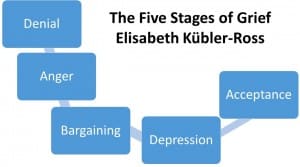
COVID-19: The Stages Before Acceptance

Where are you in your journey of acceptance?

Where are you in your journey of acceptance of the COVID-19?

I had taken an early morning flight from Sydney to Melbourne and while I don’t really like orange juice I was bored. So I peeled back the silver foil and drank from the plastic cup on my tray. Later that day a radio announcer caught my attention with a public health announcement that “all travelers on flight #xxx from Sydney to Melbourne who drank any of the orange juice offered on the airplane should call a doctor immediately.”  That was three decades ago. But this COVID-19 pandemic reminds me of the feelings I felt that day. At first I was in denial. I don’t trust panic, and I don’t trust people who tell me to panic. (Now I can see it was prudence not panic.) I did not call a doctor and adopted a wait and see attitude. Then, when I couldn’t concentrate on my work I got angry. Poor me, I was minding my own business but NO…people who made mistakes (or worse) had impacted my life and now I faced the burden of going to see a doctor. It was the next stage, bargaining, when I finally did call a doctor. The second the doctor insisted on coming straight to my apartment to give me a shot, I moved on to depression. All this time I was treating this danger as if it were a made up tragedy. But dammit, it was real. To this date I don’t know what was in that orange juice. I do know that even with the doctor’s injection I spent two days in a special hell of barfing and diarrhea. The emotions I felt in that one day are very similar to my journey of acceptance regarding COVID-19.  I share this story, because I think my experience may have led me to acceptance just a bit faster.  Every minute, every hour, we spend in denial, anger, bargaining, or depression puts people we love at risk.  If you are still stuck in one of these stages…I highly recommend acceptance. Stay home. Stop bargaining to give yourself permission to attend one more gathering.  It took me six hours to call a doctor.  If I’d reached acceptance earlier, I might have saved myself some pain. I think the same goes for COVID-19.

Filed Under: Uncategorized Tagged With: Annette Simmons, communication, COVID-19, engagement, five stages of grief, story

November 12, 2018 by Annette Simmons 6 Comments

Ten Games People Play to Control Truth (5)


  1. Information Manipulation Game
Weasel words distort truth.

Weasel words distort truth.

Tweak the numbers and you tweak the decision.  Edit video and you edit context. Control the narrative and you control what information seems relevant. Truth is the first casualty whenever we assume that everyone manipulates information so we have to as well….since “that’s how the game is played.”

“Their response [when tweaking numbers] is that they’re doing what the system allows them to do. They feel, ‘I’m within the rules. I’m applying the rules to my benefit but I’m still playing within the rules.’”

When we characterize work, government, or other personal interactions as a competitive game we invoke game “rules.”  As long as politics is considered a battleground, war rules apply and truth is the first casualty.  Why not review the rules with Sun Tzu’s Art of War? The battle metaphor is a disaster for truth seekers. In a war/game, withholding information, promoting disinformation, suprise attack and active misdirection are not just acceptable but honored as good tactics. Whenever I facilitate high-level budget meetings, I always ask the question – how do you calculate your budget requests? Eventually I hear, “we figure how much we need and double it, or add 30%,” or whatever distortion each group’s norms justify. When I ask:

“How can we possibly make good decisions if our norm is to lie to each other?”

…it is usually the first time the group has asked themselves this question. The resulting conversations reveal the obstacles we impose on ourselves every time we characterize a budget meeting as a battle or a game. We play by rules that guarantee to distort our collective understanding of Big T Truths. Truth is the first casualty the minute we unconsciously expect there will be winners and losers, because it means that helping the other side tell the truth is the fastest track to becoming a loser.

Granted our judicial system wouldn’t work if lawyers were asked to collaborate – but there is no reason this adversarial approach should be our primary method for seeking Truth. While there are laws about sharing information in the judicial system, few lawyers call attention to evidence that helps the other side.  An adversarial system for seeking truth incentivizes a battle mentality that rarely assembles various points of view into one big picture.  We limit our truth to the one who wins, rather than the one who has the most integrity, experience, or good intentions.

“Another example is where data can be selectively manipulated.  That’s a strong word for what I’m describing, but I’ve seen instances where selective use of data can basically get you to a different conclusion. They are protecting their own territory. The conclusion they are going for – let’s assume we are looking at a particular feature on a product – it’s a strong desire from one group in the company to have this feature.  Another group…may not feel it’s that important…It becomes a judgment call.  You are adding cost, adding weight. The one that wants the feature will tend to collect data and present data that would enhance the attractiveness of that feature. On the other hand, other people will be tweaking the numbers the other way.”

People (and now, algorithms) that assemble, interpret, format, and relay information into “meaningful” chunks edit out what seems unimportant (from their point of view) in order to feature what is important (from their point of view).

“So you’ve got a subculture that is trying to go for their optimum, which is counter to the big-picture good…What actually happens in the interchange from human to human is that they refuse to look at the big picture.  They tell you flat out in a meeting… I’ve made the request that we look at the big picure and their response back [to me] is that they don’t get measured to do that, not paid to do what. ‘I’m only measured on meeting this objective and that’s what I’m talking to you about.'”

Any “fight” for truth means welcoming truths we dont like as well as the truths we do like.  Denying unpleasant realities doesn’t make them untrue, it only distorts our ability to find solutions.  That’s what I meant when I titled my last book “Whoever Tells the Best Story Wins.” I didn’t mean to suggest it was a guide to crush someone else’s truth with a truth you like better.  I thought it would be obvious to those who study storytelling that the real wins are only found in Big T Truths.  I guess I need to keep working on that.

Filed Under: Uncategorized Tagged With: Annette Simmons, Big T Truth, engagement, interview techniques narrative, metaphor, storytelling, Territorial Games, true stories, war, Whoever Tells the Best Story Wins

July 3, 2017 by Annette Simmons 3 Comments

Budweiser Storytelling Genius Used for Good

I just watched the new Budweiser commercial for July 4 this year and I think it is genius.  They used story to do good as well as make money. Lately I’ve been disturbed by mechanistic applications of story, but this? This is big picture, risky, embedded with big T Truth and I hope it does what it seems to have been designed to do.

Budweiser invites liberals and conservatives to remember who they are and why they are here, and to have a damn beer fer crissakes. The common good intentions of left and right are symbolized by the conservative cues framing the family of the veteran and his daughter as obviously conservative they add an even heavier handed cues about liberal Hollywood to characterize Adam Driver.  Then they dissolve their different POVs with the shared tragedy of both men being wounded before deployment and dealing with pain and survivors guilt.

I try to imagine… what was the dialogue in the conference room when they made the decision

“Should we do it?”

“It’s risky.”

“You are f—ing idealists.”

“It tested well.”

“Screw it, we’re going to do it.”

Of course they tested this ad. I admit preliminary the comments I’ve read are accusatorial jabs from die hard haters from both sides. But I hope that over time, the idea of just sitting down and having a beer comparing what we care about most…will bring some sanity to the current political arena.

If not, I’ll just drink a Bud and try not to worry about it.

Filed Under: Uncategorized Tagged With: Annette Simmons, BUDWEISER, business storytelling, communication, engagement, JULY 4, narrative, story, The Story Factor, Whoever Tells the Best Story Wins

  • 1
  • 2
  • Next Page »

Storytelling 101

I have a confession to make...

Storyteller’s Confession: My Secret Mission

October 5, 2021 8:59 am

I’ve been trying to infiltrate the halls of power for decades. My secret mission is to increase the diversity of thought by teaching those without a voice how to tell their stories and by teaching leaders how to find and retell stories that broaden everyone’s understanding. Read more →

Posted in: Uncategorized

Stories with a Moral Blueprint – part 8 of 8

May 14, 2020 8:43 am

  We need a Magic School for Storytellers Thirty years before J. K. Rowling created Harry Potter, Ursula Le Guin’s... Read more →

Posted in: Annette's Blog, Big T Truths

Stories with a Moral Blueprint – part 7 of 8

May 13, 2020 7:37 am

  Truth in Storytelling When I wrote the first edition of The Story Factor twenty years ago, I began with the... Read more →

Posted in: Uncategorized

Stories with a Moral Blueprint – part 6 of 8

May 12, 2020 6:48 am

The Moral Dilemmas of a Lion, a Scarecrow, and a Tin Man Frank Baum’s original introduction to The Wizard of... Read more →

Posted in: Annette's Blog, Big T Truths

Stories with a Moral Blueprint – part 5 of 8

May 11, 2020 8:38 am

  Blueprints for Building Trust Learning to drive was fun until I hit the mailbox. I burst into tears, blaming... Read more →

Posted in: Annette's Blog, Big T Truths

Subscribe to Annette's Blog via Email

Enter your email address to subscribe to this blog and receive notifications of new posts by email.

Like us on Facebook:

Like us on Facebook:

Contact Us

Group Process Consulting, LLC
phone: 318.861.9220
email: annette@annettesimmons.com
facebook: www.facebook.com/thestoryfactor

  • Storyteller’s Confession: My Secret Mission

    A Storyteller’s Confession I’ve been trying to infiltrate the halls of power for decades. My … Continue Reading…

    Storyteller’s Confession: My Secret Mission
  • Stories with a Moral Blueprint – part 8 of 8

      We need a Magic School for Storytellers Thirty years before J. K. Rowling created Harry … Continue Reading…

    Stories with a Moral Blueprint – part 8 of 8
  • Stories with a Moral Blueprint – part 7 of 8

      Truth in Storytelling When I wrote the first edition of The Story Factor twenty years … Continue Reading…

    Stories with a Moral Blueprint – part 7 of 8
© Copyright 2021, Group Process Consulting, All Rights Reserved.
Based on the ·Executive Pro Theme/Genesis Framework by StudioPress · Built using WordPress · Log in