Annette Simmons

  • About
    • About Annette
    • Annette in Action
  • Books
    • Territorial Games
    • A Safe Place for Dangerous Truths
    • The Story Factor
    • Whoever Tells the Best Story Wins
  • Services
  • The Six Kinds of Stories
  • Storytelling 101
    • Blog
    • Q & A
    • Metaphor Maps
  • Clients
  • Contact

May 14, 2020 by Annette Simmons 1 Comment

Stories with a Moral Blueprint – part 8 of 8

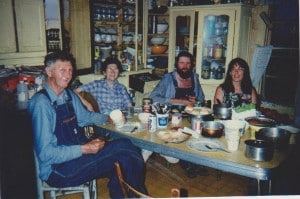
Ray, Rosa, Ted and me sharing dinner and stories.

Ray, Rosa, Ted Hicks and me sharing dinner and stories.


We need a Magic School for Storytellers

Thirty years before J. K. Rowling created Harry Potter, Ursula Le Guin’s Earthsea series imagined a magic school that taught apprentice sorcerers how to avoid abusing the power of magic. Le Guin points out early in the series that “even to light a candle is to cast a shadow.” Her point is well taken. While the vast majority of storytellers have good intentions (lighting candles), good intentions aren’t enough when practicing the powerful magic of storytelling because the potential pitfalls (shadows) are many. Master magicians (like master storytellers) need guidelines to avoid abusing their power. Here are a few guidelines borrowed from magic school:

Know your own heart and what feels meaningful to you.

Stories without heart don’t travel very far. Le Guin’s magic school refused entry to any student who could not give his true name. Certainly the magic of one who knows his own name and his own heart is more powerful than one who isn’t sure who he is or what he stands for. In Le Guin’s first Earthsea novel, a young wizard is showing off when he recklessly summons his own shadow, which then seeks to destroy him. By the end of the book the young wizard learns that he can never escape his shadow, so he merges with it to keep it safely in check. We don’t have to be perfect, but we do need to understand our weaknesses. It is impossible to art your heart into your storytelling if you don’t know your own heart.

Prove trustworthiness by demonstrating restraint.

Just because you can do something doesn’t mean you should. Storytellers, like sorcerers, create illusions, transform normal people into heroes (or enemies), and mold perceptions in ways that imitate the magician’s sleight of hand. J. K. Rowling’s character Dumbledore puts it this way: “It is our choices that show who we truly are, far more than our abilities.” His advice applies equally to storytelling. Rowling’s version of magic school is not only interested in teaching students how to do magic, it is dedicated to teaching budding wizards how to avoid (and how difficult it is to avoid) doing magic that causes harm. The success of the Harry Potter books proves just how engaging it is to collaborate for moral reasons. In a commercial environment where storytellers are only evaluated on how quickly they stack up wins, it takes courage to exercise restraint and leave some opportunities untapped. Yet without restraint there is no evidence of trustworthiness. Only a story of what you could do, but choose not to, can prove you are trustworthy.

Tell stories that validate both sides.

There are things that beginners can’t know. It took me twenty years to realize the danger of characterizing storytelling as a tool rather than a resource. Telling a story that connects two adversarial sides and helps them to start building bridges and finding meaning in collaboration is the highest art of the storyteller. Demonizing others in order to win at all costs, silence the weak, or smooth the abuses of the powerful is much easier, but it lacks wisdom, requires very little skill, and strips your practice of meaning. Build your talent by stretching yourself to find stories in which both sides win. Help adversaries see a bigger picture so they can discover solutions that are invisible when their lens is narrow.

The famous Appalachian storyteller Ray Hicks once told me that during a particularly difficult time in his youth he stood near a cliff and the voice of the devil “come upon” him. “It was a fast, urgin’ voice” trying to persuade him to escape his troubles. He stood in the mountains on an “outcrop o’ rock” contemplating a jump as the “devil’s voice” told him to just “get it done, go on and get it over.” Ray looked me in the eye and said, “But then I heerd the Lo-r-r-rd’s voice, and it was a calm peaceful voice—not like that fast urgin devil voice—it tole me, Ra-a-ay, you gonna be just f-i-i-ine. Ain’t nothing that bad. Things is gonna turn around.” Ray then told me my job was to go out and “up the numbers” listening to that calm voice.

So from Ray, to me, to you: “We need to be listenin’ more to that calm peaceful voice ’cause that’s the voice that’s gonna get us through.” That’s the voice that has the magic in it.

Picture3

Excerpt from Chapter 12, 3rd ed. of The Story Factor (2019)  AUDIBLE VERSION HERE

Filed Under: Annette's Blog, Big T Truths Tagged With: Annette Simmons, business storytelling, communication, engagement, influence, Magic School for Storytellers, narrative, Ray Hicks, Storytelling Moral Survival System, true stories, Whoever Tells the Best Story Wins

April 21, 2020 by Annette Simmons 2 Comments

Storytelling Moral Survival System: Part six

Photo by cjphoto.com

Photo by cjphoto.com

Defining Story as a Significant Emotional Experience

My current teaching definition of story is:

“the narration of a significant emotional experience that feels meaningful to both teller and listener.”

Teaching non-professional storytellers helped me realize that it is much easier for them to find a great story if I ask them to think about a significant emotional experience from real life or existing literary and film stories. I never suggest a beginner try to construct a story from scratch. The best storytelling advice in the world will not help you describe something you have never experienced. Coming from the arts, I favor Tolstoy’s perspective that the role of any art (including story) is to communicate emotion. He wrote that art begins when a person, “with the purpose of communicating to other people a feeling he once experienced, calls it up again within himself and expresses it with certain external signs.” (By external signs he means dance, images, and other arts, including storytelling.) I strongly believe the stories that resonate most with others always reflect experiences of truth and beauty that connect us to what Tolstoy calls the “oneness of life’s joys and sorrows.” In War and Peace, for instance, Tolstoy showcases the kind of extreme experiences that change people forever and how love changes the trajectory of our lives.

Once people learn to mine genuine memories of significant emotional experiences, they learn to recognize stories that ring true and represent the way life actually works, they learn how to avoid inventing stories that misrepresent or mislead. This isn’t new advice. This is the same advice that suggests writers write what they know. Creative storytellers may invent fantastical worlds to illustrate core truths but they don’t try to invent new core truths out of thin air. Unfortunately, some of the popular templates for storytelling don’t always prioritize this.

Excerpt from Chapter 11, 3rd ed. of The Story Factor (2019)  AUDIBLE VERSION HERE

Filed Under: Stories Help, Uncategorized Tagged With: Annette Simmons, business storytelling, communication, definition of storytelling, leadership, significant emotional experience, The Story Factor, true stories, Whoever Tells the Best Story Wins

June 7, 2019 by Annette Simmons 2 Comments

The Story Factor 3rd ed. OCT2019 (new material)

ship
“Ships at a distance have every man’s wish on board.”                          Zora Neale Hurston
From a distance, storytelling also seems to have every man’s wish on board. There is an initial euphoria when you consider that once you learn how to tell stories that alter perceptions, conclusions, and actions you might become captain of all the ships and invent “Get out of jail free” cards for anyone who wants a story of absolution, whether they deserve it or not. Over time, like King Midas, you will discover that getting everything you want inevitably produces unintended consequences. When technology alters moral stories, it changes the meaning and the morals of those stories. King Midas did not anticipate that his golden touch would kill his daughter. In the story, his personal experience of watching the light in her eyes go out carries a sensory impact; we get the message. But when calculated on a spreadsheet, the promise of an infinite return on investment (ROI) after sacrificing just one person can seem like a viable investment strategy. What’s more, people who value utilitarian reasoning now use data distance to create enough emotional distance that they can characterize one person as a “small sacrifice” and therefore a reasonable price to pay. The question is, are we at risk of allowing utilitarian reasoning to guide our storytelling practices? (Excerpt from The Story Factor 3rd ed. Chapter 11 out October 2019 )

Filed Under: Uncategorized Tagged With: Annette Simmons, business storytelling, influence, interview techniques narrative, leadership, true stories, Whoever Tells the Best Story Wins

May 28, 2019 by Annette Simmons 2 Comments

Ten Games #10: Powerful Alliances

Powerful Alliances

It's not what you know but who you know!

It’s not what you know but who you know!

“Powerful alliances” is a territorial game humans have played from the beginning of time. But when people start treating friends and natural allies like bargaining chips to win a territorial game in ways that silence others – they cross a line.  It is human nature to cultivate connections with people who seek the same goals we seek to use their power, a voice, or connections to step in when they can help.  Back when I did the original research, technology had yet to invent platforms and industries to dedicated to automating powerful alliances. The gig economy has forced many people to treat friends like assets.  It makes me sad.  But it’s not new.  The minute work life is characterized as a battle then accumulating allies, spies, confederates, pawns, re-tweeters, likes, links, and moles reduces friendships to bargaining chips.

The chickens are coming home to roost.  Blindly recruiting other people to play games on your “tribe’s” behalf as a way to silence, disable, or crush perceived opposition is effective but there are consequences. Once friendships are stripped of intimacy, loyalty, kinship, moral solidarity, and empathetic feedback and replaced with economic reasoning and score-keeping we lose the social glue that holds us together.

The game called Powerful Alliances is the best example of how a territorial game can be used for good or evil (although game players always believe they are on the side of good).  A big picture view of politics today shows tight groups of liberals and conservatives deploying every powerful alliance they can to “win” battles that can never be decisive.  The fatal flaw in pursuing wins instead of balancing continuums is that choosing one “side” or the other prevents the healthy toggle back and forth between contrasting but vital moral paradoxes that work best in tandem.  Territorial game players dont seem to understand there are no “wins” involving paradoxes of human life (safety/freedom, individual/group, relationships/rules, etc) that could possible be decisive without dire consequences.  Worse, it divides the resulting “tribes” to the point alliances are no longer moderated by social norms of discretion, dialogue, compromise and deep trust.

People who “mobilize” their friends into contacts for economic advantage don’t intend to contribute to the global loss of social trust we now experience, but they do. Like everyone else, I hope to attract powerful alliances too.  But only with people who genuinely think my work makes a contribution to the collective wellbeing of us all.  Likewise, I will continue to share and promote your work when it speaks to my soul and helps us lead the business and political environment back to collaboration, mutual respect, and reciprocal generosity.  It’s all I care about. If I can help, let me know.

But please let’s stop reducing human relationships to “contacts” – it’s killing unconditional generosity and cultivating cynicism we cannot afford.

Filed Under: Annette's Blog, Big T Truths, Stories Help Tagged With: Annette Simmons, Big T Truth, communication, Territorial Games, true stories

November 12, 2018 by Annette Simmons 6 Comments

Ten Games People Play to Control Truth (5)


  1. Information Manipulation Game
Weasel words distort truth.

Weasel words distort truth.

Tweak the numbers and you tweak the decision.  Edit video and you edit context. Control the narrative and you control what information seems relevant. Truth is the first casualty whenever we assume that everyone manipulates information so we have to as well….since “that’s how the game is played.”

“Their response [when tweaking numbers] is that they’re doing what the system allows them to do. They feel, ‘I’m within the rules. I’m applying the rules to my benefit but I’m still playing within the rules.’”

When we characterize work, government, or other personal interactions as a competitive game we invoke game “rules.”  As long as politics is considered a battleground, war rules apply and truth is the first casualty.  Why not review the rules with Sun Tzu’s Art of War? The battle metaphor is a disaster for truth seekers. In a war/game, withholding information, promoting disinformation, suprise attack and active misdirection are not just acceptable but honored as good tactics. Whenever I facilitate high-level budget meetings, I always ask the question – how do you calculate your budget requests? Eventually I hear, “we figure how much we need and double it, or add 30%,” or whatever distortion each group’s norms justify. When I ask:

“How can we possibly make good decisions if our norm is to lie to each other?”

…it is usually the first time the group has asked themselves this question. The resulting conversations reveal the obstacles we impose on ourselves every time we characterize a budget meeting as a battle or a game. We play by rules that guarantee to distort our collective understanding of Big T Truths. Truth is the first casualty the minute we unconsciously expect there will be winners and losers, because it means that helping the other side tell the truth is the fastest track to becoming a loser.

Granted our judicial system wouldn’t work if lawyers were asked to collaborate – but there is no reason this adversarial approach should be our primary method for seeking Truth. While there are laws about sharing information in the judicial system, few lawyers call attention to evidence that helps the other side.  An adversarial system for seeking truth incentivizes a battle mentality that rarely assembles various points of view into one big picture.  We limit our truth to the one who wins, rather than the one who has the most integrity, experience, or good intentions.

“Another example is where data can be selectively manipulated.  That’s a strong word for what I’m describing, but I’ve seen instances where selective use of data can basically get you to a different conclusion. They are protecting their own territory. The conclusion they are going for – let’s assume we are looking at a particular feature on a product – it’s a strong desire from one group in the company to have this feature.  Another group…may not feel it’s that important…It becomes a judgment call.  You are adding cost, adding weight. The one that wants the feature will tend to collect data and present data that would enhance the attractiveness of that feature. On the other hand, other people will be tweaking the numbers the other way.”

People (and now, algorithms) that assemble, interpret, format, and relay information into “meaningful” chunks edit out what seems unimportant (from their point of view) in order to feature what is important (from their point of view).

“So you’ve got a subculture that is trying to go for their optimum, which is counter to the big-picture good…What actually happens in the interchange from human to human is that they refuse to look at the big picture.  They tell you flat out in a meeting… I’ve made the request that we look at the big picure and their response back [to me] is that they don’t get measured to do that, not paid to do what. ‘I’m only measured on meeting this objective and that’s what I’m talking to you about.'”

Any “fight” for truth means welcoming truths we dont like as well as the truths we do like.  Denying unpleasant realities doesn’t make them untrue, it only distorts our ability to find solutions.  That’s what I meant when I titled my last book “Whoever Tells the Best Story Wins.” I didn’t mean to suggest it was a guide to crush someone else’s truth with a truth you like better.  I thought it would be obvious to those who study storytelling that the real wins are only found in Big T Truths.  I guess I need to keep working on that.

Filed Under: Uncategorized Tagged With: Annette Simmons, Big T Truth, engagement, interview techniques narrative, metaphor, storytelling, Territorial Games, true stories, war, Whoever Tells the Best Story Wins

November 6, 2018 by Annette Simmons 8 Comments

Ten Games People Play to Control Truth (4 of 10)

  1. Camouflage Game (Wild Goose Chase)

wildgoodchase

The new forms of this game have the potential to twist truth in ways that kill ideas that matter far more than just killing the research project described in the quote below:

“Hal was there only as a sophisticated untracker in groups.  Untrackers get you going down the primrose path…you feel comfortable going…the whole way through.  In order to avoid implementation of my [research] idea, Hal said it sounded great but ‘we need…to get the…clinical investigation committee to approve the scientific merit.’ And so on and so forth….What he knew [was] that if you have a bunch of fairly bright people…you can make it sound plausible…. what he said was absolutely right on target, but the intent…was not scientific merit. [It was to block the research.]

The term “untracker” is an excellent way to define a camouflage game player.  This game is a common slapstick comedy routine. The Three Stooges played it all the time. One of them would point and yell, “Look over there!” and when the target looked in that direction the “untracker” could steal whatever he wanted while they weren’t looking. You may have played it yourself without malicious intent.  It’s what siblings do to get the last cookie.  But when the stakes are high, involving difficult truths, it’s not funny.

“It’s the wild goose chase. If they send you off on enough of them, you won’t think the thing to be hunted is in their territory. It appears so credible…’If I can get you away from my territory then I win.’”

From the original research in 1997, it was clear that most untrackers hid their misdirection in the camouflage of support: just one more additional step, an opportunity we should wait for, adding one more expert.  Sometimes the tactic is to get a group to bite off way more than they can chew so they choke on their own good intentions before their program has a chance to invade protected territory.  Frequently it works so well people really believe the game player’s insistent claims of positive intent.

Capitalizing on someone’s insecurity doubles the game player’s ability to create confusion. The goal is for emotions to hijack the rational mind. Calling attention to someone’s embarrassing past, a mistake, or asking in the middle of their presentation “what’s that brown thing hanging out of your nose?” is enough to steal momentum or stop a speaker dead in her tracks.  The game player almost always pretends they are trying to help. In particular, to help us avoid some perceived disaster they intend to illustrate in vivid detail. Because the fastest way to misdirect attention is to find a threat and supersize it.

“So it ranged from discounting to actually creating perceptions of threats.  A new program was positioned to be potentially dangerous to the welfare of the company in order to keep it from effecting the way a group of managers liked to do business.”

When game players point out multiple threats and escalate perceptions of dire consequences they can make a group so dizzy with confusion the group is much more likely to defer to an authority (usually the game player) to save them.  This game incorporates the art of illusion – make the threat seem big enough and scary enough and no one has time to think or to do the hard thing.

Like all of the games, the Camouflage Game works because people participate.  When we look “over there” and stop paying attention to what we know is true, we are the ones who make the game work. And the most susceptible groups are always those of us with tough dilemmas we can avoid indefinately every time we agree to “Look over there!” Rather than making hard decisions and making the painful sacrifices the situation demands we opt for rubber necking someone else’s disaster. I suspect this hasn’t changed.

Filed Under: Annette's Blog, Big T Truths Tagged With: Annette Simmons, Big T Truth, communication, narrative, Territorial Games, true stories, Whoever Tells the Best Story Wins

  • 1
  • 2
  • 3
  • …
  • 6
  • Next Page »

Storytelling 101

I have a confession to make...

Storyteller’s Confession: My Secret Mission

October 5, 2021 8:59 am

I’ve been trying to infiltrate the halls of power for decades. My secret mission is to increase the diversity of thought by teaching those without a voice how to tell their stories and by teaching leaders how to find and retell stories that broaden everyone’s understanding. Read more →

Posted in: Uncategorized

Stories with a Moral Blueprint – part 8 of 8

May 14, 2020 8:43 am

  We need a Magic School for Storytellers Thirty years before J. K. Rowling created Harry Potter, Ursula Le Guin’s... Read more →

Posted in: Annette's Blog, Big T Truths

Stories with a Moral Blueprint – part 7 of 8

May 13, 2020 7:37 am

  Truth in Storytelling When I wrote the first edition of The Story Factor twenty years ago, I began with the... Read more →

Posted in: Uncategorized

Stories with a Moral Blueprint – part 6 of 8

May 12, 2020 6:48 am

The Moral Dilemmas of a Lion, a Scarecrow, and a Tin Man Frank Baum’s original introduction to The Wizard of... Read more →

Posted in: Annette's Blog, Big T Truths

Stories with a Moral Blueprint – part 5 of 8

May 11, 2020 8:38 am

  Blueprints for Building Trust Learning to drive was fun until I hit the mailbox. I burst into tears, blaming... Read more →

Posted in: Annette's Blog, Big T Truths

Subscribe to Annette's Blog via Email

Enter your email address to subscribe to this blog and receive notifications of new posts by email.

Like us on Facebook:

Like us on Facebook:

Contact Us

Group Process Consulting, LLC
phone: 318.861.9220
email: annette@annettesimmons.com
facebook: www.facebook.com/thestoryfactor

  • Storyteller’s Confession: My Secret Mission

    A Storyteller’s Confession I’ve been trying to infiltrate the halls of power for decades. My … Continue Reading…

    Storyteller’s Confession: My Secret Mission
  • Stories with a Moral Blueprint – part 8 of 8

      We need a Magic School for Storytellers Thirty years before J. K. Rowling created Harry … Continue Reading…

    Stories with a Moral Blueprint – part 8 of 8
  • Stories with a Moral Blueprint – part 7 of 8

      Truth in Storytelling When I wrote the first edition of The Story Factor twenty years … Continue Reading…

    Stories with a Moral Blueprint – part 7 of 8
© Copyright 2021, Group Process Consulting, All Rights Reserved.
Based on the ·Executive Pro Theme/Genesis Framework by StudioPress · Built using WordPress · Log in