
Annette Simmons

  • About
    • About Annette
    • Annette in Action
  • Books
    • Territorial Games
    • A Safe Place for Dangerous Truths
    • The Story Factor
    • Whoever Tells the Best Story Wins
  • Services
  • The Six Kinds of Stories
  • Storytelling 101
    • Blog
    • Q & A
    • Metaphor Maps
  • Clients
  • Contact

March 2, 2020 by Annette Simmons 3 Comments

How telling my own #metoo story helped me build resilience.

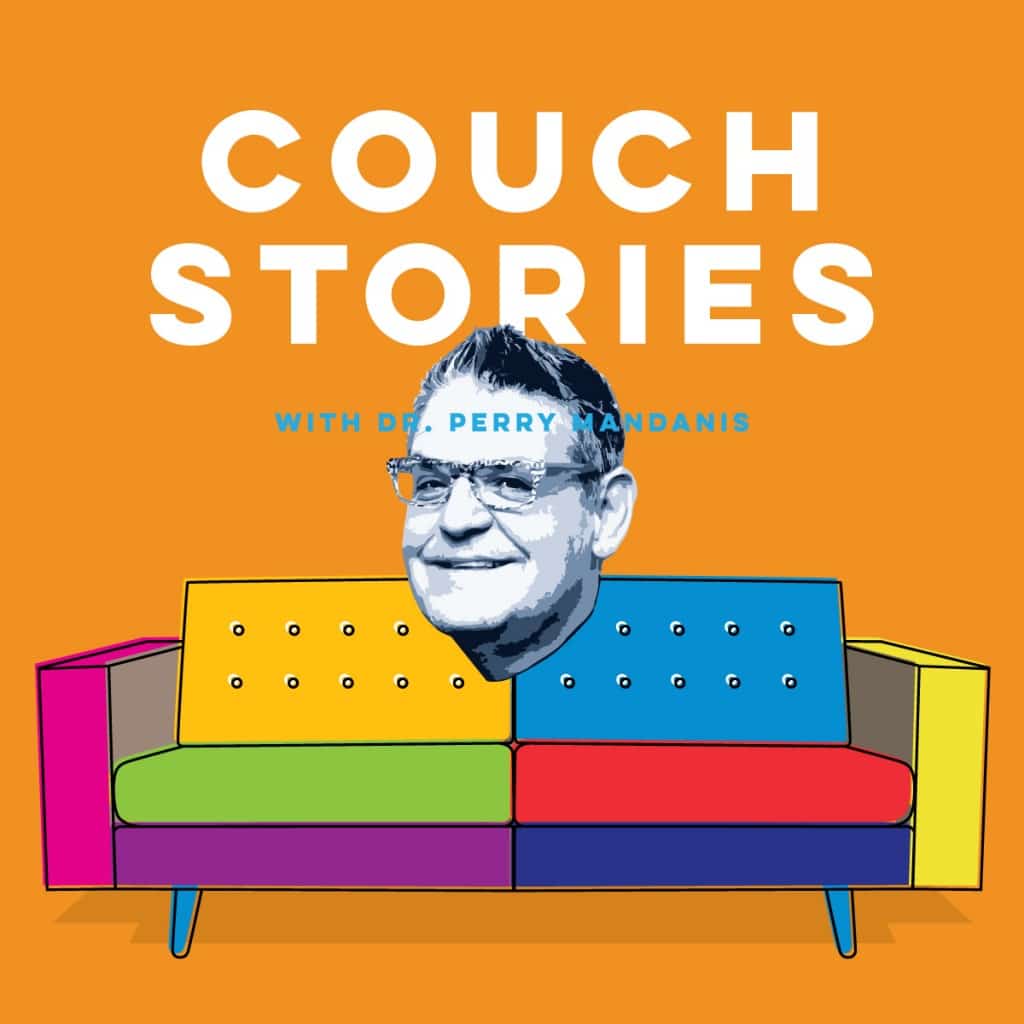
couch_stories_mandanis_cover_web  I’d love to hear what you think about this podcast. I share a story of an early experience of sexual harassment and the ways I’ve rewritten and replaced shame stories that left me frozen so I learned how to stay present and protected when it happened again. Today I genuinely feel like I can call out bad behavior without getting triggered so badly I fold like a cheap tent (or flip out). My friend Dr. Perry Mandanis is a psychiatrist, consultant, musician, artist, and brilliant therapist who shares true stories on his podcast that speak to the universal aspects of living a resilient life. You are going to love him as much as I do. He has SO many great stories to tell.

Filed Under: Uncategorized Tagged With: #narrativetherapy, #story #metoo #annettesimmons, Annette Simmons, Big T Truth, self confidence

December 20, 2019 by Annette Simmons 10 Comments

Narratives That Leave Us Feeling Powerless

lappe

“I think it’s because the dominant story in our culture is one that creates a feeling of powerlessness, and it starts with this reductive understanding of human nature.”  Francis Moore Lappe

This is from the woman who wrote “Diet for a Small Planet” back in 1971.  That book started a conversation that is now a vital movement to reduce overconsumption of meat and increase plant-based consumption.

Her latest book Daring Democracy: Igniting Power Meaning and Connection for the America We Want correlates strongly with my own research into the narratives men and women recruit when deciding how to allocate resources and how to design power structures. Here is a quote from my proposal:

“Because female narratives don’t always follow male narratives about power we can better see how current systems might leave women in positions of power feeling powerless. Suddenly it makes sense that women don’t just want more power, we want to change the way power works.”

I’ve been gathering true stories men and women tell about their personal experiences with power.  And there is a theme.  Masculine narratives tend to define power as morally neutral.  Women preface their stories with clear distinctions of good power versus bad power. Francis Moore Lappe’s new book basically says the same thing without pointing fingers at gender differences. Here is another quote from her in the NYTimes article:

“We took Charles Darwin, who in “Descent of Man” says that in primal tribal societies everything was judged good or bad solely as it affected the welfare of the tribe, and reduced him to survival of the fiercest.”

Personally I think it is important to highlight that women are much more likely to live according to narratives that address the moral nature of power.  Mainly because I want to undermine the way women’s narratives are routinely discredited (attacked) as too emotional, unfocused, weak or my personal pet peeve as “utopian” by those who can only see through the lens of toxic male narratives. I think we need to do more to validate women’s narratives in order to strengthen and amplify women’s voices.

So … I think gender matters when we talk about these competing narratives.  What do you think?

Filed Under: Uncategorized Tagged With: Annette Simmons, female narrative, gender, male narrative, narrative, power, powerlessness, story, The Story Factor, Whoever Tells the Best Story Wins

December 12, 2019 by Annette Simmons 5 Comments

The Spirituality of Storytelling…with animals!

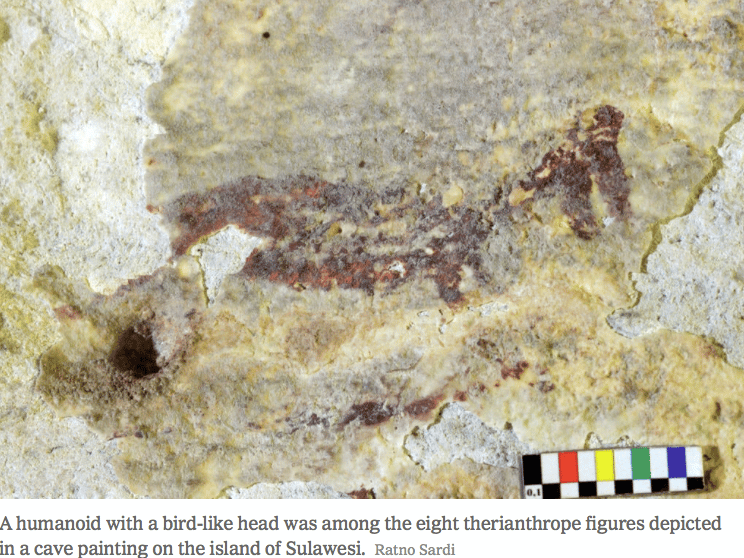
therianthrope

Do your stories have a spiritual message?

Or…perhaps we should ask ourselves what spiritual message do our stories tell?  Because all storytelling delivers a spiritual message.  The message may be spiritually rich or poor but it is there.  And it seems like spirituality has been at the core of storytelling from the beginning.  A recent article about newly discovered cave paintings in central Indonesia illustrates what is still a common trope – interpreting humanity through the lens of animal characteristics – from Aesop’s stories about the lion and the mouse to the three little pigs, animals have been recruited represent our values. Stories with animals tend to explore spiritual themes (compassion, courage, conservation) that illustrate the way we struggle to balance our lower and higher natures. Here is a quote from a Dec. 11, 2019 article:

Despite these unresolved mysteries, it is now abundantly clear that these humans were storytellers whose abstract paintings shed light into the origins of human cognition and spirituality.

Over forty thousand years ago the urge to tell a story represented far more than a desire for individual gain.  Newly discovered images of the earliest example of storytelling featured “therianthropes” – characters that embody a mix of human and animal characteristics. Our storytelling instincts were far less about individual profit and much more about collective wellbeing.  We risk a failure of the spirit when we forget this. (as well as a failure to address climate change and other global problems)

I first encountered ancient therianthropes in Museo del Oro in Bogata where solid gold characters blended the characteristics of humans and animal spirits. And more recently, when a friend who has a bad habit of suppressing his creative spirit to please others showed me a small brass tiger he carried in his pocket to remind him to act with courage. What animal spirit would improve the spiritual message in your storytelling?

Filed Under: Uncategorized Tagged With: Aesop's Fables, Annette Simmons, business storytelling, leadership, narrative, spirituality of storytelling, story, storyteller, Sulawesi, The Story Factor, therianthrope

December 10, 2019 by Annette Simmons 1 Comment

The Morals of Our Stories

From Strategy + Business article in PwC’s online magazine:

“Stories have always been about ethics. They help listeners find the right path in the face of ambiguity and competing desires. The King Midas story juxtaposes commercial desires against social desires. Narcissus was so entranced with his reflection in the water, he died of thirst. The morals expressed in story form teach us how to negotiate the paradoxical dilemmas that all businesspeople — that all humans — must navigate and reconcile: growth and sustainability, freedom and safety, inclusion and exclusion, control and collaboration.

And the stories you pick to tell can change your view. Truly powerful stories — like the fables and myths — tend to take small circles of concern and make them bigger.”

I’m gaining faith that people are ready to stop controlling narratives and start recruiting multiple narratives for bigger picture, not to mention, more creative solutions! Are you seeing the same shift? Please speak up, we could all use a little more faith at this point.


Filed Under: Uncategorized Tagged With: Annette Simmons, Big T Truth, business storytelling, influence, interview techniques narrative, storytelling, Whoever Tells the Best Story Wins

June 7, 2019 by Annette Simmons 2 Comments

The Story Factor 3rd ed. OCT2019 (new material)

ship
“Ships at a distance have every man’s wish on board.”                          Zora Neale Hurston
From a distance, storytelling also seems to have every man’s wish on board. There is an initial euphoria when you consider that once you learn how to tell stories that alter perceptions, conclusions, and actions you might become captain of all the ships and invent “Get out of jail free” cards for anyone who wants a story of absolution, whether they deserve it or not. Over time, like King Midas, you will discover that getting everything you want inevitably produces unintended consequences. When technology alters moral stories, it changes the meaning and the morals of those stories. King Midas did not anticipate that his golden touch would kill his daughter. In the story, his personal experience of watching the light in her eyes go out carries a sensory impact; we get the message. But when calculated on a spreadsheet, the promise of an infinite return on investment (ROI) after sacrificing just one person can seem like a viable investment strategy. What’s more, people who value utilitarian reasoning now use data distance to create enough emotional distance that they can characterize one person as a “small sacrifice” and therefore a reasonable price to pay. The question is, are we at risk of allowing utilitarian reasoning to guide our storytelling practices? (Excerpt from The Story Factor 3rd ed. Chapter 11 out October 2019 )

Filed Under: Uncategorized Tagged With: Annette Simmons, business storytelling, influence, interview techniques narrative, leadership, true stories, Whoever Tells the Best Story Wins

March 6, 2019 by Annette Simmons 1 Comment

Ten Games #9: The Shunning Game

Ten Games #9: The Shunning Game

The unblinking stare of someone who acts like you don't exist

The unblinking stare of someone who acts like you don’t exist.

Any time there were meetings called at the strategy level, he would ‘inadvertently’ not contact this person… a number of meetings were scheduled at the exact same time as this particular executive’s staff meetings.”

“There was a lot of whispering and things going on. I’d walk back there to hand someone something and, all of a sudden, the conversation would completely stop and the atmosphere would get very tense.”

“His response when I would ask him questions was to say, ‘I’m working with so-and-so on that – what do you need to know for?’… and I’m his MANAGER!”

Technically all ten games are tactics of exclusion. However, the Shunning Game packs a psychological punch that damages a victim’s self-regard and destabilizes their equilibrium. There is a reason the Amish use shunning to reject members who question Amish beliefs. It works.  For any group dedicated to controlling perceptions there is plenty of new technology that automates shunning, blocks access, and disables the stories of individuals who don’t fit some preferred narrative.

Don’t get me wrong. We are talking about two sides to a paradox here. On one side, any individual with a big collaborative vision needs a strategy for ignoring critical voices that mean harm.  Caring too much about the voices of those who do not share our values is a recipe for failure.  Those of us who value collaboration and empathy need a “thick skin” to reduce our sensitivity to rejection and mockery  – but go too far and thick skin becomes routine insensitivity and a counter-productive lack of empathy.  It suppresses moral qualms about hoarding resources or refusing safe harbor to the less fortunate who end up labeled “out-group.”

Shunning is not always intentional. Privileged people often don’t even know they shun less privileged voices.  They treat dissenting voices like bothersome gnats dehumanizing these voices with metaphorical bug spray. Deliberate shunners on the other hand, actively set up gatekeepers, block entry, and rig communication pipelines.

Shunning feels personal to the victim, but not the perpetrator. In the worst cases the shunning game translates to bullying, mockery, public humiliation, systematic exclusion, and cruelty. New and supposedly impersonal “efficiencies” that dehumanize communication, treat humans like numbers, or block the voices of dissent deliver a personal experience of shunning that creates a viscerally powerful personal impact. Victims of shunning either shut down or lose their ability to think straight.

The human body interprets social isolation as dangerous to our physical survival.  The body actually treats isolation like a mortal threat: distorting the immune system, increasing inflammation, and mortality rates.  See, we crave human contact for evolutionary reasons.  Humans need to belong to a collective in order to survive.

Almost everyone has suffered the impact of a personal rejection. Perhaps you enthusiastically reached out to engage, collaborate, or offer the gift of your attention – and your presence was overtly or covertly unwelcomed, unrecognized or even mocked. It hurts enough to fuel a wasteful kind of anger that is vindictive – not to mention prompting hours of time spent coming up with a perfect come back (guilty) that will never be delivered.

Like most paradoxes the best solutions are found between the extremes.  If you are being shunned, seek out regular connections with those who share your ideals.  Recognize that most shunning is a defensive ploy rather than a personal rejection. If we let shunning drive us crazy it steals our energy. It is much better to stay sane and minimize the impact of shunning. Reclaim your time to think strategically about how to best regain your place at the table.

And finally, contemplate the idea that the person shunning you might think you started it. If they felt ignored first, the game was on. Test the tactic of asking their perspective, apologizing, and reconnecting.  You will find this method works far more often than you expect. Your ego won’t like it, but this tactic is actually a minor risk. Over the twenty years since Territorial Games was released I’ve heard countless stories from people who successfully set aside old grievances and reclaimed a relationship that ended up better than the original relationship before it was broken. Hemingway was right, we often end up stronger at the broken places.


Filed Under: Big T Truths, Ten Territorial Games, Uncategorized Tagged With: Annette Simmons, Big T Truth, communication, power, Territorial Games, Whoever Tells the Best Story Wins

  • « Previous Page
  • 1
  • 2
  • 3
  • 4
  • 5
  • 6
  • 7
  • Next Page »

Storytelling 101

I have a confession to make...

Storyteller’s Confession: My Secret Mission

October 5, 2021 8:59 am

I’ve been trying to infiltrate the halls of power for decades. My secret mission is to increase the diversity of thought by teaching those without a voice how to tell their stories and by teaching leaders how to find and retell stories that broaden everyone’s understanding. Read more →

Posted in: Uncategorized

Stories with a Moral Blueprint – part 8 of 8

May 14, 2020 8:43 am

  We need a Magic School for Storytellers Thirty years before J. K. Rowling created Harry Potter, Ursula Le Guin’s... Read more →

Posted in: Annette's Blog, Big T Truths

Stories with a Moral Blueprint – part 7 of 8

May 13, 2020 7:37 am

  Truth in Storytelling When I wrote the first edition of The Story Factor twenty years ago, I began with the... Read more →

Posted in: Uncategorized

Stories with a Moral Blueprint – part 6 of 8

May 12, 2020 6:48 am

The Moral Dilemmas of a Lion, a Scarecrow, and a Tin Man Frank Baum’s original introduction to The Wizard of... Read more →

Posted in: Annette's Blog, Big T Truths

Stories with a Moral Blueprint – part 5 of 8

May 11, 2020 8:38 am

  Blueprints for Building Trust Learning to drive was fun until I hit the mailbox. I burst into tears, blaming... Read more →

Posted in: Annette's Blog, Big T Truths

Subscribe to Annette's Blog via Email

Enter your email address to subscribe to this blog and receive notifications of new posts by email.

Like us on Facebook:

Like us on Facebook:

Contact Us

Group Process Consulting, LLC
phone: 318.861.9220
email: annette@annettesimmons.com
facebook: www.facebook.com/thestoryfactor

  • Storyteller’s Confession: My Secret Mission

    A Storyteller’s Confession I’ve been trying to infiltrate the halls of power for decades. My … Continue Reading…

    Storyteller’s Confession: My Secret Mission
  • Stories with a Moral Blueprint – part 8 of 8

      We need a Magic School for Storytellers Thirty years before J. K. Rowling created Harry … Continue Reading…

    Stories with a Moral Blueprint – part 8 of 8
  • Stories with a Moral Blueprint – part 7 of 8

      Truth in Storytelling When I wrote the first edition of The Story Factor twenty years … Continue Reading…

    Stories with a Moral Blueprint – part 7 of 8
© Copyright 2021, Group Process Consulting, All Rights Reserved.
Based on the ·Executive Pro Theme/Genesis Framework by StudioPress · Built using WordPress · Log in