
Annette Simmons

  • About
    • About Annette
    • Annette in Action
  • Books
    • Territorial Games
    • A Safe Place for Dangerous Truths
    • The Story Factor
    • Whoever Tells the Best Story Wins
  • Services
  • The Six Kinds of Stories
  • Storytelling 101
    • Blog
    • Q & A
    • Metaphor Maps
  • Clients
  • Contact

April 17, 2020 by Annette Simmons 2 Comments

Storytelling Moral Survival System: Part four

Perceptual agility is the ability to toggle back and forth between paradoxical truths.

Storytelling Morals and Ethics for the Digital Age

Obviously, the combined power of story and technology begs for a new code of ethics. The good news is that enduring myths “crowd sourced” moral lessons long before we coined the term, by incorporating centuries of listeners’ tales about what works, what doesn’t work, and how to (or how not to) resolve conflicting needs. This original form of crowd-sourcing wisdom is distorted when our conversations become subject to the goals of technology and the assumption that emotions are irrational, inaccurate, or needlessly biased. Oral tradition retained vital morals designed to frame behaviors that might be unreasonable in the short term—generosity, for instance—as such an emotionally rewarding act of personal sacrifice that it was worth it. Many myths and folk stories preserve valuable wisdom that frames a wide variety of solutions to the recurring dilemmas of real people with competing needs living in an imperfect world. Right now, many corporations focused entirely on speed would benefit from the insights provided in the story of the tortoise and the hare. This wisdom of slow thinking need not be forfeited simply because we can’t accurately predict the monetary value of deep insight.

Recent attempts to monetize advice for storytellers with books and webinars that offer formulas and promise fast track tools tend to emphasize stories that achieve goals of commerce at the risk of social good. In the same way that mastering the skill to generate social media “likes” can actively degrade the skills that generate real life “likes” as when a good friend brings you soup when you are sick. Is it social media’s job to train us to be good friends? The answer depends on your circle of moral concern and willingness to balance tangible goals with intangible goals. There is no reason why we can’t blend scientific approaches to storytelling with moral and spiritual approaches as well. And there is every chance that your stories will feel far more meaningful and more engaging when you do.

For millennia, stories passed down wisdom with moral guidance to help listeners find the right path in the face of ambiguity, paradox and competing desires. The King Midas story juxtaposes commercial desires against social desires. Narcissus was so entranced with his reflection in the water he died of thirst. There are too may myths that warn of the danger of excessive self-interest to disregard this advice. Morals expressed in story form teach us how to negotiate paradoxical dilemmas all humans must negotiate growth/sustainability, freedom/safety, inclusion/exclusion, justice/apathy, control/collaboration, and greed/generosity. They are not formulaic, or necessarily convenient, or even rational, but these ambiguous stories encourage the kind of perceptual agility we need to design solutions for current global dilemmas. The good news for marketers is that stories that reflect the complexity of balancing self interest and moral reasoning are more likely to produce content that feels meaningful as well as deliver bottom line results.

Excerpt from Chapter 11, 3rd ed. of The Story Factor (2019)  AUDIBLE VERSION HERE
Filed Under: Stories Help, Uncategorized Tagged With: Annette Simmons, business storytelling, leadership, narrative, Story Factor podcast, storytelling, Storytelling Moral Survival System, Whoever Tells the Best Story Wins

April 16, 2020 by Annette Simmons 5 Comments

Storytelling Moral Survival System: Part three

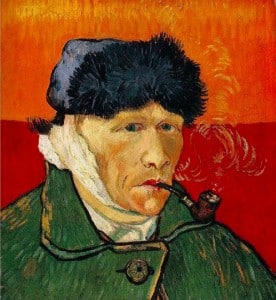
Is yellow the most important color?

Is yellow the most important color?

The Social Impact of Storytelling

Over the twenty years since The Story Factor was first published technology has accelerated communication, and with it the speed of storytelling, beyond our wildest imagination. Amid the revolutionary growth of all this digital media, video, database mining, and social media, Apple founder Steve Jobs commented that the “most powerful person in the world is the storyteller.” Jobs did not originate this thought. Hopi Indians have long said, “He who tells the stories rules the world.” But it was Jobs and his colleagues in the tech world who ushered in advances that magnify the power and magic of storytelling. Magic this powerful brings with it responsibility, so it’s essential to remember that to whom much is given, much is expected.

The biggest lesson over the last twenty years for storytellers is the realization that using technology to control a narrative in favor of a single point of view can silence other important points of view. The ancient story about five blind men describing five different parts of an elephant takes on new significance if you imagine that one of the blind men might now have a Twitter feed of 50 million followers. Through no fault of his own, his story describing only the elephant’s trunk—the only part of the elephant he could feel—could convince millions of his followers that elephants are like fat snakes that hang from the sky so they will be completely unprepared for the actual thing. The point is, single stories with short-term goals often leave out important details, and technology has increased our ability to spread those short- sighted tales.

In a TED talk, Nigerian novelist and short-story writer Chimamanda Ngozi Adichie warned of the danger of a single story, even those stories with positive intent. As a little girl in Africa, Adichie read children’s books about white children living in Europe that both engaged her and left her feeling excluded. A book designed to teach European kids to read unintentionally sent her the message that the world wasn’t interested in brown kids. It is difficult to predict this kind of harm, but now that we can see the potential we can develop practices that lessen the risk. Part of the answer is to avoid the harm of a single story by providing a variety of perspectives.

It is part of the creative process for artistic storytellers to apply a variety of methodologies and to be suspicious of “yes/no” answers to questions that are too complicated for the “yes/no” binary. Imagine asking Van Gogh if yellow is the most important color. Any “clear” answer distracts the aspiring painter from learning that yellow’s importance (like all colors) changes depending on its proximity and relationship to other colors. A tiny speck of yellow on an otherwise dark canvas can be more meaningful than a canvas completely covered with the same yellow. Whatever clear answers you have adopted to guide your storytelling, it’s important to remember that there are lots of good answers and more than one good definition. Single definitions limit your stories to the constraints of that source’s point of view. Recruiting definitions of story from psychology, business, behavioral science, marketing, public speaking, anthropology, the liberal arts, and mythology are bound to improve the artistry of a storyteller, as well as mitigate the risk of blind spots.

Excerpt from Chapter 11, 3rd ed. of The Story Factor (2019)  AUDIBLE VERSION HERE

Filed Under: Big T Truths, Finding Stories, Stories Help, Uncategorized Tagged With: Annette Simmons, business storytelling, narrative, storytelling, Storytelling Moral Survival System, Whoever Tells the Best Story Wins

December 20, 2019 by Annette Simmons 10 Comments

Narratives That Leave Us Feeling Powerless

lappe

“I think it’s because the dominant story in our culture is one that creates a feeling of powerlessness, and it starts with this reductive understanding of human nature.”  Francis Moore Lappe

This is from the woman who wrote “Diet for a Small Planet” back in 1971.  That book started a conversation that is now a vital movement to reduce overconsumption of meat and increase plant-based consumption.

Her latest book Daring Democracy: Igniting Power Meaning and Connection for the America We Want correlates strongly with my own research into the narratives men and women recruit when deciding how to allocate resources and how to design power structures. Here is a quote from my proposal:

“Because female narratives don’t always follow male narratives about power we can better see how current systems might leave women in positions of power feeling powerless. Suddenly it makes sense that women don’t just want more power, we want to change the way power works.”

I’ve been gathering true stories men and women tell about their personal experiences with power.  And there is a theme.  Masculine narratives tend to define power as morally neutral.  Women preface their stories with clear distinctions of good power versus bad power. Francis Moore Lappe’s new book basically says the same thing without pointing fingers at gender differences. Here is another quote from her in the NYTimes article:

“We took Charles Darwin, who in “Descent of Man” says that in primal tribal societies everything was judged good or bad solely as it affected the welfare of the tribe, and reduced him to survival of the fiercest.”

Personally I think it is important to highlight that women are much more likely to live according to narratives that address the moral nature of power.  Mainly because I want to undermine the way women’s narratives are routinely discredited (attacked) as too emotional, unfocused, weak or my personal pet peeve as “utopian” by those who can only see through the lens of toxic male narratives. I think we need to do more to validate women’s narratives in order to strengthen and amplify women’s voices.

So … I think gender matters when we talk about these competing narratives.  What do you think?

Filed Under: Uncategorized Tagged With: Annette Simmons, female narrative, gender, male narrative, narrative, power, powerlessness, story, The Story Factor, Whoever Tells the Best Story Wins

December 17, 2019 by Annette Simmons 5 Comments

“The Lord’s just showing off today!”

Sometimes I hear a story that I just have to share.  This one came from my mother, Harriet. In this picture taken last week, you see Mom standing with the guys who just repaved her driveway. She saved for two years to repave that driveway and just had to have a picture to celebrate.  I particularly like the guys’ “Kick Some Asphalt!” sweat shirts.  For people who can’t find stories to tell, I recommend my mom’s example of turning ordinary life into story worthy events.

Mom loves her new driveway and they guys who made it happen!

Mom loves her new driveway and the guys who made it happen!


So here’s the story:  Last Sunday Mom went to church at First Presbyterian and then to lunch with a friend. Driving back she decided to visit my “Aunt” Jere a longtime friend who taught me piano lessons and who is now suffering from COPD. On the way to Aunt Jere’s house she passed a woman walking along the road lugging five bags of groceries. Mom told me she just had to turn around.  When she pulled up, rolled down her window and asked, “Do you need a ride home?” Without hesitation the woman blurted out “YES!” They both got tickled about her enthusiastic response and once she had placed her grocery bags in the back seat and climbed in the passenger seat, started chatting.  The woman looked at mom and said, “Looks like you went to church this morning and got the message!” With equal enthusiasm Mom replied, “I sure did!” It turns out this woman had just missed her bus and if mom hadn’t given her a ride would have had to walk well over a mile with five heavy bags in the Louisiana humidity. As they pulled in her driveway, she summarized her thoughts to my mom, “Yep, the Lord’s just showing off today!”

I think value-in-action stories are much easier to find when we remember to show off our values more often.  Happy Holidays and may you find yourself with plenty of opportunties to show off the rich mutual rewards of kindness.


Filed Under: Big T Truths, Stories Help Tagged With: Annette Simmons, inspiration, mom, story, storytelling, The Story Factor, Value-in-Action Story, Whoever Tells the Best Story Wins

December 10, 2019 by Annette Simmons 1 Comment

The Morals of Our Stories

From Strategy + Business article in PwC’s online magazine:

“Stories have always been about ethics. They help listeners find the right path in the face of ambiguity and competing desires. The King Midas story juxtaposes commercial desires against social desires. Narcissus was so entranced with his reflection in the water, he died of thirst. The morals expressed in story form teach us how to negotiate the paradoxical dilemmas that all businesspeople — that all humans — must navigate and reconcile: growth and sustainability, freedom and safety, inclusion and exclusion, control and collaboration.

And the stories you pick to tell can change your view. Truly powerful stories — like the fables and myths — tend to take small circles of concern and make them bigger.”

I’m gaining faith that people are ready to stop controlling narratives and start recruiting multiple narratives for bigger picture, not to mention, more creative solutions! Are you seeing the same shift? Please speak up, we could all use a little more faith at this point.


Filed Under: Uncategorized Tagged With: Annette Simmons, Big T Truth, business storytelling, influence, interview techniques narrative, storytelling, Whoever Tells the Best Story Wins

June 7, 2019 by Annette Simmons 2 Comments

The Story Factor 3rd ed. OCT2019 (new material)

ship
“Ships at a distance have every man’s wish on board.”                          Zora Neale Hurston
From a distance, storytelling also seems to have every man’s wish on board. There is an initial euphoria when you consider that once you learn how to tell stories that alter perceptions, conclusions, and actions you might become captain of all the ships and invent “Get out of jail free” cards for anyone who wants a story of absolution, whether they deserve it or not. Over time, like King Midas, you will discover that getting everything you want inevitably produces unintended consequences. When technology alters moral stories, it changes the meaning and the morals of those stories. King Midas did not anticipate that his golden touch would kill his daughter. In the story, his personal experience of watching the light in her eyes go out carries a sensory impact; we get the message. But when calculated on a spreadsheet, the promise of an infinite return on investment (ROI) after sacrificing just one person can seem like a viable investment strategy. What’s more, people who value utilitarian reasoning now use data distance to create enough emotional distance that they can characterize one person as a “small sacrifice” and therefore a reasonable price to pay. The question is, are we at risk of allowing utilitarian reasoning to guide our storytelling practices? (Excerpt from The Story Factor 3rd ed. Chapter 11 out October 2019 )

Filed Under: Uncategorized Tagged With: Annette Simmons, business storytelling, influence, interview techniques narrative, leadership, true stories, Whoever Tells the Best Story Wins

  • « Previous Page
  • 1
  • 2
  • 3
  • 4
  • 5
  • Next Page »

Storytelling 101

I have a confession to make...

Storyteller’s Confession: My Secret Mission

October 5, 2021 8:59 am

I’ve been trying to infiltrate the halls of power for decades. My secret mission is to increase the diversity of thought by teaching those without a voice how to tell their stories and by teaching leaders how to find and retell stories that broaden everyone’s understanding. Read more →

Posted in: Uncategorized

Stories with a Moral Blueprint – part 8 of 8

May 14, 2020 8:43 am

  We need a Magic School for Storytellers Thirty years before J. K. Rowling created Harry Potter, Ursula Le Guin’s... Read more →

Posted in: Annette's Blog, Big T Truths

Stories with a Moral Blueprint – part 7 of 8

May 13, 2020 7:37 am

  Truth in Storytelling When I wrote the first edition of The Story Factor twenty years ago, I began with the... Read more →

Posted in: Uncategorized

Stories with a Moral Blueprint – part 6 of 8

May 12, 2020 6:48 am

The Moral Dilemmas of a Lion, a Scarecrow, and a Tin Man Frank Baum’s original introduction to The Wizard of... Read more →

Posted in: Annette's Blog, Big T Truths

Stories with a Moral Blueprint – part 5 of 8

May 11, 2020 8:38 am

  Blueprints for Building Trust Learning to drive was fun until I hit the mailbox. I burst into tears, blaming... Read more →

Posted in: Annette's Blog, Big T Truths

Subscribe to Annette's Blog via Email

Enter your email address to subscribe to this blog and receive notifications of new posts by email.

Like us on Facebook:

Like us on Facebook:

Contact Us

Group Process Consulting, LLC
phone: 318.861.9220
email: annette@annettesimmons.com
facebook: www.facebook.com/thestoryfactor

  • Storyteller’s Confession: My Secret Mission

    A Storyteller’s Confession I’ve been trying to infiltrate the halls of power for decades. My … Continue Reading…

    Storyteller’s Confession: My Secret Mission
  • Stories with a Moral Blueprint – part 8 of 8

      We need a Magic School for Storytellers Thirty years before J. K. Rowling created Harry … Continue Reading…

    Stories with a Moral Blueprint – part 8 of 8
  • Stories with a Moral Blueprint – part 7 of 8

      Truth in Storytelling When I wrote the first edition of The Story Factor twenty years … Continue Reading…

    Stories with a Moral Blueprint – part 7 of 8
© Copyright 2021, Group Process Consulting, All Rights Reserved.
Based on the ·Executive Pro Theme/Genesis Framework by StudioPress · Built using WordPress · Log in