Annette Simmons

  • About
    • About Annette
    • Annette in Action
  • Books
    • Territorial Games
    • A Safe Place for Dangerous Truths
    • The Story Factor
    • Whoever Tells the Best Story Wins
  • Services
  • The Six Kinds of Stories
  • Storytelling 101
    • Blog
    • Q & A
    • Metaphor Maps
  • Clients
  • Contact

May 1, 2020 by Annette Simmons 3 Comments

Storytelling Moral Survival System: Part 14 (suggestions)

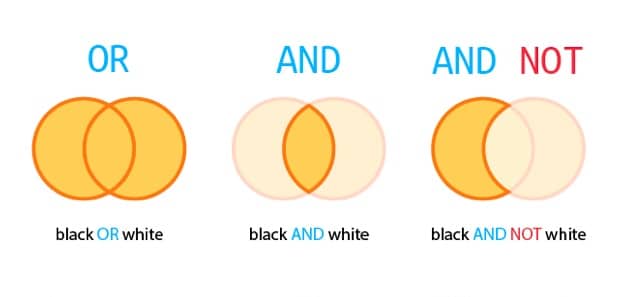
We lose a lot when we use Boolean logic to understand Big T Truths.

We lose a lot when we use Boolean logic to understand Big T Truths.

Question Metrics

Technology has evolved from practical magic to mind-blowing magic during my lifetime. While I am deeply grateful that my brain developed without the influence of personal computers, my entire working life progressed through the stages of rapid technological advancement in real time. In the early 1980s, I combed through five- inch thick stacks of printouts with tables that cross-referenced metrics from primitive databases we called “mailing lists” that we rented to test selling strategies and assumptions. We tested the responsiveness of certain clustered demographics (personas) with a/b testing limited to mailed offers using deeply flawed tracking tools. If anyone can appreciate how machines learn by analyzing unstructured data, I can.

However, improvements in tracking and measurement improve accuracy that may not qualify as wisdom. Intelligence is a resource for being right. Wisdom is a resource for doing right. Systems designed to be right respond with kindness only if the expense of providing a kindness can be justified with measurable returns. Kindness, wisdom, and ethical decisions cost time and money that yield impossible to measure long-term collective returns. That means moral actions will never be fully justified with corporate metrics. Instead these metrics disrupt and re-categorize the expense of moral decisions – and morals can be very expensive—as unjustifiable expenses rather than worthy investments. The bottom line is that the high cost of protecting humanity from adverse events like pandemics and climate change will never “add up” as profitable on any single spreadsheet. Our survival depends on re-integrating moral reasoning into economic decisions.

I recommend storytellers keep two sets of books, one for easy-to-measure criteria and one to represent meaningful goals that cannot be measured. That way, we can pursue short-term metrics without forgetting that stories also produce long-range outcomes that are impossible to measure in meaningful terms. When we subject ourselves to systems that only fund measurable goals, transcendent moral goals like justice, equality, and human rights are left unfunded and people begin to feel isolated and unengaged.

Excerpt from Chapter 11, 3rd ed. of The Story Factor (2019)  AUDIBLE VERSION HERE

Filed Under: Annette's Blog, Big T Truths

April 29, 2020 by Annette Simmons 4 Comments

Storytelling Moral Survival System: part 12 (suggestions)

Make sure your stories always make your own heart sing.

Make sure your stories always make your own heart sing.

Art Your Heart into Storytelling

I worry that people who promise to science the shit out of storytelling haven’t been doing it long enough to understand how linear reasoning can ruin the flow of the creative process. Wise mystics used stories precisely to capture life’s mysteries intact, so anyone who promises to de-mystify storytelling needs to either explain how to re-mystify these paint-by-number stories or stop oversimplifying the process. If you agree, I believe the answer is to always put your heart into every story you find, develop, and tell. Not someone else’s hypothetical heart, but yours, the one that beats inside your chest when you feel inspired and suffers when you see others suffer. Now that storytelling ideas and advice are increasingly translated to suit the goals of technology and digital media, protecting a few primary concepts from being sliced and diced will help storytellers stay in touch with centuries of storytelling wisdom that is impossible to accommodate in linear binary formats. Novelist Haruki Murakami explains it this way: “In many cases, it’s because works that critics see as analytically excellent fail to win the natural empathy of readers.”

Excerpt from Chapter 11, 3rd ed. of The Story Factor (2019)  AUDIBLE VERSION HERE

Filed Under: Annette's Blog Tagged With: Annette Simmons, business storytelling, communication, influence, inspiration, narrative, storytelling, Storytelling Moral Survival System, The Story Factor, Whoever Tells the Best Story Wins

May 28, 2019 by Annette Simmons 2 Comments

Ten Games #10: Powerful Alliances

Powerful Alliances

It's not what you know but who you know!

It’s not what you know but who you know!

“Powerful alliances” is a territorial game humans have played from the beginning of time. But when people start treating friends and natural allies like bargaining chips to win a territorial game in ways that silence others – they cross a line.  It is human nature to cultivate connections with people who seek the same goals we seek to use their power, a voice, or connections to step in when they can help.  Back when I did the original research, technology had yet to invent platforms and industries to dedicated to automating powerful alliances. The gig economy has forced many people to treat friends like assets.  It makes me sad.  But it’s not new.  The minute work life is characterized as a battle then accumulating allies, spies, confederates, pawns, re-tweeters, likes, links, and moles reduces friendships to bargaining chips.

The chickens are coming home to roost.  Blindly recruiting other people to play games on your “tribe’s” behalf as a way to silence, disable, or crush perceived opposition is effective but there are consequences. Once friendships are stripped of intimacy, loyalty, kinship, moral solidarity, and empathetic feedback and replaced with economic reasoning and score-keeping we lose the social glue that holds us together.

The game called Powerful Alliances is the best example of how a territorial game can be used for good or evil (although game players always believe they are on the side of good).  A big picture view of politics today shows tight groups of liberals and conservatives deploying every powerful alliance they can to “win” battles that can never be decisive.  The fatal flaw in pursuing wins instead of balancing continuums is that choosing one “side” or the other prevents the healthy toggle back and forth between contrasting but vital moral paradoxes that work best in tandem.  Territorial game players dont seem to understand there are no “wins” involving paradoxes of human life (safety/freedom, individual/group, relationships/rules, etc) that could possible be decisive without dire consequences.  Worse, it divides the resulting “tribes” to the point alliances are no longer moderated by social norms of discretion, dialogue, compromise and deep trust.

People who “mobilize” their friends into contacts for economic advantage don’t intend to contribute to the global loss of social trust we now experience, but they do. Like everyone else, I hope to attract powerful alliances too.  But only with people who genuinely think my work makes a contribution to the collective wellbeing of us all.  Likewise, I will continue to share and promote your work when it speaks to my soul and helps us lead the business and political environment back to collaboration, mutual respect, and reciprocal generosity.  It’s all I care about. If I can help, let me know.

But please let’s stop reducing human relationships to “contacts” – it’s killing unconditional generosity and cultivating cynicism we cannot afford.

Filed Under: Annette's Blog, Big T Truths, Stories Help Tagged With: Annette Simmons, Big T Truth, communication, Territorial Games, true stories

February 8, 2019 by Annette Simmons 3 Comments

Ten Games 8. Discrediting Game

Discrediting Game

“He would sometimes use humor to put him down. He’d make comments like ‘Well let’s stay strategic here,’ and that implies that his comment was something less than strategic. We’d laugh, but you know, they were direct put downs.”

“They would ridicule the sincerity of the fans of the new consultants. They would make them sound gullible. Saying, ‘Well that sounds pretty damn bizarre to me. What relevance does it have? You guys are turning into groupies for God’s sake.’”

Those who play the Discrediting Game undermine the reputation and credibility of their “enemies” with actions that can be as subtle as a raised eyebrow all the way to blanket character assassination.  This game has been around forever but it used to be kept under control by social norms.  Digital media has reframed what was a “nuclear option” into a daily habit. Previously, the non-verbal feedback of face-to-face interactions meant the majority of us were far less willing to demonize people we knew we desperately needed to create mutual wins.  It felt stupid.  Our emotions warned us that it was dangerous. Now we have evidence that demonizing others (just to win) felt stupid for very practical reasons.

“People were just harassing them completely. They would say, “Why do we have to listen to this? They used names like Krauts, Frogs, etc. for whomever. They were swearing…The effect was that they didn’t listen to what the person was saying. They distracted people that were listening …They effectively cut off anyone’s ability to receive whatever data was coming from the Europeans. They pulled in anyone within earshot from listening to whatever was happening. They brought in people who typically might have listened but who now share those viewpoints.”

If there is one abuse of storytelling that concerns me most it is the desire to control a narrative by discrediting other points of view.  Once an accusation sticks there may be a relative bump in trust for the accuser compared to the now demonized party, but the lost trust isn’t replaced. It is transformed into distrust and yet one more point of view is marginalized or even silenced. The robust influence of multiple points of view dissipates and our reservoirs of trust simply begin to run out.  The daily habit of demonizing rather than forging connections has created escalating accusations and fear stories, distracting everyone’s eyes from working together on shared solutions to shared dangers like climate change, systemic poverty, and war.

When businesses and politicians play only to win, they siphon energy from our ability to play together.  Pretending that life is a game to win has channeled far too many resources that used to build trust to game behaviors that tear trust apart. To frame politics as a battle is to recruit strategies from the “art of war” – surprise attack, sabotage, diversion, to “kill with a borrowed knife” and a whole host of strategies that might be appropriate for war but have the effect of breaking every norm we need for peaceful existence to the point that everything feels like a war.  Just because some people are bored with peace, doesn’t give them the right to turn business and politics into a war where character assasination is a winning strategy.

Filed Under: Annette's Blog, Big T Truths Tagged With: Annette Simmons, Big T Truth, business storytelling, Story Factor podcast, storytelling, Territorial Games

November 6, 2018 by Annette Simmons 8 Comments

Ten Games People Play to Control Truth (4 of 10)

  1. Camouflage Game (Wild Goose Chase)

wildgoodchase

The new forms of this game have the potential to twist truth in ways that kill ideas that matter far more than just killing the research project described in the quote below:

“Hal was there only as a sophisticated untracker in groups.  Untrackers get you going down the primrose path…you feel comfortable going…the whole way through.  In order to avoid implementation of my [research] idea, Hal said it sounded great but ‘we need…to get the…clinical investigation committee to approve the scientific merit.’ And so on and so forth….What he knew [was] that if you have a bunch of fairly bright people…you can make it sound plausible…. what he said was absolutely right on target, but the intent…was not scientific merit. [It was to block the research.]

The term “untracker” is an excellent way to define a camouflage game player.  This game is a common slapstick comedy routine. The Three Stooges played it all the time. One of them would point and yell, “Look over there!” and when the target looked in that direction the “untracker” could steal whatever he wanted while they weren’t looking. You may have played it yourself without malicious intent.  It’s what siblings do to get the last cookie.  But when the stakes are high, involving difficult truths, it’s not funny.

“It’s the wild goose chase. If they send you off on enough of them, you won’t think the thing to be hunted is in their territory. It appears so credible…’If I can get you away from my territory then I win.’”

From the original research in 1997, it was clear that most untrackers hid their misdirection in the camouflage of support: just one more additional step, an opportunity we should wait for, adding one more expert.  Sometimes the tactic is to get a group to bite off way more than they can chew so they choke on their own good intentions before their program has a chance to invade protected territory.  Frequently it works so well people really believe the game player’s insistent claims of positive intent.

Capitalizing on someone’s insecurity doubles the game player’s ability to create confusion. The goal is for emotions to hijack the rational mind. Calling attention to someone’s embarrassing past, a mistake, or asking in the middle of their presentation “what’s that brown thing hanging out of your nose?” is enough to steal momentum or stop a speaker dead in her tracks.  The game player almost always pretends they are trying to help. In particular, to help us avoid some perceived disaster they intend to illustrate in vivid detail. Because the fastest way to misdirect attention is to find a threat and supersize it.

“So it ranged from discounting to actually creating perceptions of threats.  A new program was positioned to be potentially dangerous to the welfare of the company in order to keep it from effecting the way a group of managers liked to do business.”

When game players point out multiple threats and escalate perceptions of dire consequences they can make a group so dizzy with confusion the group is much more likely to defer to an authority (usually the game player) to save them.  This game incorporates the art of illusion – make the threat seem big enough and scary enough and no one has time to think or to do the hard thing.

Like all of the games, the Camouflage Game works because people participate.  When we look “over there” and stop paying attention to what we know is true, we are the ones who make the game work. And the most susceptible groups are always those of us with tough dilemmas we can avoid indefinately every time we agree to “Look over there!” Rather than making hard decisions and making the painful sacrifices the situation demands we opt for rubber necking someone else’s disaster. I suspect this hasn’t changed.

Filed Under: Annette's Blog, Big T Truths Tagged With: Annette Simmons, Big T Truth, communication, narrative, Territorial Games, true stories, Whoever Tells the Best Story Wins

October 30, 2018 by Annette Simmons 8 Comments

Ten Games People Play to Control Truth (2)

The Intimidation Game (2nd of ten):

Back off or you will be sorry.

Back off or you will be sorry.

The transcribed stories from the original research still describe how intimidation games scare people away from a game player’s protected “territory:”

All of a sudden he flared into a defensive kind of maneuver. He lapsed into another language…It was uncharacteristic of this guy. He turned crimson.  He was saying, ‘I made the decision. It was my judgment to make.’ Underneath all that, I was hearing, ‘Look, back off. Say out of my turf regardless of the data”

“He was angry. His face got red. Then he became accusatory and belligerent. He said the people who had done the study didn’t know what they were doing. The outcome in my opinion was that the subordinates of the manager said, “well, it looks like we don’t go out and ask anybody questions any more.”

Learning to not ask questions may be the worst outcome of the intimidation game.  Particularly now when asking questions is so dangerous it might cause someone to send you a pipe bomb – a radical acceleration of the intimidation game.

Used to be… when someone tried to control your ability to ask about or speak truth using intimidation – i.e. social, sexual, verbal, emotional attack or humiliation designed to embarrass you, frighten you, shut you down, shut you up or back you off – the most elegant solution was to calmly stand your ground and let the game player learn that intimidation doesn’t work on you or just let them escalate until they look like the crazy one as you sit there being your best “Ghandi self.” One of the black women I interviewed projected this idea from the hypothetical into the realm of possibilities when she told me her story: She felt intimidated into leaving a meeting when a terse white male boss whispered, “you don’t actually need to stay.” She flushed with embarrassment, left the room, and when walking down the hall came to herself – decided she had every right to sit in on that meeting – and walked back in, calmly taking her seat with every ounce of dignity intact and zero visible resentment. Staying sane while standing your ground does work.  Another favorite story was when a 2 star General screamed at a female Lt. Col. “WHY DON’T YOU JUST GROW UP!?!!” only to have her lean calmly back and ask, “Okay, but could you be more specific?” So for sure, in many cases, the intimidation game can’t work if you don’t participate.

On the other hand I admit as a woman it is still very difficult for me to stay sane when a man escalates the intimidation game – particularly when using sexual harassment triggers.  Old PTSD kicks in my “freeze” mode or hyper-activates my fight/flight responses and I “lose it.” For me, the #metoo movement is like a support group for women who have decided we will no longer be intimidated by territorial games.  I genuiely believe that women have to work together to fight this sexualized form of the intimidation game.  But I digress. Yes, the intimidation game can be gender specific – but it is also universally human for multi-gendered tribes who CONTROL information, status, and relationships to use intimidation games to silence true stories about any injustice, inequity, or dehumanization embedded in their preferred solutions.

Facing an intimidation game with non-violent noncompliance still works as long as the intimidation is a bluff.  Those of us who have previously been intimidated from truth telling need good strategies when power brokers use the intimidation game to silence or force our collusion. We have to train ourselves ahead of time to breathe deep when we hear an escalated voice, personal attack, or other threat.

“I’ve observed in meetings that key managers or top managers in an organization – particularly when they’ve got subordinates in the room – can be very intimidating. If they don’t like what they are hearing, they will give either verbal or body language …[and] rather than pursue a particular point, the subordinate will shut down. Some signals are furrowed brows narrowed eyes, shaking the head back and forth or even shouting, “What in the hell are you talking about?” So they effectively shut down something …that feels threatened as a result of what they say.

And it’s not just in meetings now of course.  Online “dialogue” allow trolls to expand intimidation game to a depersonalized extreme now that technology sequesters them from experiencing negative consequences for speaking to others with inhumanity and disrespect. I have also experienced the intimidation game from certain clients whenever I try to talk about the ethics and morals of storytelling. It’s turned nasty at times. Nasty enough for me to walk away.  I feel a bit ashamed that I gave in – another reason to start writing out loud about it.

Also…you know what I find intimidating now? The amount of time I have to stay on the phone to ask a question about my health or my finances. It takes effort to stay obedient to the procedures required of me before I am allowed to ask a question or cancel a service.  In some cases it means sitting on hold, waiting for instructions to press the right numbers while trying to tune out force fed marketing messages, in other cases it means signing in to an online system designed to keep me in line, keeping track of intentionally meaningless passwords that change every month, forfeiting privacy and agreeing to god knows what terms and conditions, until I give up on justice or healthcare completely.  Which lately, I must confess has caused me to back off, give up, hibernate, avoid, and hunker down. I’m just hoping writing this journal will help reverse my backward motion.

I’m not saying I have answers. I’m simply writing about these ten games to re-examine what’s going on at a granular level so we can maybe get a more accurate perspective of how these formerly “in-person” games have translated to technological dogma and algorithms.

Filed Under: Annette's Blog, Big T Truths Tagged With: Annette Simmons, business storytelling, influence, integrity, narrative, Territorial Games, The Story Factor, true stories, Whoever Tells the Best Story Wins

  • « Previous Page
  • 1
  • 2
  • 3
  • 4
  • Next Page »

Storytelling 101

I have a confession to make...

Storyteller’s Confession: My Secret Mission

October 5, 2021 8:59 am

I’ve been trying to infiltrate the halls of power for decades. My secret mission is to increase the diversity of thought by teaching those without a voice how to tell their stories and by teaching leaders how to find and retell stories that broaden everyone’s understanding. Read more →

Posted in: Uncategorized

Stories with a Moral Blueprint – part 8 of 8

May 14, 2020 8:43 am

  We need a Magic School for Storytellers Thirty years before J. K. Rowling created Harry Potter, Ursula Le Guin’s... Read more →

Posted in: Annette's Blog, Big T Truths

Stories with a Moral Blueprint – part 7 of 8

May 13, 2020 7:37 am

  Truth in Storytelling When I wrote the first edition of The Story Factor twenty years ago, I began with the... Read more →

Posted in: Uncategorized

Stories with a Moral Blueprint – part 6 of 8

May 12, 2020 6:48 am

The Moral Dilemmas of a Lion, a Scarecrow, and a Tin Man Frank Baum’s original introduction to The Wizard of... Read more →

Posted in: Annette's Blog, Big T Truths

Stories with a Moral Blueprint – part 5 of 8

May 11, 2020 8:38 am

  Blueprints for Building Trust Learning to drive was fun until I hit the mailbox. I burst into tears, blaming... Read more →

Posted in: Annette's Blog, Big T Truths

Subscribe to Annette's Blog via Email

Enter your email address to subscribe to this blog and receive notifications of new posts by email.

Like us on Facebook:

Like us on Facebook:

Contact Us

Group Process Consulting, LLC
phone: 318.861.9220
email: annette@annettesimmons.com
facebook: www.facebook.com/thestoryfactor

  • Storyteller’s Confession: My Secret Mission

    A Storyteller’s Confession I’ve been trying to infiltrate the halls of power for decades. My … Continue Reading…

    Storyteller’s Confession: My Secret Mission
  • Stories with a Moral Blueprint – part 8 of 8

      We need a Magic School for Storytellers Thirty years before J. K. Rowling created Harry … Continue Reading…

    Stories with a Moral Blueprint – part 8 of 8
  • Stories with a Moral Blueprint – part 7 of 8

      Truth in Storytelling When I wrote the first edition of The Story Factor twenty years … Continue Reading…

    Stories with a Moral Blueprint – part 7 of 8
© Copyright 2021, Group Process Consulting, All Rights Reserved.
Based on the ·Executive Pro Theme/Genesis Framework by StudioPress · Built using WordPress · Log in