
Annette Simmons

  • About
    • About Annette
    • Annette in Action
  • Books
    • Territorial Games
    • A Safe Place for Dangerous Truths
    • The Story Factor
    • Whoever Tells the Best Story Wins
  • Services
  • The Six Kinds of Stories
  • Storytelling 101
    • Blog
    • Q & A
    • Metaphor Maps
  • Clients
  • Contact

February 8, 2019 by Annette Simmons 3 Comments

Ten Games 8. Discrediting Game

Discrediting Game

“He would sometimes use humor to put him down. He’d make comments like ‘Well let’s stay strategic here,’ and that implies that his comment was something less than strategic. We’d laugh, but you know, they were direct put downs.”

“They would ridicule the sincerity of the fans of the new consultants. They would make them sound gullible. Saying, ‘Well that sounds pretty damn bizarre to me. What relevance does it have? You guys are turning into groupies for God’s sake.’”

Those who play the Discrediting Game undermine the reputation and credibility of their “enemies” with actions that can be as subtle as a raised eyebrow all the way to blanket character assassination.  This game has been around forever but it used to be kept under control by social norms.  Digital media has reframed what was a “nuclear option” into a daily habit. Previously, the non-verbal feedback of face-to-face interactions meant the majority of us were far less willing to demonize people we knew we desperately needed to create mutual wins.  It felt stupid.  Our emotions warned us that it was dangerous. Now we have evidence that demonizing others (just to win) felt stupid for very practical reasons.

“People were just harassing them completely. They would say, “Why do we have to listen to this? They used names like Krauts, Frogs, etc. for whomever. They were swearing…The effect was that they didn’t listen to what the person was saying. They distracted people that were listening …They effectively cut off anyone’s ability to receive whatever data was coming from the Europeans. They pulled in anyone within earshot from listening to whatever was happening. They brought in people who typically might have listened but who now share those viewpoints.”

If there is one abuse of storytelling that concerns me most it is the desire to control a narrative by discrediting other points of view.  Once an accusation sticks there may be a relative bump in trust for the accuser compared to the now demonized party, but the lost trust isn’t replaced. It is transformed into distrust and yet one more point of view is marginalized or even silenced. The robust influence of multiple points of view dissipates and our reservoirs of trust simply begin to run out.  The daily habit of demonizing rather than forging connections has created escalating accusations and fear stories, distracting everyone’s eyes from working together on shared solutions to shared dangers like climate change, systemic poverty, and war.

When businesses and politicians play only to win, they siphon energy from our ability to play together.  Pretending that life is a game to win has channeled far too many resources that used to build trust to game behaviors that tear trust apart. To frame politics as a battle is to recruit strategies from the “art of war” – surprise attack, sabotage, diversion, to “kill with a borrowed knife” and a whole host of strategies that might be appropriate for war but have the effect of breaking every norm we need for peaceful existence to the point that everything feels like a war.  Just because some people are bored with peace, doesn’t give them the right to turn business and politics into a war where character assasination is a winning strategy.

Filed Under: Annette's Blog, Big T Truths Tagged With: Annette Simmons, Big T Truth, business storytelling, Story Factor podcast, storytelling, Territorial Games

December 13, 2018 by Annette Simmons 3 Comments

Ten Games People Play to Control Truth (7)

  1. Invisible Walls Game
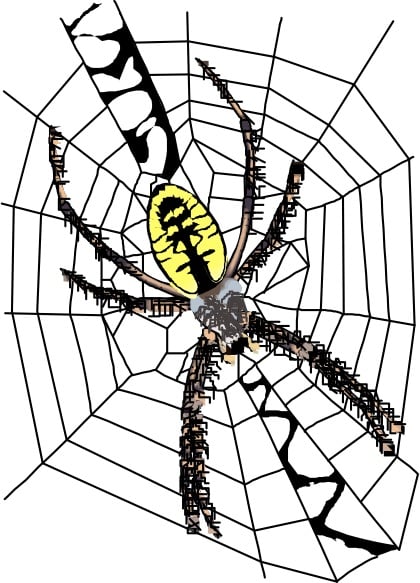
"Come on in" said the spider to the fly.

“Come on in” said the spider to the fly.

“He would use the bureaucracy. He would tie things up in bureaucracy. He knew how to make moves and grab what he wanted and then tie it up so you couldn’t get it back.  He would use the system…He would mislead people into thinking that he was being cooperative while he was doing this other stuff behind the scenes. He always put on the face of a very cooperative person, but he was a back stabber.”

The Invisible Walls Game is a broad catch-all bucket of highly creative yet secret (well…deniable) ways to stop the progress of an idea while pretending to support that idea in public.  One subject reported that a game player agreed to share information and then buried the needed information within a mountain of data and printouts.

“[They] completely disallowed any useful information to come out for me to take back and use as a program. The people in that meeting , therefore, accomplished not allowing  the program to be started.”

Of course, not all walls are inherently bad.  Good fences make good neighbors.  A “wall” is not a game until a group decides they no longer need/want to be a good neighbor.

One Big T Truth about being human is that, to survive, we must balance the paradoxical benefits of connections and protections.  Too much emphasis on protection erodes connections. Too few connections and we cannot solve problems that require collaborative effort.  Every decision to protect has the potential to erode a connection and vice versa.

Twenty years later, the word “bureaucracy” in the quote above can also describe new technology-run administration systems (new forms of bureaucracy) with built in walls that prevent unauthorized acts of connection/generosity before they can happen. For instance in healthcare, systems increasingly redefine face-to-face interactions as unnecessary and thus avoidable expenses. Kiosk check ins, website based communication and automated telephone systems effectively wall off any chance the providers I need will have to waste time on a healing smile, a shared  joke, or an expression of empathetic connection.   Some territorial game players are even proud of how these walls keep resources out of the reach of anyone outside their circle of moral concern.

Everyone knows that some walls are good, even vital, but the territorial game of Invisible Walls (not so invisible lately) specifically describes behaviors of a core group that hoards resources needed for collective actions. If it’s not a game (legit protection) it isn’t an invisible wall.

In the 3rded. of The Story Factor (Fall 2019) there will be more about how individuals, groups and institutions use stories to define who is and is not within their “circle of moral concern.”  Shrinking circles mean fewer connections.  And when the desire to protect causes us to neglect the care and feeding of vital connections required to solve problems too big for our tribe alone– we are playing games with our future.

Filed Under: Big T Truths, Uncategorized Tagged With: Annette Simmons, Big T Truth, business storytelling, communication, Territorial Games, Whoever Tells the Best Story Wins

November 6, 2018 by Annette Simmons 8 Comments

Ten Games People Play to Control Truth (4 of 10)

  1. Camouflage Game (Wild Goose Chase)

wildgoodchase

The new forms of this game have the potential to twist truth in ways that kill ideas that matter far more than just killing the research project described in the quote below:

“Hal was there only as a sophisticated untracker in groups.  Untrackers get you going down the primrose path…you feel comfortable going…the whole way through.  In order to avoid implementation of my [research] idea, Hal said it sounded great but ‘we need…to get the…clinical investigation committee to approve the scientific merit.’ And so on and so forth….What he knew [was] that if you have a bunch of fairly bright people…you can make it sound plausible…. what he said was absolutely right on target, but the intent…was not scientific merit. [It was to block the research.]

The term “untracker” is an excellent way to define a camouflage game player.  This game is a common slapstick comedy routine. The Three Stooges played it all the time. One of them would point and yell, “Look over there!” and when the target looked in that direction the “untracker” could steal whatever he wanted while they weren’t looking. You may have played it yourself without malicious intent.  It’s what siblings do to get the last cookie.  But when the stakes are high, involving difficult truths, it’s not funny.

“It’s the wild goose chase. If they send you off on enough of them, you won’t think the thing to be hunted is in their territory. It appears so credible…’If I can get you away from my territory then I win.’”

From the original research in 1997, it was clear that most untrackers hid their misdirection in the camouflage of support: just one more additional step, an opportunity we should wait for, adding one more expert.  Sometimes the tactic is to get a group to bite off way more than they can chew so they choke on their own good intentions before their program has a chance to invade protected territory.  Frequently it works so well people really believe the game player’s insistent claims of positive intent.

Capitalizing on someone’s insecurity doubles the game player’s ability to create confusion. The goal is for emotions to hijack the rational mind. Calling attention to someone’s embarrassing past, a mistake, or asking in the middle of their presentation “what’s that brown thing hanging out of your nose?” is enough to steal momentum or stop a speaker dead in her tracks.  The game player almost always pretends they are trying to help. In particular, to help us avoid some perceived disaster they intend to illustrate in vivid detail. Because the fastest way to misdirect attention is to find a threat and supersize it.

“So it ranged from discounting to actually creating perceptions of threats.  A new program was positioned to be potentially dangerous to the welfare of the company in order to keep it from effecting the way a group of managers liked to do business.”

When game players point out multiple threats and escalate perceptions of dire consequences they can make a group so dizzy with confusion the group is much more likely to defer to an authority (usually the game player) to save them.  This game incorporates the art of illusion – make the threat seem big enough and scary enough and no one has time to think or to do the hard thing.

Like all of the games, the Camouflage Game works because people participate.  When we look “over there” and stop paying attention to what we know is true, we are the ones who make the game work. And the most susceptible groups are always those of us with tough dilemmas we can avoid indefinately every time we agree to “Look over there!” Rather than making hard decisions and making the painful sacrifices the situation demands we opt for rubber necking someone else’s disaster. I suspect this hasn’t changed.

Filed Under: Annette's Blog, Big T Truths Tagged With: Annette Simmons, Big T Truth, communication, narrative, Territorial Games, true stories, Whoever Tells the Best Story Wins

November 3, 2018 by Annette Simmons 4 Comments

Ten Games People Play to Control Truth (3 of 10)

3. The Filibuster Game

Endless chatter that dominates the airwaves.

Endless chatter that dominates the airwaves.

“… we were just wasting our time. No one wanted to be the one to tell him he was full of crap so they just sat and listened to him ramble on. After all, no one could disagree with the fact that we needed to act more like a team.  But wasting all this time talking about our values and customer service didn’t solve the problem.  Everyone walked out of that meeting and went right back to the same old, same old.

I’ve been there. You’ve been there.  Now it’s happening on a national level and it’s no longer an irritation but a real threat. This quote above describes a meeting that happened over 20 years ago, but it’s happening again today, except game players now have “scaled” the filibuster game with technology that floods the airwaves with talking heads and images designed to activate clicks instead of collaboration.

The Filibuster Game has long been codified as a tactic in Congress: talk long enough and it prevents everyone else from telling his or her story.  Today technological variations of the filibuster game include apps that push notifications to the point we don’t have time to look for verification. Particularly if the “news” we get affirms our own goodness and blames those “idiots” for not understanding what’s real.

You aren’t going to like this but in experiments, peace makers sabotage their ability to confront the Filibuster game if they get stuck believing that a Filibuster game player knows exactly what he is doing and why.  Nope.  Most of the time, these game players genuinely think they are heroes protecting a value that the rest of us want to “destroy.” Calling a game player stupid (accurate or not) only doubles the energy he or she gives to the game.  Just to be clear, even those game players who are intentionally playing the filibuster game draw energy from your accusations.  The only way a game player stops playing games is if he/she can admit to him/herself in the privacy of his/her own mind: “I’ve been acting like an asshole. I think Im making things worse. I want to change for my own reasons” It’s not easy, not particuarly gratifying, but focusing on the games and not the people works faster – not 100% of the time because nothing works 100% of the time. But it works with small groups, so surely there is a larger scale approach.

IMO, I think we need to stop fighting each other and start fighting the games people play with the truth. We need checks and balances for airtime that is currently for sale to the highest bidder.

Most people who play the Filibuster Game don’t realize they are doing it. Fear and anxiety create a knee jerk physiological impulse they just can’t control.  All they know is that whatever you have to say distresses them, and they feel much better when they are talking instead of you. They will talk about anything except what you want to discuss. In corporate meetings the bluster mouth playing the filibuster game runs out the clock so other agenda items are never addressed. Filibuster is a fire hose of rhetoric that is not meant to communicate but to dominate.

This next quote was from a man describing a meeting, but you can imagine how this has translated to dominating media with loud engaging rhetoric that drowns out other stories.

In meetings when they get to the point where the gloves are off, it becomes very, very loud. The loudest and the most eloquent … He could make you listen, even though he was on the other side. He could compel you to listen by his rhetoric…You knew he was a snake. You knew full well…that what you were hearing was but a tip of his intent, what he was saying was only a portion of what he wanted you to hear. You know that what came before you on the table did not represent all that there was.

The filibuster game controls what we see as “True” by blocking out the stories deemed dangerous to a game player’s “preferred narrative.”  Some even label these other people’s stories as “anti-stories” and intentionally distract, block, nullify, or sideline those who are willing to risk telling the emperor he has no clothes.

Since we have a finite time amount of time to attend to different points of view, any media that fills our attention to capacity with a single story steals time from tough issues that arise when we admit there are at least 4 or 5 points of view, that may piss us off, but still need to be addressed.  When the flood of “something else, anything else” swirls within a media outlet it creates echo chambers (filibuster bubbles) designed to protect listeners from self-examination.

“People want to hang on to what they’ve got…so they generate so much data that it’s impossible to counteract.”

A flood of data makes it seem as if the problem we need to solve is to find a faster way to understand the data when solutions are much more likely to be found by sharing stories from all points of view, finding a way to walk a mile in the shoes of someone who knows what you don’t know, listening with empathy, generating mutual curiosity, or dialoging about Big T Truths.  This doesn’t happen unless game players somehow experience an emotional state that makes being vulnerable seem wise.  Attacking game players is satisfying but counterproductive. The trick is to get them to tell themselves the truth.

In my own experiements this rarely happens in isolation, but can be achieved in face-to-face group dialogue.


*******************************

BTW, my definition of Big T truths: human paradoxes than sound like opposites but are actually two poles that must be balanced in the middle. We balance helping individuals AND the collective, depending on rules AND relationships, and investing in safety AND freedom. For instance, the golden rule “treat others as you wish to be treated,” plots a middle way between my wants and your wants.


Filed Under: Big T Truths, Territorial Games, Truth Tagged With: Annette Simmons, business storytelling, influence, interview techniques narrative, Territorial Games, true stories, Whoever Tells the Best Story Wins

October 30, 2018 by Annette Simmons 8 Comments

Ten Games People Play to Control Truth (2)

The Intimidation Game (2nd of ten):

Back off or you will be sorry.

Back off or you will be sorry.

The transcribed stories from the original research still describe how intimidation games scare people away from a game player’s protected “territory:”

All of a sudden he flared into a defensive kind of maneuver. He lapsed into another language…It was uncharacteristic of this guy. He turned crimson.  He was saying, ‘I made the decision. It was my judgment to make.’ Underneath all that, I was hearing, ‘Look, back off. Say out of my turf regardless of the data”

“He was angry. His face got red. Then he became accusatory and belligerent. He said the people who had done the study didn’t know what they were doing. The outcome in my opinion was that the subordinates of the manager said, “well, it looks like we don’t go out and ask anybody questions any more.”

Learning to not ask questions may be the worst outcome of the intimidation game.  Particularly now when asking questions is so dangerous it might cause someone to send you a pipe bomb – a radical acceleration of the intimidation game.

Used to be… when someone tried to control your ability to ask about or speak truth using intimidation – i.e. social, sexual, verbal, emotional attack or humiliation designed to embarrass you, frighten you, shut you down, shut you up or back you off – the most elegant solution was to calmly stand your ground and let the game player learn that intimidation doesn’t work on you or just let them escalate until they look like the crazy one as you sit there being your best “Ghandi self.” One of the black women I interviewed projected this idea from the hypothetical into the realm of possibilities when she told me her story: She felt intimidated into leaving a meeting when a terse white male boss whispered, “you don’t actually need to stay.” She flushed with embarrassment, left the room, and when walking down the hall came to herself – decided she had every right to sit in on that meeting – and walked back in, calmly taking her seat with every ounce of dignity intact and zero visible resentment. Staying sane while standing your ground does work.  Another favorite story was when a 2 star General screamed at a female Lt. Col. “WHY DON’T YOU JUST GROW UP!?!!” only to have her lean calmly back and ask, “Okay, but could you be more specific?” So for sure, in many cases, the intimidation game can’t work if you don’t participate.

On the other hand I admit as a woman it is still very difficult for me to stay sane when a man escalates the intimidation game – particularly when using sexual harassment triggers.  Old PTSD kicks in my “freeze” mode or hyper-activates my fight/flight responses and I “lose it.” For me, the #metoo movement is like a support group for women who have decided we will no longer be intimidated by territorial games.  I genuiely believe that women have to work together to fight this sexualized form of the intimidation game.  But I digress. Yes, the intimidation game can be gender specific – but it is also universally human for multi-gendered tribes who CONTROL information, status, and relationships to use intimidation games to silence true stories about any injustice, inequity, or dehumanization embedded in their preferred solutions.

Facing an intimidation game with non-violent noncompliance still works as long as the intimidation is a bluff.  Those of us who have previously been intimidated from truth telling need good strategies when power brokers use the intimidation game to silence or force our collusion. We have to train ourselves ahead of time to breathe deep when we hear an escalated voice, personal attack, or other threat.

“I’ve observed in meetings that key managers or top managers in an organization – particularly when they’ve got subordinates in the room – can be very intimidating. If they don’t like what they are hearing, they will give either verbal or body language …[and] rather than pursue a particular point, the subordinate will shut down. Some signals are furrowed brows narrowed eyes, shaking the head back and forth or even shouting, “What in the hell are you talking about?” So they effectively shut down something …that feels threatened as a result of what they say.

And it’s not just in meetings now of course.  Online “dialogue” allow trolls to expand intimidation game to a depersonalized extreme now that technology sequesters them from experiencing negative consequences for speaking to others with inhumanity and disrespect. I have also experienced the intimidation game from certain clients whenever I try to talk about the ethics and morals of storytelling. It’s turned nasty at times. Nasty enough for me to walk away.  I feel a bit ashamed that I gave in – another reason to start writing out loud about it.

Also…you know what I find intimidating now? The amount of time I have to stay on the phone to ask a question about my health or my finances. It takes effort to stay obedient to the procedures required of me before I am allowed to ask a question or cancel a service.  In some cases it means sitting on hold, waiting for instructions to press the right numbers while trying to tune out force fed marketing messages, in other cases it means signing in to an online system designed to keep me in line, keeping track of intentionally meaningless passwords that change every month, forfeiting privacy and agreeing to god knows what terms and conditions, until I give up on justice or healthcare completely.  Which lately, I must confess has caused me to back off, give up, hibernate, avoid, and hunker down. I’m just hoping writing this journal will help reverse my backward motion.

I’m not saying I have answers. I’m simply writing about these ten games to re-examine what’s going on at a granular level so we can maybe get a more accurate perspective of how these formerly “in-person” games have translated to technological dogma and algorithms.

Filed Under: Annette's Blog, Big T Truths Tagged With: Annette Simmons, business storytelling, influence, integrity, narrative, Territorial Games, The Story Factor, true stories, Whoever Tells the Best Story Wins

October 19, 2018 by Annette Simmons 25 Comments

Who Controls the Truth?

Who Controls the Truth?

Who Controls the Truth?

I think there are two kinds of truth, little “t” truth and Big “T” Truth.  If anyone walks up to you wagging their finger and says,

“You want the truth…I’ll tell you the truth!” …

…they are about to share their opinion with you.  Big T Truths are timeless and transcend the small snapshots of little t truths we call facts.  Big T Truths were true before you and I were born, and they will be true long after we are gone. Little t truths are context dependent.  The difference is embedded in the old saying, “Do you want to be right (little truth), or do you want to be kind?” (Big Truth: we need to be both.)

Long before The Story Factor, I wrote Territorial Games – about people gaming the truth – and A Safe Place for Dangerous Truths – how to get a group to tell themselves the truth. So, it’s always been about truth for me.  That is why I got interested in storytelling.  I found a Big T truth in the story that naked Truth was turned away until Parable dressed her in story so people invited her to sit at their table.

My hope is to journal “out loud” and find people (like you?) who are interested in having a dialogue about the idea of Big T Truths and the norms that keep our eyes and hearts wide open to supposedly dangerous truths that if ignored, will threaten our collective survival. In fact, it seems that some our algorithms now gamify truth in ways that lead to infighting, withholding information, and excluding certain narratives.

Big T Truths embrace the paradoxes we cannot avoid if we want to live a meaningful life by balancing both love and power.  Honestly I think some of the recent efforts to “science the shit” out of storytelling lead to smaller either/or truths and skip the “art part” necessary to retain paradoxical Big T Truths.

As a kid, I learned certain kinds of truth telling were dangerous to my survival. These experiences spring-coiled me to jump out of my skin when it feels like it is happening again.

It’s happening again.

Trauma made me hyper vigilant specifically for abuses of power and hypocrisy. I’ve learned to lighten up, but it’s still there. And I think it makes me useful.

If enough people are interested, I’ll post about the games I see people playing with truth. Please leave a comment if this sounds interesting to you.

Filed Under: Annette's Blog, Big T Truths Tagged With: algorithmic bias, Annette Simmons, Big T Truth, brand story, business storytelling, storytelling, true stories, truth telling, truthiness, Whoever Tells the Best Story Wins

  • « Previous Page
  • 1
  • 2
  • 3

Storytelling 101

I have a confession to make...

Storyteller’s Confession: My Secret Mission

October 5, 2021 8:59 am

I’ve been trying to infiltrate the halls of power for decades. My secret mission is to increase the diversity of thought by teaching those without a voice how to tell their stories and by teaching leaders how to find and retell stories that broaden everyone’s understanding. Read more →

Posted in: Uncategorized

Stories with a Moral Blueprint – part 8 of 8

May 14, 2020 8:43 am

  We need a Magic School for Storytellers Thirty years before J. K. Rowling created Harry Potter, Ursula Le Guin’s... Read more →

Posted in: Annette's Blog, Big T Truths

Stories with a Moral Blueprint – part 7 of 8

May 13, 2020 7:37 am

  Truth in Storytelling When I wrote the first edition of The Story Factor twenty years ago, I began with the... Read more →

Posted in: Uncategorized

Stories with a Moral Blueprint – part 6 of 8

May 12, 2020 6:48 am

The Moral Dilemmas of a Lion, a Scarecrow, and a Tin Man Frank Baum’s original introduction to The Wizard of... Read more →

Posted in: Annette's Blog, Big T Truths

Stories with a Moral Blueprint – part 5 of 8

May 11, 2020 8:38 am

  Blueprints for Building Trust Learning to drive was fun until I hit the mailbox. I burst into tears, blaming... Read more →

Posted in: Annette's Blog, Big T Truths

Subscribe to Annette's Blog via Email

Enter your email address to subscribe to this blog and receive notifications of new posts by email.

Like us on Facebook:

Like us on Facebook:

Contact Us

Group Process Consulting, LLC
phone: 318.861.9220
email: annette@annettesimmons.com
facebook: www.facebook.com/thestoryfactor

  • Storyteller’s Confession: My Secret Mission

    A Storyteller’s Confession I’ve been trying to infiltrate the halls of power for decades. My … Continue Reading…

    Storyteller’s Confession: My Secret Mission
  • Stories with a Moral Blueprint – part 8 of 8

      We need a Magic School for Storytellers Thirty years before J. K. Rowling created Harry … Continue Reading…

    Stories with a Moral Blueprint – part 8 of 8
  • Stories with a Moral Blueprint – part 7 of 8

      Truth in Storytelling When I wrote the first edition of The Story Factor twenty years … Continue Reading…

    Stories with a Moral Blueprint – part 7 of 8
© Copyright 2021, Group Process Consulting, All Rights Reserved.
Based on the ·Executive Pro Theme/Genesis Framework by StudioPress · Built using WordPress · Log in