Annette Simmons

  • About
    • About Annette
    • Annette in Action
  • Books
    • Territorial Games
    • A Safe Place for Dangerous Truths
    • The Story Factor
    • Whoever Tells the Best Story Wins
  • Services
  • The Six Kinds of Stories
  • Storytelling 101
    • Blog
    • Q & A
    • Metaphor Maps
  • Clients
  • Contact

January 3, 2017 by Annette Simmons Leave a Comment

Storytelling and UX: Separated at Birth

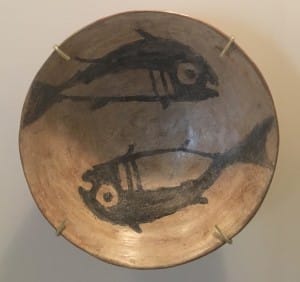
Plate Design pre-800 A.D. Nazca tribe, Cusco Peru

Plate designed 0-800 A.D. by Nazca tribe, Peru

In 2004 I introduced my ideas about story-thinking to a bunch of design engineers who responded  “no, no, that’s design-thinking.” So I fell in love with design thinking…genuises like Dan Lockton (101 patterns for behavior change), Jan Jursa and UX Storytellers (free ebook with personal UX stories) create designs that are stories. Perhaps story thinking and design thinking are not an exact match but the steps of find/share/refine from UX, Agile,  and Scrum sources are delightfully nonlinear (story) compared to the decision routines I learned from management by objective techniques (i.e. SMART goals) and I like the conversations of UX people.   They ignite the imagination to pursue goals we can’t yet see.

I have an issue with the UX term “cognitive bias” because EMOTION should be in there somewhere and “bias” makes humans sound like stupid cows who might follow a cattle chute wherever it goes. Even cow chutes can fail until a designer understands the stories cows tell themselves (see Temple Grandin). Human patterns of interpretation can utilize rational tools but our patterns irrevocably reflect the DNA of physical experience and emotional reasoning. Every “cognitive bias” makes as much sense as any stereotype makes sense. It shouldn’t be universally applied, but it comes from an organic place.  I’m happy to know that Dan Ariely says his term “predictably irrational” refers to the idea that it is irrational to think you can predict your own behavior. It is not a blanket disdain for these patterns of behavior. Emotional reasoning is and forever will be more powerful than rational decision making and I see that as a good thing because our future will be much better when we learn to blend emotions like empathy, compassion and love into our ratios.

Before demand for content reduced storytelling to a sequence of linear explanations and numbered bullets, it was mostly taught in person.

Learning storytelling in a group from an experienced storyteller provides an experiential sense of story that can’t be captured with a set of procedural instructions.  There are great courses out there.  We can learn a lot online…but if we want to understand something as deeply human as storytelling its ideal for humans to interact with other humans.

Here’s why: A story blends emotional, visual, kinesthetic and rational reasoning routines without separating them.  Personal stories illuminate insights that are specific to a situation’s people, complexity, texture and relationships. A vibrant true story delivers a hologram of culture, nature, nurture, space and time from an embodied human point of view: WAY more information than a story formated via a hunt and peck search for hero, quest, obstacle, helper and journey.

The job of a storyteller is two-fold. First, a storyteller notices the emotional, visual, and kinesthetic patterns that produce perceptions (i.e. what makes some facts feel more important than other facts) and interpret conclusions (I “know” him therefore he is more trustworthy).  Second, a storyteller must be able to re-create this perceptual/emotional point of view so others share the insights and the feelings as if they were physically there.

Yes, any story that provides your listeners with a vicarious experience of your facts in time and space makes your facts feel more “real” …with all the benefits of that, but to me, the real value of storytelling is the way it allows us to aggregate contexts and shift perspectives so we make better decisions.  When rational objective reasoning is allowed to over-rule subjective story reasoning we end up with projects that should’ve worked, but didn’t because emotions and perceptions rule human reality.

More than a set of tool to persuade, story-finding and storytelling skills increase the variety and quality of scenarios we can imagine to produce the results we seek – sometimes revealing even better goals in the process. Any story that narrates a relevant “Significant Emotional Event” (without some imposed structure) helps us S.E.E. important patterns, better test prototypes, and understand user experiences.

Designing cattle chute stories/interfaces that only lead to pre-determined conclusions is not engaging it is coercion. Narrating stories with the priority of understanding (not controlling) true human experiences releases listener conclusions to be creative and more meaningful to you both.  It means showing faith in your listeners (always appreciated) and sharing responsibility for mutually creative interpretations and actions. There is no “right story.” If you look for the perfect story you sacrifice the process of mindful attention to what is, in favor of what you want to see.  Both are valid…but I’m thinking we could all do a better job of understanding what is.

So to all my UX colleagues, please don’t let your understanding of storytelling get distorted with contrivances created to package and sell storytelling advice.  User experiences with emotion and unpredictability intact are too valuable to the process of innovation to be reduced to fit existing categroies. Be bold.

Filed Under: Annette's Blog Tagged With: Annette Simmons, business storytelling, interview techniques narrative, The Story Factor, Whoever Tells the Best Story Wins

July 5, 2016 by Annette Simmons 9 Comments

The Secret of Storytelling: Take a bite

Apple

Let’s pretend I’m Eve and you are Adam. Don’t worry about what we are or aren’t wearing. So in my hand is this apple, and with it the secret to finding good stories. All yours, free of charge.  But, before you take a bite I have to warn you; there is a big downside. This apple is from the tree of knowledge (yep, that one) and each bite can be as difficult as it is joyful. Tiny bites are okay, but tiny bites mean tiny difficulties and tiny joys.

As a general rule, I harbor deep suspicions against anyone who says they have “the answer” to anything. Storytelling took off around the same time my book The Story Factor was published. Probably a coincidence. I wasn’t the only exploding with ideas at the Jonesborough storytelling festival in 1994. In 1998 and 1999 I wasn’t the only one running experiments and writing about stories. But there wasn’t a big crowd, either.  I felt complete freedom to explore storytelling without restraint and I had more than enough arrogance to assume I understood what I thought I understood. I mainly sought advice from traditional storytellers although my questions came from psychology, group dynamics, and teaching self-awareness workshops.

It was a lot of work…but I felt pure joy writing about storytelling (except for the editing part, editing sucks). Back then stories were allowed to go anywhere and come from anywhere. It felt like exploring a natural wilderness of surprises. There was no internet to harsh my buzz with numbered lists and so I mapped what felt natural to map, connecting my own dots, for my own reasons: I had a shiny messiah complex and I was out to save the world – share storytelling for good, not evil, and all that.

Anyway, it’s 20 years later and you can’t swing a dead cat in a coffee shop without hitting a storyteller. The neighborhood looks a lot different than it did. I see the equivalent of fancy cars and big malls, secret clubs and Disney story wonderlands with hefty entry fees. My friends call it the “storytelling industrial complex.” Do any of them have “the answer?”

Honestly? Some do. I still like my six stories and I’ve felt “this is it! several times since then. But after twenty years, the “this is it!” moments run together. So…I needed one big thing, something pivotal, basic, primitive, and organic to help organize my thoughts and zero in on really good stories.

It’s not surprising I found my new “unifying theory of story” listening to Joseph Campbell. I was two blocks from my house walking Lucy, when through my earbuds I heard Joseph Campbell tell Bill Moyers that he had revised his opinion that the purpose of myth was to create meaning. His tone got lively as he explained that maybe creation stories prompted it, but in his revised opinion the purpose of myth is to chart what it is to “feel truly alive.”

Who cares about a love story if it doesnt make you feel more alive? Horror stories aren’t interesting unless they remind us how precious life is or validate that you are not alone in your fear, a good mystery offers shared wonder that produces a visceral and physiological change in heart rate, etc.  I now think this is the common denominator in all good stories.  They remind us we are alive.

The secret to great storytelling is: does this story make me/us feel more alive? It is as simple and as difficult as that. This aliveness seems to happen when opposites touch: life/death, good/evil, rich/poor, dangerous/safe, dark grey/light grey, love/emptiness, beauty/ugliness and the rest. So contrast is key to creating a narrative frame, but there is a big difference between a story that should work and one that does.

Joseph Campbell spoke of the knights on their quest for the Holy Grail “If a path exists in the forest, don’t follow it, for though it took someone else to the Grail, it will not take you there, because it is not your path.”

My advice? I recommend you go take a big juicy bite out of a real apple. Let the juice run down your chin, look at the red, green, brown and white of it and think about what else makes you feel truly alive. Then look for stories that make you feel like that: more alive. When you find it, that’s a good story.


Filed Under: Annette's Blog, Finding Stories Tagged With: business storytelling, interview techniques narrative, story, storytelling, true stories

January 22, 2014 by admin 3 Comments

Episode #14 – Secrets from the MOTH!

Lea Thau
Lea Thau was creative director of TheMoth.org for a decade (2001-2010), developing the format and process that has become one of the most popular storytelling organizations in the world.  From the beginning, Lea favored the idea of sticking to true stories told in the first person – a critical decision that created what we know as “the Moth format.” If you haven’t subscribed to the Moth podcast do it now.  You will become a better storyteller simply by listening to the craft, detail and structure embedded in these wonderful stories.

Lea now has her own show called Strangers on KCRW – a podcast I also highly recommend. [Read more…]

Filed Under: Podcast Tagged With: Annette Simmons, business storytelling, influence, inspiration, interview, interview techniques narrative, narrative, podcast, self confidence, Story Factor podcast, true stories

December 3, 2013 by Annette Simmons Leave a Comment

Episode #7 – Facilitating Story Search and Meaning

David-HutchinsAn interview with David Hutchens about capturing the wisdom of an organization.

“Stories are incredibly efficient containers of knowledge, mental models, assumptions, beliefs, emotions and key information.”

– David Hutchens [Read more…]

Filed Under: Podcast Tagged With: Annette Simmons, business storytelling, David Hutchens, influence, interview, interview techniques narrative, leadership, metaphor, podcast, story, storytelling, true stories

November 26, 2013 by admin Leave a Comment

Episode #6 – Two GREAT Questions! from Karen Dietz

Karen DietzThe closest thing to mind control is asking a good question.  As in the old example:

Q: Are you thinking about a pink elephant?

A: No. Yes. Well, I wasn’t thinking about a pink elephant until you asked me if I was thinking about a pink elephant!

This podcast includes a fantastic short clip from my first interview with Karen Dietz.  I tell a story so she can  demonstrate the questions she uses to encourage “reflection and flow.”  It is less than ten minutes long. [Read more…]

Filed Under: Podcast Tagged With: Annette Simmons, inspiration, interview techniques narrative, leadership, narrative, podcast, story, Story Factor podcast, storytelling

October 30, 2013 by admin Leave a Comment

Episode 3: The Art of Storytelling – Karen Dietz Part 2

Karen Dietz…storytelling has become extraordinarily popular.

Karen Dietz and I discuss how storytelling has become extraordinarily popular. It is good that people realize  story is how we think and communicate but a lot of people are confused about how to get started. People who promise to teach storytelling but have not been trained in oral storytelling miss key ingredients.  In the same way that we can all write, but we aren’t all novelists: we are all storytellers, but that doesn’t mean we can tell a compelling story.  It is important for practitioners to study storytelling in its natural state.

Expecting storytelling consultants to study with performance tellers is not about keeping the bloodlines pure, but about ensuring new applications of story retain the magic that keeps oral storytelling alive.  Karen points out that one aspect of storytelling that gets lost is that “storytelling is deep play.” Karen says, “It’s really fun!…I lose control of the room…and that’s perfect.” Once people get permission to tell stories, that’s all they want to do.

websitepodcastgfxThose untrained in oral storytelling produce laundry lists of components or a best structure for a “good story.”

Karen points out that those untrained in oral storytelling produce laundry lists of components or a best structure for a “good story.” Things that are nice to know but don’t make you a better storyteller.  Leaders demand, “Tell me the structure of a good story?” She gives the what they want: “The structure of a story is: Problem/Resolution. That is it’s most simple form. Now …do you know how  to tell a compelling story?” Of course they don’t. It doesn’t help.  Having this information, is nice, but not helpful.

…stories are “living breathing beings that reside in us.”

Oral storyteller Ron Evans taught Karen stories are “living breathing beings that reside in us.” Moving an oral story to written form or other media means we lose the co-created aspect of the story. It “becomes concretized in a way that doesn’t allow flexibility” and “creates a relationship not with the teller but with the media” being used.

If someone thinks they can record a story “and be done with it,” they are missing the most effective use of story.  Tell your story face to face whenever possible.  If you need to create a video, invite members of your audience to listen when you create a video and be responsive to the future time, place and context of your listeners as they view the video in the future.

If someone thinks they can record a story “and be done with it,” they are missing the most effective use of story.

Karen encourages leaders to walk around, listen for stories and learn story evoking techniques before they spend time learning to tell stories. One of the things we both learned by studying oral storytelling is to ask ourselves “Have I earned the right to tell this story?” It keeps things ethical, but in terms of creating quality business stories this step is a constraint that ensures your story is authentic to the emotions of your audience. Adding “touches of authenticity” down the line don’t help an “unearned” story sound more authentic. The fastest and most convenient way to be authentic is to be authentic.

 “brings pleasure and liveliness back to work”

Studying oral storytelling shows us how to stay a part of the equation in a way that develops our personal creative process, talents and habits that anchor our stories in authenticity.

Karen concludes by saying that she would like to see storytelling become a core leadership competency. If only because it “brings pleasure and liveliness back to work.”

  • MP3 Download or play this episode directly.
  • iTunes Subscribe to The Story Factor Podcast directly in iTunes.
  • RSS Add the podcast to your RSS reader, podcast player or manually into iTunes.

Feed link:  http://archive.org/download/StoryFactorPodcast003/StoryFactorPodcast003.mp3

Filed Under: Podcast Tagged With: Annette Simmons, business storytelling, engagement, influence, interview, interview techniques narrative, narrative, podcast, story, storytelling, true stories

  • « Previous Page
  • 1
  • 2
  • 3
  • Next Page »

Storytelling 101

I have a confession to make...

Storyteller’s Confession: My Secret Mission

October 5, 2021 8:59 am

I’ve been trying to infiltrate the halls of power for decades. My secret mission is to increase the diversity of thought by teaching those without a voice how to tell their stories and by teaching leaders how to find and retell stories that broaden everyone’s understanding. Read more →

Posted in: Uncategorized

Stories with a Moral Blueprint – part 8 of 8

May 14, 2020 8:43 am

  We need a Magic School for Storytellers Thirty years before J. K. Rowling created Harry Potter, Ursula Le Guin’s... Read more →

Posted in: Annette's Blog, Big T Truths

Stories with a Moral Blueprint – part 7 of 8

May 13, 2020 7:37 am

  Truth in Storytelling When I wrote the first edition of The Story Factor twenty years ago, I began with the... Read more →

Posted in: Uncategorized

Stories with a Moral Blueprint – part 6 of 8

May 12, 2020 6:48 am

The Moral Dilemmas of a Lion, a Scarecrow, and a Tin Man Frank Baum’s original introduction to The Wizard of... Read more →

Posted in: Annette's Blog, Big T Truths

Stories with a Moral Blueprint – part 5 of 8

May 11, 2020 8:38 am

  Blueprints for Building Trust Learning to drive was fun until I hit the mailbox. I burst into tears, blaming... Read more →

Posted in: Annette's Blog, Big T Truths

Subscribe to Annette's Blog via Email

Enter your email address to subscribe to this blog and receive notifications of new posts by email.

Like us on Facebook:

Like us on Facebook:

Contact Us

Group Process Consulting, LLC
phone: 318.861.9220
email: annette@annettesimmons.com
facebook: www.facebook.com/thestoryfactor

  • Storyteller’s Confession: My Secret Mission

    A Storyteller’s Confession I’ve been trying to infiltrate the halls of power for decades. My … Continue Reading…

    Storyteller’s Confession: My Secret Mission
  • Stories with a Moral Blueprint – part 8 of 8

      We need a Magic School for Storytellers Thirty years before J. K. Rowling created Harry … Continue Reading…

    Stories with a Moral Blueprint – part 8 of 8
  • Stories with a Moral Blueprint – part 7 of 8

      Truth in Storytelling When I wrote the first edition of The Story Factor twenty years … Continue Reading…

    Stories with a Moral Blueprint – part 7 of 8
© Copyright 2021, Group Process Consulting, All Rights Reserved.
Based on the ·Executive Pro Theme/Genesis Framework by StudioPress · Built using WordPress · Log in