
Annette Simmons

  • About
    • About Annette
    • Annette in Action
  • Books
    • Territorial Games
    • A Safe Place for Dangerous Truths
    • The Story Factor
    • Whoever Tells the Best Story Wins
  • Services
  • The Six Kinds of Stories
  • Storytelling 101
    • Blog
    • Q & A
    • Metaphor Maps
  • Clients
  • Contact

April 24, 2020 by Annette Simmons 3 Comments

Storytelling Moral Survival System: Part nine (templates)

Stories that cherry-pick correlations and represent them as causation can be misleading.

Stories that cherry-pick correlations and represent them as causation can be misleading.

A Story Spine

The best storytelling templates arise from the arts. Improv artist Kenn Adams laid out what he called a “story spine” as a mechanism to help children and adults play with improvisational theatre. According to Kenn, the origin of his template arose from his desire to bring arts, creativity, and improv play to more people. The template is a guide for creating characters and a plot that produces a spontaneous play that is as satisfying to the players as the audience.

Pixar Studios uses a similar template to provide structure to illustrate core human conflicts with a story.

Once upon a time there was ___. Every day, ___.
One day ___.
Because of that, ___.

Because of that, ___.
Until finally ___.
(And ever since that day______.)
A beginner storyteller given this template might find fill in the blanks with merely plausible events and characters instead of looking to personal experiences with real people, actual life events, and the sensations of time and space. No template can correct for a storyteller who doesn’t remember to “write what you know.” It’s worth noting that this template is only one part of Pixar’s 22 rules of storytelling. Without the other twenty-one rules the template could be limited to creating merely feasible characters negotiating hypothetical situations. Apply the other twenty-one rules, such as “remember that what is most fun to write doesn’t necessarily translate into what is most interesting to an audience,” and the template becomes much more useful.

Story as Cause/Effect

The novelist E.M. Forster famously stated that “the king died then the queen died” was not a plot until adding the detail that the queen died “of grief”. Some have interpreted this to mean that stories set up clear cause/effect relationships. It’s not a bad way to hunt for a plot – love sets you free, pride leads to a fall, etc. – but this method risks oversimplifying relational truths, and correlations. Love usually kicks your butt before it sets you free and pride leads to wins as well as losses. Whenever a storyteller forces a story to suggest an easy cause/effect relationship he runs the risk of omitting complexities that render the story as recognizably realistic. Perhaps the king killed the queen’s lover before he died. Her grief gets a bit more complex and the reader is offered more freedom to come to his or her own conclusions.

There are risks to restricting a story to the format of cause and effect. We create unnecessary problems when we tell a story that suggests a clear single cause and direct effect, when the truth is far more complex. Cause/effect stories can discredit story-supported social norms, like the golden rule. For instance, if a story translates “do unto others as you would have them do unto you” into a cause/effect relationship, it unilaterally suggests treating people fairly automatically causes others to treat you fairly in return. Forcing a story to characterize any human dilemma as an effect of a single cause unwittingly encourages oversimplified solutions that don’t work in real life. Even when simple parables imply cause/effect sequences, the goal is to reinforce reliably accurate correlations—not statistically provable causes and effects. Within storytelling, then, be advised that impressions of cause/effect are usually metaphorical and correlational.

Excerpt from Chapter 11, 3rd ed. of The Story Factor (2019)  AUDIBLE VERSION HERE
Filed Under: Uncategorized Tagged With: business storytelling, communication, correlations, interview techniques narrative, narrative, The Story Factor, Whoever Tells the Best Story Wins

April 23, 2020 by Annette Simmons Leave a Comment

Storytelling Moral Survival System: Part eight (templates)

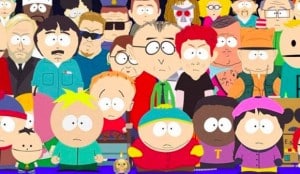
South Park writers Trey Parker and Matt Stone popularized the application of “And, But, Therefore” as good storytelling advice.

South Park writers Trey Parker and Matt Stone popularized the application of “And, But, Therefore” as good storytelling advice.

“And, But, Therefore”

Contrast is key to the structure of any story. For example, characters with a recognizable internal struggle provide the most engaging points of reference. It is actually easier to visualize a CEO who takes paternity leave, a hero who stutters, or an enemy who loves dogs than it is to imagine a one-dimensional character. Contrast in storytelling reflects the effect of painting red and yellow stripes side by side. The contrast makes both elements more vivid than they are when seen in isolation. The “and/but/therefore” template is a good way to keep contrast lively. In this framework, rather than progressing smoothly through narrative with only “ands,” a storyteller is encouraged to revisit conflict and consequences in the form of “buts” and “therefores.” For instance the character who hears a hotel’s fire alarm and grabs his briefcase and runs outside is less memorable than a character who hears the alarm and runs outside, but then remembers he left his briefcase containing $50,000 and therefore runs back into the smoke-filled lobby.

South Park writers Trey Parker and Matt Stone popularized the application of “And, But, Therefore” as good storytelling advice. This template reminds us to refresh a story’s core contrast by illustrating wins and setbacks that make the core conflict feel more tangible. Parker and Stone suggest “whenever you can replace your ‘ands’ with ‘buts’ or ‘therefores’, it makes for better writing.” These writers know deep in their bones how to keep a cartoon TV series interesting. And this is great storytelling advice as long as we don’t invent random conflicts. Adding random “buts” unrelated to a story’s core conflict dilutes the realism and coherence of a story in ways that shift perceptions away from the true conflict.

Good storytellers come to understand that the “but’s” and “therefores” they seek already exist and only need to be emphasized. Margaret Atwood even demonstrates how “and, but, and therefore” can exist within a single sentence in her book, A Handmaids Tale: “Ignoring isn’t the same as ignorance, you have to work at it.”  Which I take to mean that you may force me to say you didn’t hurt me, but you did hurt me, therefore I work to hide my hurt as well as work to endure the hurt.

Of course, the whole book goes into much greater detail about the price women pay when we remain silent about injustice. A Handmaids Tale vividly imagines the long-term emotional and physical consequences of silence in a way that makes the long-term consequences of “therefore I stay silent” demonstrably worse than the short-term consequences of the implicit alternative: “therefore I speak up.” Atwood affirms that every event and character in A Handmaid’s Tale was based on real people and real events. “If I was to create an imaginary garden I wanted the toads in it to be real. One of my rules was that I would not put any events into the book that had not already happened.” Storytellers like Atwood understand that the best way to ensure a narrative feels real is to base it on reality, and reality is full of contrasts.

Excerpt from Chapter 11, 3rd ed. of The Story Factor (2019)  AUDIBLE VERSION HERE

Filed Under: Stories Help, Uncategorized Tagged With: And, Annette Simmons, business storytelling, But, communication, leadership, narrative, storytelling, The Story Factor, Therefore, Whoever Tells the Best Story Wins

April 20, 2020 by Annette Simmons Leave a Comment

Storytelling Moral Survival System: Part five

Apple

Story Is Still the Foundation of Culture and Context

If formulas and machine learning could solve all of our problems, we wouldn’t need stories. Like every religion, technology delivers dogma and formulas that promise more clarity than they can deliver. Religions recruit metaphor and storytelling to make sense of ambiguities that dogma can’t condense. Technological dogma—definitions, templates, and formulas based on accuracy and consistency can’t duplicate the way moral emotions encourage us to toggle back and forth between small circle goals and big circle needs. That’s why now, just as technology fails to deliver the panacea of solutions it once promised, we discover what is missing—the emotional solidarity needed to implement big circle solutions to global problems. A decrease in the number of stories that drive emotional urges to identify when, where, and why to sacrifice selfish goals in favor of a collective goals means fewer people value the sensory cues moral emotions deliver.

From a cultural point of view, any definition of story must reflect the role stories play in creating and sustaining shared assumptions about appropriate behaviors, fair play, and important values. These are the stories that guide continuous re-discoveries of the “Big T” Truths that transcend the limitations of rational understanding. Economic logic alone will not keep golden rules of spiritual generosity alive. To rise above our selfish instincts we cultivate stories that build faith that doing good is it’s own reward. These stories reinforce good behavior so a community can maintain the fragile but functional faith that goodwill, good actions, and good intentions are worth the minor sacrifices they require. Slack off on the stories that keep these promises/morals alive, and faith begins to die.

Stories that clarify and reinforce habits of imagining long term collective benefits whenever we make important decisions build a culture with strong emotional instincts for doing good. One of my mentors, Joseph Sobol, director of the George Ewart Evans Centre for Storytelling at University of South Wales, recently shared his current working definition of story as:

“The representation and evaluation of consequential actions by sentient agents in imagined worlds.”

For those of us who want to reinforce cultural contexts that support moral behaviors, Sobol’s definition helps us pay attention to story elements that are vital. Setting out to represent “sentient agents” discourages flat emotionless characters. Working to simulate “consequential actions” ensures a storyteller can include contradictory aspects of sequential events. For instance, Little Red Riding Hood is more than a children’s story. It illustrates the point at which a seeming virtue (bravery) can lead to trusting wolves who only pretend to be kind. Sobol’s definition also includes a vital reminder that every story’s end goal is only fully realized within the imagination of our listeners. For culture keepers, Sobol’s definition helps us remember that new media, like old media, either does or does not reinforce imagined futures that correlate individual sacrifices with cultural values and payoffs.

Excerpt from Chapter 11, 3rd ed. of The Story Factor (2019)  AUDIBLE VERSION HERE

Filed Under: Big T Truths, Stories Help, Uncategorized Tagged With: Annette Simmons, business storytelling, Collective, communication, consequences, Definition of story, Golden Rule, Joseph Sobol, moral storytelling, narrative, storytelling, Storytelling Moral Survival System, The Story Factor, Whoever Tells the Best Story Wins

April 17, 2020 by Annette Simmons 2 Comments

Storytelling Moral Survival System: Part four

Perceptual agility is the ability to toggle back and forth between paradoxical truths.

Storytelling Morals and Ethics for the Digital Age

Obviously, the combined power of story and technology begs for a new code of ethics. The good news is that enduring myths “crowd sourced” moral lessons long before we coined the term, by incorporating centuries of listeners’ tales about what works, what doesn’t work, and how to (or how not to) resolve conflicting needs. This original form of crowd-sourcing wisdom is distorted when our conversations become subject to the goals of technology and the assumption that emotions are irrational, inaccurate, or needlessly biased. Oral tradition retained vital morals designed to frame behaviors that might be unreasonable in the short term—generosity, for instance—as such an emotionally rewarding act of personal sacrifice that it was worth it. Many myths and folk stories preserve valuable wisdom that frames a wide variety of solutions to the recurring dilemmas of real people with competing needs living in an imperfect world. Right now, many corporations focused entirely on speed would benefit from the insights provided in the story of the tortoise and the hare. This wisdom of slow thinking need not be forfeited simply because we can’t accurately predict the monetary value of deep insight.

Recent attempts to monetize advice for storytellers with books and webinars that offer formulas and promise fast track tools tend to emphasize stories that achieve goals of commerce at the risk of social good. In the same way that mastering the skill to generate social media “likes” can actively degrade the skills that generate real life “likes” as when a good friend brings you soup when you are sick. Is it social media’s job to train us to be good friends? The answer depends on your circle of moral concern and willingness to balance tangible goals with intangible goals. There is no reason why we can’t blend scientific approaches to storytelling with moral and spiritual approaches as well. And there is every chance that your stories will feel far more meaningful and more engaging when you do.

For millennia, stories passed down wisdom with moral guidance to help listeners find the right path in the face of ambiguity, paradox and competing desires. The King Midas story juxtaposes commercial desires against social desires. Narcissus was so entranced with his reflection in the water he died of thirst. There are too may myths that warn of the danger of excessive self-interest to disregard this advice. Morals expressed in story form teach us how to negotiate paradoxical dilemmas all humans must negotiate growth/sustainability, freedom/safety, inclusion/exclusion, justice/apathy, control/collaboration, and greed/generosity. They are not formulaic, or necessarily convenient, or even rational, but these ambiguous stories encourage the kind of perceptual agility we need to design solutions for current global dilemmas. The good news for marketers is that stories that reflect the complexity of balancing self interest and moral reasoning are more likely to produce content that feels meaningful as well as deliver bottom line results.

Excerpt from Chapter 11, 3rd ed. of The Story Factor (2019)  AUDIBLE VERSION HERE
Filed Under: Stories Help, Uncategorized Tagged With: Annette Simmons, business storytelling, leadership, narrative, Story Factor podcast, storytelling, Storytelling Moral Survival System, Whoever Tells the Best Story Wins

April 16, 2020 by Annette Simmons 5 Comments

Storytelling Moral Survival System: Part three

Is yellow the most important color?

Is yellow the most important color?

The Social Impact of Storytelling

Over the twenty years since The Story Factor was first published technology has accelerated communication, and with it the speed of storytelling, beyond our wildest imagination. Amid the revolutionary growth of all this digital media, video, database mining, and social media, Apple founder Steve Jobs commented that the “most powerful person in the world is the storyteller.” Jobs did not originate this thought. Hopi Indians have long said, “He who tells the stories rules the world.” But it was Jobs and his colleagues in the tech world who ushered in advances that magnify the power and magic of storytelling. Magic this powerful brings with it responsibility, so it’s essential to remember that to whom much is given, much is expected.

The biggest lesson over the last twenty years for storytellers is the realization that using technology to control a narrative in favor of a single point of view can silence other important points of view. The ancient story about five blind men describing five different parts of an elephant takes on new significance if you imagine that one of the blind men might now have a Twitter feed of 50 million followers. Through no fault of his own, his story describing only the elephant’s trunk—the only part of the elephant he could feel—could convince millions of his followers that elephants are like fat snakes that hang from the sky so they will be completely unprepared for the actual thing. The point is, single stories with short-term goals often leave out important details, and technology has increased our ability to spread those short- sighted tales.

In a TED talk, Nigerian novelist and short-story writer Chimamanda Ngozi Adichie warned of the danger of a single story, even those stories with positive intent. As a little girl in Africa, Adichie read children’s books about white children living in Europe that both engaged her and left her feeling excluded. A book designed to teach European kids to read unintentionally sent her the message that the world wasn’t interested in brown kids. It is difficult to predict this kind of harm, but now that we can see the potential we can develop practices that lessen the risk. Part of the answer is to avoid the harm of a single story by providing a variety of perspectives.

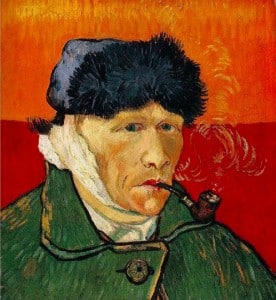
It is part of the creative process for artistic storytellers to apply a variety of methodologies and to be suspicious of “yes/no” answers to questions that are too complicated for the “yes/no” binary. Imagine asking Van Gogh if yellow is the most important color. Any “clear” answer distracts the aspiring painter from learning that yellow’s importance (like all colors) changes depending on its proximity and relationship to other colors. A tiny speck of yellow on an otherwise dark canvas can be more meaningful than a canvas completely covered with the same yellow. Whatever clear answers you have adopted to guide your storytelling, it’s important to remember that there are lots of good answers and more than one good definition. Single definitions limit your stories to the constraints of that source’s point of view. Recruiting definitions of story from psychology, business, behavioral science, marketing, public speaking, anthropology, the liberal arts, and mythology are bound to improve the artistry of a storyteller, as well as mitigate the risk of blind spots.

Excerpt from Chapter 11, 3rd ed. of The Story Factor (2019)  AUDIBLE VERSION HERE

Filed Under: Big T Truths, Finding Stories, Stories Help, Uncategorized Tagged With: Annette Simmons, business storytelling, narrative, storytelling, Storytelling Moral Survival System, Whoever Tells the Best Story Wins

December 20, 2019 by Annette Simmons 10 Comments

Narratives That Leave Us Feeling Powerless

lappe

“I think it’s because the dominant story in our culture is one that creates a feeling of powerlessness, and it starts with this reductive understanding of human nature.”  Francis Moore Lappe

This is from the woman who wrote “Diet for a Small Planet” back in 1971.  That book started a conversation that is now a vital movement to reduce overconsumption of meat and increase plant-based consumption.

Her latest book Daring Democracy: Igniting Power Meaning and Connection for the America We Want correlates strongly with my own research into the narratives men and women recruit when deciding how to allocate resources and how to design power structures. Here is a quote from my proposal:

“Because female narratives don’t always follow male narratives about power we can better see how current systems might leave women in positions of power feeling powerless. Suddenly it makes sense that women don’t just want more power, we want to change the way power works.”

I’ve been gathering true stories men and women tell about their personal experiences with power.  And there is a theme.  Masculine narratives tend to define power as morally neutral.  Women preface their stories with clear distinctions of good power versus bad power. Francis Moore Lappe’s new book basically says the same thing without pointing fingers at gender differences. Here is another quote from her in the NYTimes article:

“We took Charles Darwin, who in “Descent of Man” says that in primal tribal societies everything was judged good or bad solely as it affected the welfare of the tribe, and reduced him to survival of the fiercest.”

Personally I think it is important to highlight that women are much more likely to live according to narratives that address the moral nature of power.  Mainly because I want to undermine the way women’s narratives are routinely discredited (attacked) as too emotional, unfocused, weak or my personal pet peeve as “utopian” by those who can only see through the lens of toxic male narratives. I think we need to do more to validate women’s narratives in order to strengthen and amplify women’s voices.

So … I think gender matters when we talk about these competing narratives.  What do you think?

Filed Under: Uncategorized Tagged With: Annette Simmons, female narrative, gender, male narrative, narrative, power, powerlessness, story, The Story Factor, Whoever Tells the Best Story Wins

  • « Previous Page
  • 1
  • 2
  • 3
  • 4
  • …
  • 7
  • Next Page »

Storytelling 101

I have a confession to make...

Storyteller’s Confession: My Secret Mission

October 5, 2021 8:59 am

I’ve been trying to infiltrate the halls of power for decades. My secret mission is to increase the diversity of thought by teaching those without a voice how to tell their stories and by teaching leaders how to find and retell stories that broaden everyone’s understanding. Read more →

Posted in: Uncategorized

Stories with a Moral Blueprint – part 8 of 8

May 14, 2020 8:43 am

  We need a Magic School for Storytellers Thirty years before J. K. Rowling created Harry Potter, Ursula Le Guin’s... Read more →

Posted in: Annette's Blog, Big T Truths

Stories with a Moral Blueprint – part 7 of 8

May 13, 2020 7:37 am

  Truth in Storytelling When I wrote the first edition of The Story Factor twenty years ago, I began with the... Read more →

Posted in: Uncategorized

Stories with a Moral Blueprint – part 6 of 8

May 12, 2020 6:48 am

The Moral Dilemmas of a Lion, a Scarecrow, and a Tin Man Frank Baum’s original introduction to The Wizard of... Read more →

Posted in: Annette's Blog, Big T Truths

Stories with a Moral Blueprint – part 5 of 8

May 11, 2020 8:38 am

  Blueprints for Building Trust Learning to drive was fun until I hit the mailbox. I burst into tears, blaming... Read more →

Posted in: Annette's Blog, Big T Truths

Subscribe to Annette's Blog via Email

Enter your email address to subscribe to this blog and receive notifications of new posts by email.

Like us on Facebook:

Like us on Facebook:

Contact Us

Group Process Consulting, LLC
phone: 318.861.9220
email: annette@annettesimmons.com
facebook: www.facebook.com/thestoryfactor

  • Storyteller’s Confession: My Secret Mission

    A Storyteller’s Confession I’ve been trying to infiltrate the halls of power for decades. My … Continue Reading…

    Storyteller’s Confession: My Secret Mission
  • Stories with a Moral Blueprint – part 8 of 8

      We need a Magic School for Storytellers Thirty years before J. K. Rowling created Harry … Continue Reading…

    Stories with a Moral Blueprint – part 8 of 8
  • Stories with a Moral Blueprint – part 7 of 8

      Truth in Storytelling When I wrote the first edition of The Story Factor twenty years … Continue Reading…

    Stories with a Moral Blueprint – part 7 of 8
© Copyright 2021, Group Process Consulting, All Rights Reserved.
Based on the ·Executive Pro Theme/Genesis Framework by StudioPress · Built using WordPress · Log in