Annette Simmons

  • About
    • About Annette
    • Annette in Action
  • Books
    • Territorial Games
    • A Safe Place for Dangerous Truths
    • The Story Factor
    • Whoever Tells the Best Story Wins
  • Services
  • The Six Kinds of Stories
  • Storytelling 101
    • Blog
    • Q & A
    • Metaphor Maps
  • Clients
  • Contact

December 12, 2019 by Annette Simmons 5 Comments

The Spirituality of Storytelling…with animals!

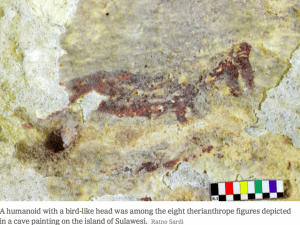
therianthrope

Do your stories have a spiritual message?

Or…perhaps we should ask ourselves what spiritual message do our stories tell?  Because all storytelling delivers a spiritual message.  The message may be spiritually rich or poor but it is there.  And it seems like spirituality has been at the core of storytelling from the beginning.  A recent article about newly discovered cave paintings in central Indonesia illustrates what is still a common trope – interpreting humanity through the lens of animal characteristics – from Aesop’s stories about the lion and the mouse to the three little pigs, animals have been recruited represent our values. Stories with animals tend to explore spiritual themes (compassion, courage, conservation) that illustrate the way we struggle to balance our lower and higher natures. Here is a quote from a Dec. 11, 2019 article:

Despite these unresolved mysteries, it is now abundantly clear that these humans were storytellers whose abstract paintings shed light into the origins of human cognition and spirituality.

Over forty thousand years ago the urge to tell a story represented far more than a desire for individual gain.  Newly discovered images of the earliest example of storytelling featured “therianthropes” – characters that embody a mix of human and animal characteristics. Our storytelling instincts were far less about individual profit and much more about collective wellbeing.  We risk a failure of the spirit when we forget this. (as well as a failure to address climate change and other global problems)

I first encountered ancient therianthropes in Museo del Oro in Bogata where solid gold characters blended the characteristics of humans and animal spirits. And more recently, when a friend who has a bad habit of suppressing his creative spirit to please others showed me a small brass tiger he carried in his pocket to remind him to act with courage. What animal spirit would improve the spiritual message in your storytelling?

Filed Under: Uncategorized Tagged With: Aesop's Fables, Annette Simmons, business storytelling, leadership, narrative, spirituality of storytelling, story, storyteller, Sulawesi, The Story Factor, therianthrope

November 6, 2018 by Annette Simmons 8 Comments

Ten Games People Play to Control Truth (4 of 10)

  1. Camouflage Game (Wild Goose Chase)

wildgoodchase

The new forms of this game have the potential to twist truth in ways that kill ideas that matter far more than just killing the research project described in the quote below:

“Hal was there only as a sophisticated untracker in groups.  Untrackers get you going down the primrose path…you feel comfortable going…the whole way through.  In order to avoid implementation of my [research] idea, Hal said it sounded great but ‘we need…to get the…clinical investigation committee to approve the scientific merit.’ And so on and so forth….What he knew [was] that if you have a bunch of fairly bright people…you can make it sound plausible…. what he said was absolutely right on target, but the intent…was not scientific merit. [It was to block the research.]

The term “untracker” is an excellent way to define a camouflage game player.  This game is a common slapstick comedy routine. The Three Stooges played it all the time. One of them would point and yell, “Look over there!” and when the target looked in that direction the “untracker” could steal whatever he wanted while they weren’t looking. You may have played it yourself without malicious intent.  It’s what siblings do to get the last cookie.  But when the stakes are high, involving difficult truths, it’s not funny.

“It’s the wild goose chase. If they send you off on enough of them, you won’t think the thing to be hunted is in their territory. It appears so credible…’If I can get you away from my territory then I win.’”

From the original research in 1997, it was clear that most untrackers hid their misdirection in the camouflage of support: just one more additional step, an opportunity we should wait for, adding one more expert.  Sometimes the tactic is to get a group to bite off way more than they can chew so they choke on their own good intentions before their program has a chance to invade protected territory.  Frequently it works so well people really believe the game player’s insistent claims of positive intent.

Capitalizing on someone’s insecurity doubles the game player’s ability to create confusion. The goal is for emotions to hijack the rational mind. Calling attention to someone’s embarrassing past, a mistake, or asking in the middle of their presentation “what’s that brown thing hanging out of your nose?” is enough to steal momentum or stop a speaker dead in her tracks.  The game player almost always pretends they are trying to help. In particular, to help us avoid some perceived disaster they intend to illustrate in vivid detail. Because the fastest way to misdirect attention is to find a threat and supersize it.

“So it ranged from discounting to actually creating perceptions of threats.  A new program was positioned to be potentially dangerous to the welfare of the company in order to keep it from effecting the way a group of managers liked to do business.”

When game players point out multiple threats and escalate perceptions of dire consequences they can make a group so dizzy with confusion the group is much more likely to defer to an authority (usually the game player) to save them.  This game incorporates the art of illusion – make the threat seem big enough and scary enough and no one has time to think or to do the hard thing.

Like all of the games, the Camouflage Game works because people participate.  When we look “over there” and stop paying attention to what we know is true, we are the ones who make the game work. And the most susceptible groups are always those of us with tough dilemmas we can avoid indefinately every time we agree to “Look over there!” Rather than making hard decisions and making the painful sacrifices the situation demands we opt for rubber necking someone else’s disaster. I suspect this hasn’t changed.

Filed Under: Annette's Blog, Big T Truths Tagged With: Annette Simmons, Big T Truth, communication, narrative, Territorial Games, true stories, Whoever Tells the Best Story Wins

October 30, 2018 by Annette Simmons 8 Comments

Ten Games People Play to Control Truth (2)

The Intimidation Game (2nd of ten):

Back off or you will be sorry.

Back off or you will be sorry.

The transcribed stories from the original research still describe how intimidation games scare people away from a game player’s protected “territory:”

All of a sudden he flared into a defensive kind of maneuver. He lapsed into another language…It was uncharacteristic of this guy. He turned crimson.  He was saying, ‘I made the decision. It was my judgment to make.’ Underneath all that, I was hearing, ‘Look, back off. Say out of my turf regardless of the data”

“He was angry. His face got red. Then he became accusatory and belligerent. He said the people who had done the study didn’t know what they were doing. The outcome in my opinion was that the subordinates of the manager said, “well, it looks like we don’t go out and ask anybody questions any more.”

Learning to not ask questions may be the worst outcome of the intimidation game.  Particularly now when asking questions is so dangerous it might cause someone to send you a pipe bomb – a radical acceleration of the intimidation game.

Used to be… when someone tried to control your ability to ask about or speak truth using intimidation – i.e. social, sexual, verbal, emotional attack or humiliation designed to embarrass you, frighten you, shut you down, shut you up or back you off – the most elegant solution was to calmly stand your ground and let the game player learn that intimidation doesn’t work on you or just let them escalate until they look like the crazy one as you sit there being your best “Ghandi self.” One of the black women I interviewed projected this idea from the hypothetical into the realm of possibilities when she told me her story: She felt intimidated into leaving a meeting when a terse white male boss whispered, “you don’t actually need to stay.” She flushed with embarrassment, left the room, and when walking down the hall came to herself – decided she had every right to sit in on that meeting – and walked back in, calmly taking her seat with every ounce of dignity intact and zero visible resentment. Staying sane while standing your ground does work.  Another favorite story was when a 2 star General screamed at a female Lt. Col. “WHY DON’T YOU JUST GROW UP!?!!” only to have her lean calmly back and ask, “Okay, but could you be more specific?” So for sure, in many cases, the intimidation game can’t work if you don’t participate.

On the other hand I admit as a woman it is still very difficult for me to stay sane when a man escalates the intimidation game – particularly when using sexual harassment triggers.  Old PTSD kicks in my “freeze” mode or hyper-activates my fight/flight responses and I “lose it.” For me, the #metoo movement is like a support group for women who have decided we will no longer be intimidated by territorial games.  I genuiely believe that women have to work together to fight this sexualized form of the intimidation game.  But I digress. Yes, the intimidation game can be gender specific – but it is also universally human for multi-gendered tribes who CONTROL information, status, and relationships to use intimidation games to silence true stories about any injustice, inequity, or dehumanization embedded in their preferred solutions.

Facing an intimidation game with non-violent noncompliance still works as long as the intimidation is a bluff.  Those of us who have previously been intimidated from truth telling need good strategies when power brokers use the intimidation game to silence or force our collusion. We have to train ourselves ahead of time to breathe deep when we hear an escalated voice, personal attack, or other threat.

“I’ve observed in meetings that key managers or top managers in an organization – particularly when they’ve got subordinates in the room – can be very intimidating. If they don’t like what they are hearing, they will give either verbal or body language …[and] rather than pursue a particular point, the subordinate will shut down. Some signals are furrowed brows narrowed eyes, shaking the head back and forth or even shouting, “What in the hell are you talking about?” So they effectively shut down something …that feels threatened as a result of what they say.

And it’s not just in meetings now of course.  Online “dialogue” allow trolls to expand intimidation game to a depersonalized extreme now that technology sequesters them from experiencing negative consequences for speaking to others with inhumanity and disrespect. I have also experienced the intimidation game from certain clients whenever I try to talk about the ethics and morals of storytelling. It’s turned nasty at times. Nasty enough for me to walk away.  I feel a bit ashamed that I gave in – another reason to start writing out loud about it.

Also…you know what I find intimidating now? The amount of time I have to stay on the phone to ask a question about my health or my finances. It takes effort to stay obedient to the procedures required of me before I am allowed to ask a question or cancel a service.  In some cases it means sitting on hold, waiting for instructions to press the right numbers while trying to tune out force fed marketing messages, in other cases it means signing in to an online system designed to keep me in line, keeping track of intentionally meaningless passwords that change every month, forfeiting privacy and agreeing to god knows what terms and conditions, until I give up on justice or healthcare completely.  Which lately, I must confess has caused me to back off, give up, hibernate, avoid, and hunker down. I’m just hoping writing this journal will help reverse my backward motion.

I’m not saying I have answers. I’m simply writing about these ten games to re-examine what’s going on at a granular level so we can maybe get a more accurate perspective of how these formerly “in-person” games have translated to technological dogma and algorithms.

Filed Under: Annette's Blog, Big T Truths Tagged With: Annette Simmons, business storytelling, influence, integrity, narrative, Territorial Games, The Story Factor, true stories, Whoever Tells the Best Story Wins

October 23, 2018 by Annette Simmons 9 Comments

Ten Games People Play to Control Truth (1)

People seem to be applying the same ten games from Territorial Games (1997) to control narratives and thus control our perceptions of what is/isn’t true.  For the next ten weeks I’ll post about each of these ten games one at a time.

But first let me give a bit of background on the research. It all started with the metaphor, “turf war.” Everyone knew what “turf war” meant, but when I asked for stories every description just contained more metaphors (back stabber, empire builder, brown noser, etc). I wanted to know what actually happened, the behaviors, and the impact at a granular level.  SO, I asked people to tell me stories about “a time when I witnessed a turf war.” The metaphors started to translate to specific situations that eventually fell into ten buckets of behaviors.

Marking territory is quite common.

Marking territory is quite common.

What is a territorial game? What is territory?

In the late ‘90s we already had very few tangible kinds of territory to fight over except maybe office space (remember private office space?) The games were primarily used to control information, relationships, and status/popularity. Controlling these three intangible factors meant players could monopolize gateways to money, power, and more tangible goodies.  Today, it seems these ten territorial games have exponential potential to control global perceptions of truth.  Any storyteller determined to control “the” narrative has stopped seeking mutual truths in favor of a single story.

Today, these games are even less visible because technology hides games so they are much harder to name, resist or question. So many messages are shaped and promoted by entities seeking to game the truth, we are all either confused or escape into fundamentalism.  Personally I can’t even conceptualize solutions until I can examine which games perpetuate the biggest problems. Over the next few weeks I’ll do my best to translate old descriptions of each of the ten territorial games to current examples so we can decide if we think this is a useful way to describe the most common games people use to distort “dangerous” truths.

  1. Occupation Game:

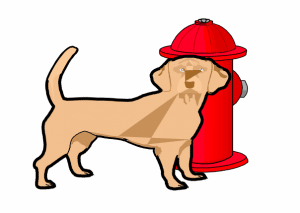
The image that best evokes the idea of the occupation game is an dog marking his territory.  Just as often the Occupation Game is played like musical chairs. The game is all about getting there first, in as big a way as possible to occupy control of who/how/why people get information, access, or status. In musical chairs the player with the biggest butt who is most willing to knock someone else off a chair usually wins.  Sending an biting email with our version of the truth while copying far more recipients than necessary is a form of the occupation game. Occupation game players also withhold information (sit on it) if it they feel it might benefit their percieved “enemy” even in situations where sharing the information is the best way to achieve the organization’s mission.

Thank goodness I did this research when there were more tangible examples. Most of these behaviors are so far behind the scenes, written in code, and so complex we need metaphors to discuss them. SEO software has automated the occupation game. Which is fine. People have been playing these games since cave men protected good hunting grounds. Only… look at the two examples below of physical games of occupation and ask yourself if the problems caused by these games might also translate to current problems discerning what is/isn’t true.

“So there would be cases where people wanted to get something done and regardless of any of the [safety] procedures or who was accountable, they would just get it done – they’d go ahead and do it.  They would ignore the procedures and then justify it on the basis of this is what you’ve got to do to keep the plant online…To keep the procedure people out of their hair they were very secretive in many cases.  In some cases, they would rewrite procedures on their own.”

                                             Safety Engineer of a Nuclear Plant

In the name of speed and efficiency we prefer to ask forgiveness rather than permission. But if a nuclear plant needs safety procedures surely we also need safety procedures to protect “Truth.”  In the tangible world safety doesn’t happen without effort, so it sure as heck isn’t going to happen without effort/procedures in the intangible world to avoid nuclear options and scorched earth solutions.

In my research most people did not connect the long range implications of these games or even realize that they were playing a game.  Territorial games are fear based actions that hijack the limbic system with knee-jerk fear responses. The central aspect to understanding and overcoming territorial games is to understand that no matter who you ask, “who started it?” no one will ever answer: “me.”

Therefore solutions that seek to place blame only make things worse.

For the most part these games are not malicious. We play these games because we are humans acting like humans.  The example above risked a nuclear disaster.  Occupation games that populate (occupy) all of our available attention with half truths risk similar disasters.

“We had three different departments on the same physical site.  When a load of scrap came in, you sent a truck and you had to dump it somewhere…The guys were doing whatever they could to sort of define their boundaries and dump piles of stuff that would keep the other guy from using that space …There would be this stuff sort of creeping into the parking lot…the other funny thing is that the people who did the work couldn’t stand to see the pile get too low. It scared the hell out of them. It was like they liked seeing this big pile of work …they always knew they had a job…[it was] contrary to the financial side, because the best thing we could do was to have no inventory with no money tied up in it.”

If storytellers race to produce as much content as possible across as many channels as possible, I don’t see how we can avoid burying the kind of Big T Truths we must face to keep counterproductive individual goals from sabotaging humanity’s collective goals.


Filed Under: Uncategorized Tagged With: Annette Simmons, business storytelling, communication, Metaphor Map, narrative, occupation game, storytelling, Territorial Games, true stories, Truth

August 15, 2017 by Annette Simmons 1 Comment

Charlottesville Vigil in A Southern Town

Elizabeth Beauvais spoke the words written below last Sunday night at a local vigil to mourn the violence in Charlottesville. We still have a confederate monument directly in front of our court house. Let’s not ignore the stories perpetuated by these monuments. Monuments have motives. This one was erected during Jim Crow when loyalty to Confederacy was code for white supremacy.  It still is.

She agreed to let me share a copy of her words:

“I went to the University of Virginia in the mid-1990s as a Jefferson Scholar, a scholarship that brought with it expectations of not just academic excellence, but citizenship and a real contribution to the inclusiveness, equality among student life. I soon learned that this was a campus-wide religion at UVA – this religion to Jefferson and his democratized ideals of self-determination, honor and equality. I took the history of civil rights under Julian Bond and poetry with our first black female poet laureate Rita Dove. I say this to tell you what a horror and shock it was to see hundreds of torch-bearing neo Nazis walking the central lawn of this campus, my campus, on Friday night. Don’t get me wrong – Charlottesville, then and now, struggles with a racist and misogynist past with lingering aftershocks in the present– a state school that didn’t allow women in until 1970, a university built with slave labor under the design of a founding father whose repeated rape of his slave mistress has become perversely romanticized. Charlottesville is far from perfect. But Charlottesville did not bring this on itself.

I believe that Charlottesville was expressly targeted as a strategic battle site by douchebag Richard Spencer and his NeoNazi, racist colleagues BOTH because it is now a progressive city built by the leading architect of America AND because it could actually be anywhere. For outside hate groups to invade and unilaterally terrorize a city that voted over 80% blue in the last election, a college town, and UNESCO world heritage site – (a city also, by the way, surrounded by a sea of red) – is a pointed, clear message that reads: We can take Berkeley with torches and hate just as easily as we can take Shreveport.

This matters to us not just because we feel for people in Charlottesville but because the violence could happen here — and the oppression and marginalization of already vulnerable people is in fact happening daily at the policy level.

My friend Kristin Adolfson was in the crowd hit by the car Saturday that barreled into her and dozens of other peaceful protesters that were holding signs that said, “Solidarity. Unity.” Kristen had written Love Not Hate on her shoulders and carried snacks and water in her backpack. She was marching by a low-income housing complex that white supremacists had been tormenting with racial epithets and chants of “Heil, Trump”. Miraculously, Kristin was unharmed, but a woman near her, Heather Heyer, died. Kristin told the New Yorker in an interview Sunday: “This was a terrorist act. Something that happens in so many places around the world, and it happened here in our little town. And I still can’t process the hate—that someone could actively take people’s lives, that’s what their goal was.”

She wrote to us on Facebook:

“What I can’t forget: The joy we had as we were marching down Water Street. Clapping and chanting and the solidarity and the community.

Then: such a strong feeling of ***NO!!!!!*** when I realized what was happening, realizing there was a car at full speed plowing through us. If my NO could have stopped time. It felt like it should have, it was that big.
How I knew what was happening and I couldn’t stop it. The sound of the car hitting human flesh and bone, ripping into us like dominoes, a quick staccato. Bodies thrown into the air. The anger that someone would do this. So angry, so angry. NO.
NO to the car and to the driver and to why it happened.
The fear for how bad it was, how many dead? How many dead.
A woman supported by three friends screaming heart wrenching. Her scream contained all our screams.
The tear streaked face of the young man wearing gray and a black medical mask around his neck, telling me someone is dead.
His face. Grief, incomprehension, pain, tears and pain, collapsing not able to stand.
His face.”

Over the past several years, since Sandy Hook, I’ve wondered – how long until I know someone who’s killed by gun violence and unchecked hate and intolerance? Or since Lafayette – when will I need to map out the exit the next time I take my kids to see a movie? How long until it comes for me or someone central to my life? I didn’t have the opportunity and the misfortune to test my courage as Kristin did (and I know that for many the awfulness of racially motivated violence has long been in their streets.) Charlottesville is as close as it’s come for me. I won’t let my fingers write “so far” – but that of course is my fear, your fear, all our fears, right?

Here’s what I know:

  • This is not “alt-right” or far-right, this is non directional, non partisan. Non American. The actual right should be loudest group saying this.
  • This is not about First Amendment rights. Not when assembling and speaking also means toting torches and assault rifles and other actual tools of terror. Friends who teach constitutional law at UVA have been telling me and others earnestly that when both the first amendment and the second amendment are abused together – violence, terrorism, homicide are not far behind.
  • Ignoring the fact that there is a short, direct and causal line from the President’s rhetoric and permissiveness for hate to the recent shocking surge of violence and hate crimes in American towns is dangerous. Strong leaders on both sides of the aisle, CEOs and other influencers are now seeing this writing on the wall and finally being vocal. Meanwhile – David Duke, our embarrassing fellow Louisianian, himself declared that the alt-right unity fiasco “fulfills the promises of Donald Trump.”
  • Doing nothing regarding Shreveport’s own Confederate statues and totems of racism in the hopes that Charlottesville’s violence won’t come here is ostriching and wrongheaded and in fact, the surest way to greater oppression and racial violence and domestic terrorism.
  • Equivocating with so-called compromises on false equivalencies – as if monuments enshrining civil rights and slavery bear equal moral weight and significance as worthy symbols in front of a courthouse is another fast track to Charlottesville – or worse.
  • I love Charlottesville so much I named my daughter after it — and I also gave her the middle name Strong. I actually believe Charlottesville is going to be okay, largely because there is a strong and motivated population and institutions that immediately began calling the evil out by name, AirBNB owners who canceled Alt-right reservations, locals who moved their cars to make it harder for hate groups to park and have to walk miles and miles in their sad little fake military costumes, teachers and students who stood in front of their university buildings as they sought to reclaim it for tolerance and were viciously assaulted, and now residents crowd-funding for all kinds of social justice groups to strengthen their community.
  • I love Shreveport too. Can we organize like that together?
  • When and if the Nazis come to our town, or reveal themselves in our town, terrorize and threaten people, maybe even brutally mow down some young brave person, how will we respond to their chant “you can not replace us.” I think we start in the same way we have gathered here at this vigil: by standing up to say, “we are not replacing you – because you were never entitled to anything you are demanding in the first place.”

I need to say how much of an imposter I feel as a well-meaning, slightly crunchy aging liberal white woman talking about bigotry and racism. I am acutely aware of the fact that what I am speaking of is no news at all to my neighbors of color in Shreveport. In fact, I told Tamica there were people far better positioned than me to speak today. But then, I remembered what I read this Sunday morning in the New York Times:

“Now is the time for every decent white American to prove he or she loves this country by actively speaking out against the scourge this bigot-ocracy represents. If such heinous behavior is met by white silence, it will only cement the perception that as long as most white folk are not immediately at risk, then all is relatively well. Yet nothing could be further from the truth, and nothing could more clearly declare the moral bankruptcy of our country.”

Read more from Elizabeth Beauvais here.  She’s a great writer!

Filed Under: Uncategorized Tagged With: charlottesville, confederate monument, interview techniques narrative, narrative, storytelling, true stories

July 3, 2017 by Annette Simmons 3 Comments

Budweiser Storytelling Genius Used for Good

I just watched the new Budweiser commercial for July 4 this year and I think it is genius.  They used story to do good as well as make money. Lately I’ve been disturbed by mechanistic applications of story, but this? This is big picture, risky, embedded with big T Truth and I hope it does what it seems to have been designed to do.

Budweiser invites liberals and conservatives to remember who they are and why they are here, and to have a damn beer fer crissakes. The common good intentions of left and right are symbolized by the conservative cues framing the family of the veteran and his daughter as obviously conservative they add an even heavier handed cues about liberal Hollywood to characterize Adam Driver.  Then they dissolve their different POVs with the shared tragedy of both men being wounded before deployment and dealing with pain and survivors guilt.

I try to imagine… what was the dialogue in the conference room when they made the decision

“Should we do it?”

“It’s risky.”

“You are f—ing idealists.”

“It tested well.”

“Screw it, we’re going to do it.”

Of course they tested this ad. I admit preliminary the comments I’ve read are accusatorial jabs from die hard haters from both sides. But I hope that over time, the idea of just sitting down and having a beer comparing what we care about most…will bring some sanity to the current political arena.

If not, I’ll just drink a Bud and try not to worry about it.

Filed Under: Uncategorized Tagged With: Annette Simmons, BUDWEISER, business storytelling, communication, engagement, JULY 4, narrative, story, The Story Factor, Whoever Tells the Best Story Wins

  • « Previous Page
  • 1
  • 2
  • 3
  • 4
  • 5
  • …
  • 7
  • Next Page »

Storytelling 101

I have a confession to make...

Storyteller’s Confession: My Secret Mission

October 5, 2021 8:59 am

I’ve been trying to infiltrate the halls of power for decades. My secret mission is to increase the diversity of thought by teaching those without a voice how to tell their stories and by teaching leaders how to find and retell stories that broaden everyone’s understanding. Read more →

Posted in: Uncategorized

Stories with a Moral Blueprint – part 8 of 8

May 14, 2020 8:43 am

  We need a Magic School for Storytellers Thirty years before J. K. Rowling created Harry Potter, Ursula Le Guin’s... Read more →

Posted in: Annette's Blog, Big T Truths

Stories with a Moral Blueprint – part 7 of 8

May 13, 2020 7:37 am

  Truth in Storytelling When I wrote the first edition of The Story Factor twenty years ago, I began with the... Read more →

Posted in: Uncategorized

Stories with a Moral Blueprint – part 6 of 8

May 12, 2020 6:48 am

The Moral Dilemmas of a Lion, a Scarecrow, and a Tin Man Frank Baum’s original introduction to The Wizard of... Read more →

Posted in: Annette's Blog, Big T Truths

Stories with a Moral Blueprint – part 5 of 8

May 11, 2020 8:38 am

  Blueprints for Building Trust Learning to drive was fun until I hit the mailbox. I burst into tears, blaming... Read more →

Posted in: Annette's Blog, Big T Truths

Subscribe to Annette's Blog via Email

Enter your email address to subscribe to this blog and receive notifications of new posts by email.

Like us on Facebook:

Like us on Facebook:

Contact Us

Group Process Consulting, LLC
phone: 318.861.9220
email: annette@annettesimmons.com
facebook: www.facebook.com/thestoryfactor

  • Storyteller’s Confession: My Secret Mission

    A Storyteller’s Confession I’ve been trying to infiltrate the halls of power for decades. My … Continue Reading…

    Storyteller’s Confession: My Secret Mission
  • Stories with a Moral Blueprint – part 8 of 8

      We need a Magic School for Storytellers Thirty years before J. K. Rowling created Harry … Continue Reading…

    Stories with a Moral Blueprint – part 8 of 8
  • Stories with a Moral Blueprint – part 7 of 8

      Truth in Storytelling When I wrote the first edition of The Story Factor twenty years … Continue Reading…

    Stories with a Moral Blueprint – part 7 of 8
© Copyright 2021, Group Process Consulting, All Rights Reserved.
Based on the ·Executive Pro Theme/Genesis Framework by StudioPress · Built using WordPress · Log in